




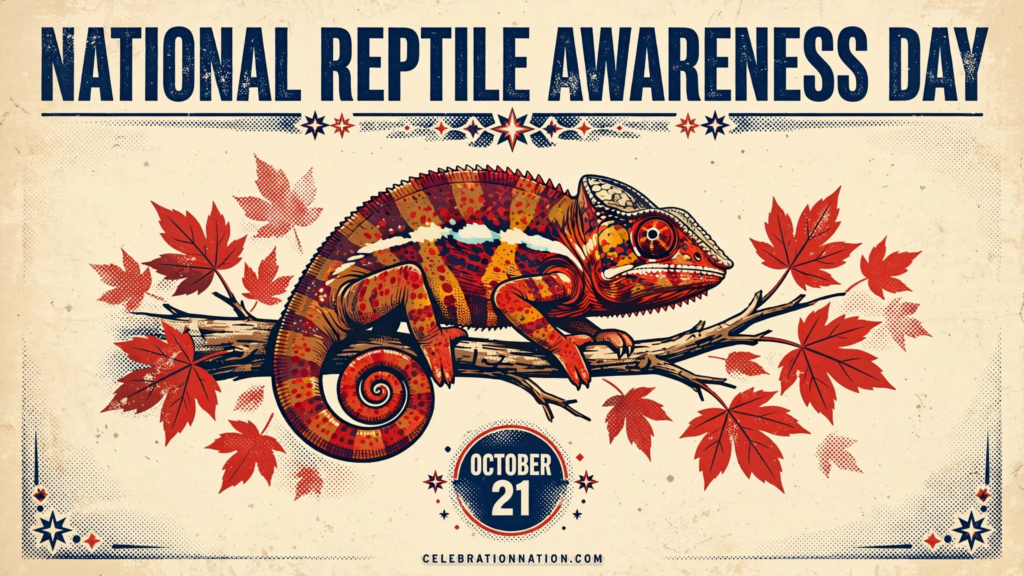
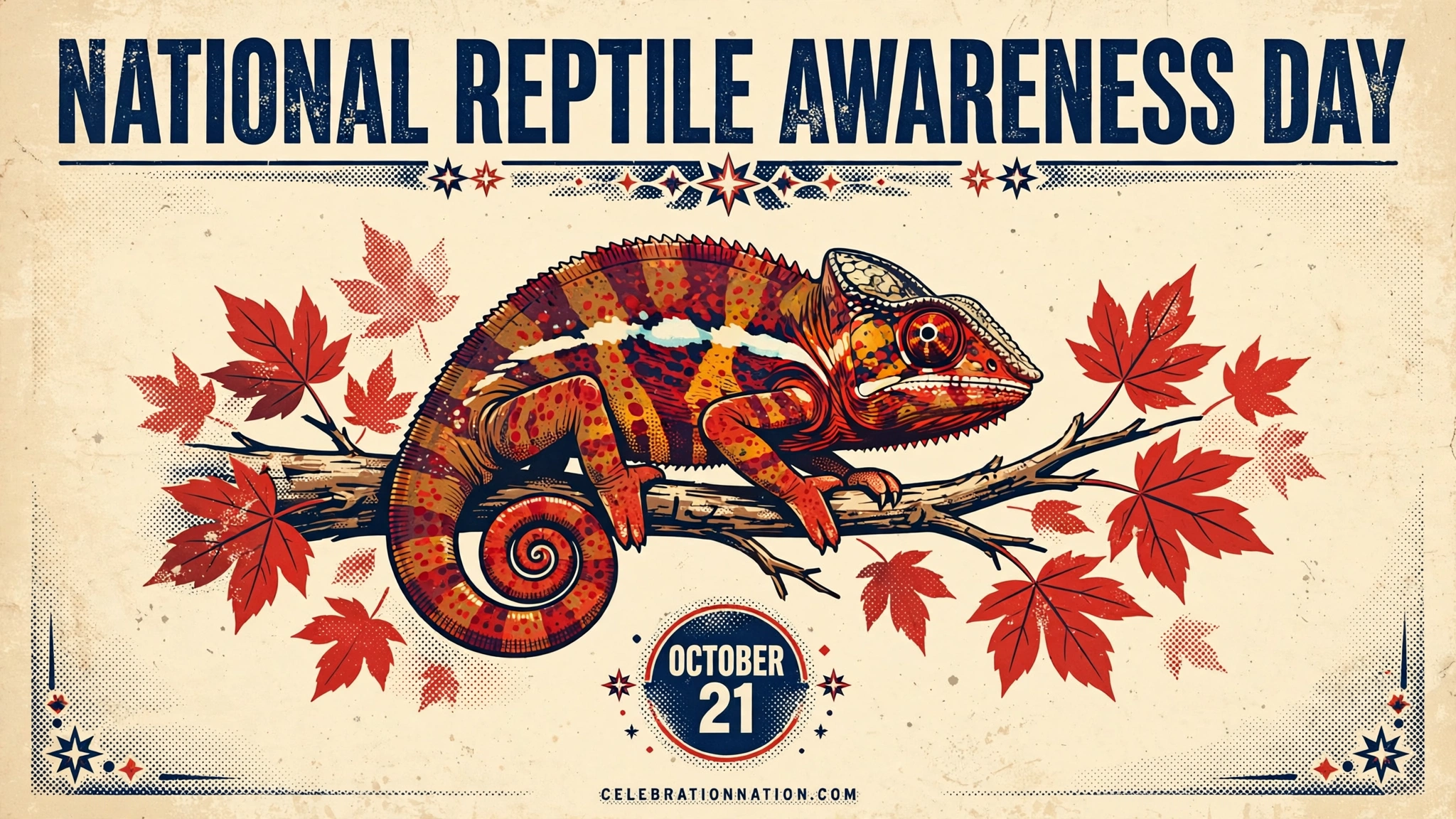
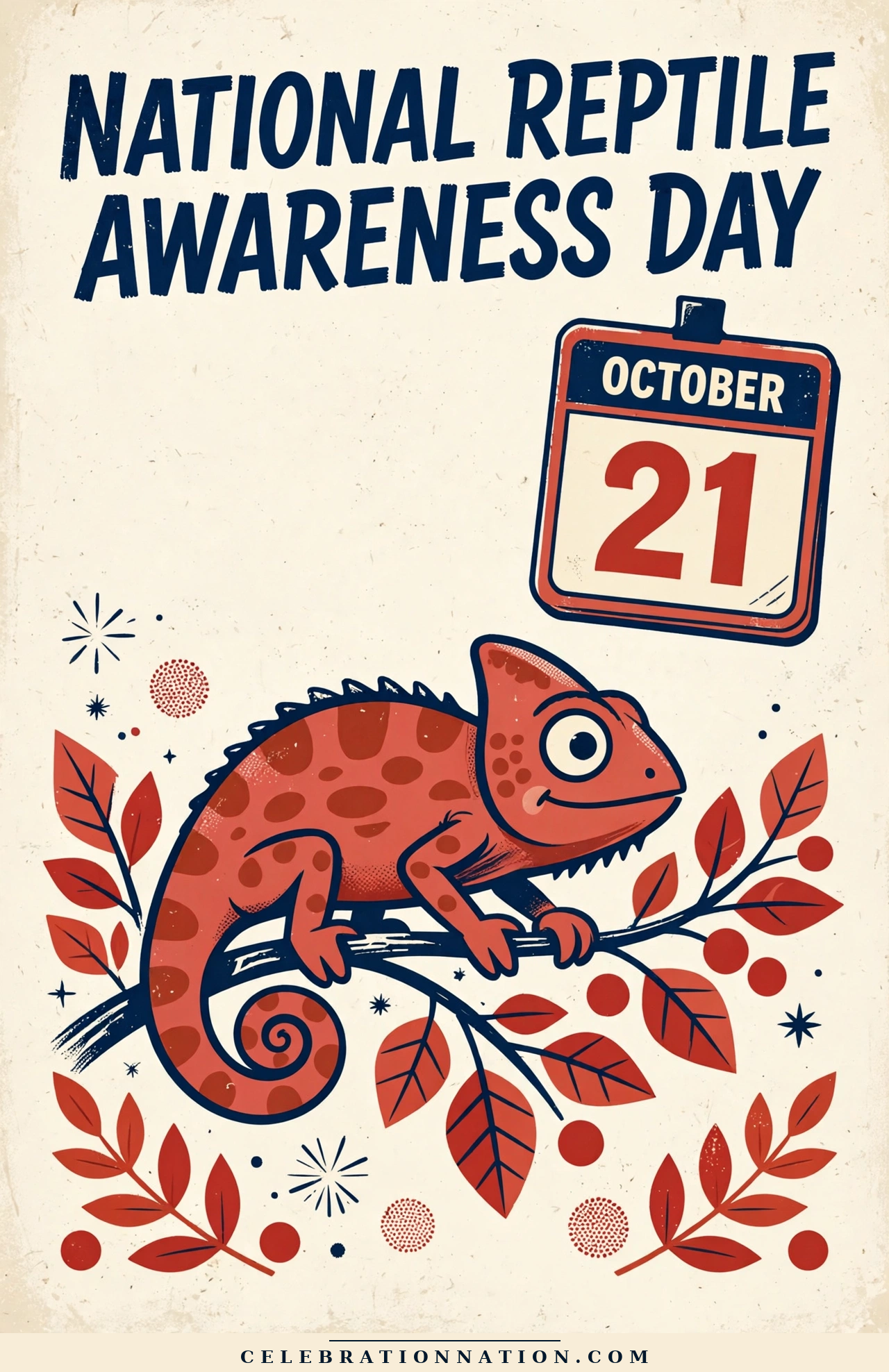
National Reptile Awareness Day
Join us in honoring the vital role reptiles play in our ecosystem with a focus on education and conservation.
- Roots
- Promoted annually by Reptiles Magazine; founder unknown
- Vibe
- Educational and conservation-focused
- Also on Oct 21
- Orionid Meteor Shower Peak · Global Dignity Day · International Nacho Day
- Hashtag
- #NationalReptileAwarenessDay
3 ways to celebrate
Learn about reptiles
Read up on lizards, snakes and turtles and their habitats.
Visit a reptile house
Tour a zoo's reptile exhibit with friends this weekend.
Share a reptile fact
Post your favorite reptile fact and see who is surprised.
Plan ahead
National Reptile Awareness Day is observed on October 21 every year. Here is where it lands for the next ten years, handy for planners, marketers and party people.
Fast facts
The story
National Reptile Awareness Day, observed on October 21, was established to raise awareness about the plight of reptiles and their conservation needs. This day serves as a reminder of the significant role reptiles play in maintaining the ecological balance across various habitats. From the deserts to the rainforests, reptiles contribute to the health of ecosystems, which in turn supports countless other species.
Read the full story
In recent years, the decline in reptile populations due to habitat loss, climate change, and the illegal pet trade has become a pressing concern. Organizations like the Association of Zoos and Aquariums have taken significant strides in reptile conservation, providing resources and education to the public. Through initiatives such as breeding programs and habitat restoration, these organizations aim to ensure a future for reptiles and their habitats.
Celebrating this day can take many forms, from visiting local zoos and aquariums to participating in educational workshops. Schools often engage students with projects about reptiles, fostering a deeper understanding of these creatures. Community events may also be organized, where experts can share knowledge about various reptile species and their importance in nature.
As we observe National Reptile Awareness Day, let us recognize the beauty and diversity of reptiles. By educating ourselves and others, we can play a vital role in their conservation. Understanding these unique creatures ensures their survival for generations to come.
Did you know?
Oldest Reptile
The oldest known reptile is Hylonomus, dating back about 312 million years.
Reptile Lifespan
Some tortoises can live over 150 years.
Unique Breathing
Crocodiles can hold their breath for over an hour underwater.
Cold-Blooded
Most reptiles are ectothermic, relying on external temperatures to regulate body heat.
Diverse Habitat
Reptiles inhabit a wide range of environments, from deserts to rainforests.
Reptile Communication
Some reptiles use body language and color changes to communicate.
Endangered Species
Many reptiles face threats, with about 21% of species threatened with extinction.
Around the world
Every culture celebrates a little differently.
- USUnited StatesHome to diverse reptile species, from sea turtles to rattlesnakes.
- AUAustraliaKnown for its unique reptiles, including the venomous Taipan.
- BRBrazilRich in biodiversity, featuring many endemic reptile species.
- ZASouth AfricaHome to the iconic Nile crocodile and various lizard species.
- CACanadaFeatures reptiles like the common garter snake and painted turtle.
- KRSouth KoreaHome to unique reptile species, including the Korean rat snake.
Keep the party going
See the calendar



Celebrate every day, all year
Official gear from the people who track 1,700+ celebrations.
Browse the shop 2027 Wall Calendar, signed by Marlo AndersonSigned by the founder of National Day Calendar.
Never miss a reason to celebrate.
One quick morning email with today's celebrations, ideas and posters. Free, unsubscribe anytime.
🎉 You're on the list! Watch your inbox for The Daily Confetti.