

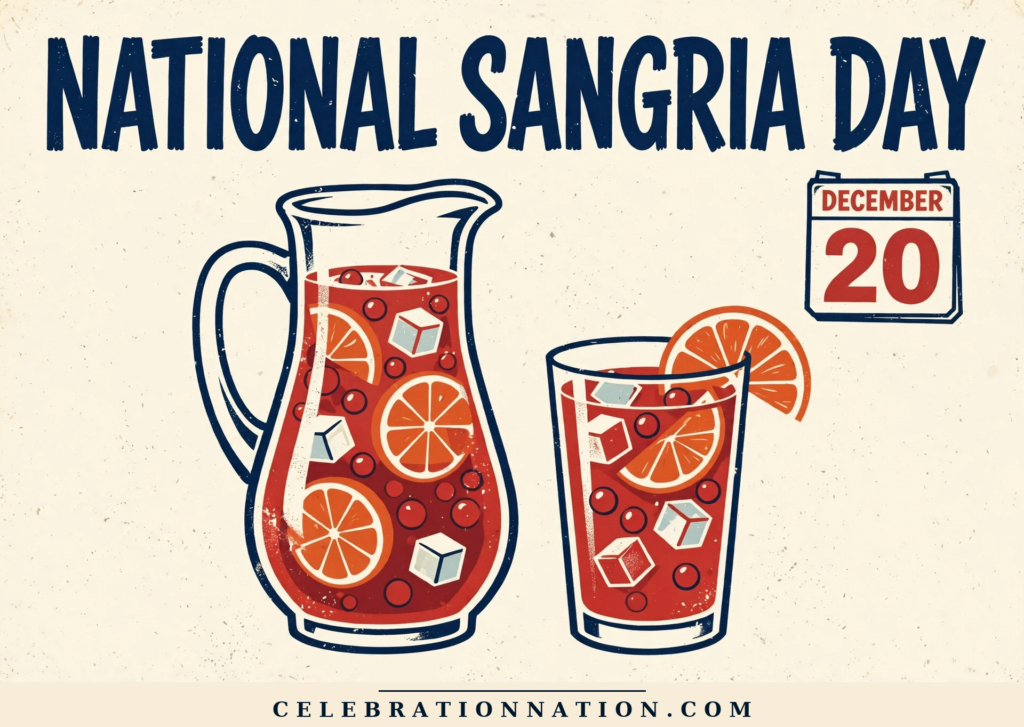
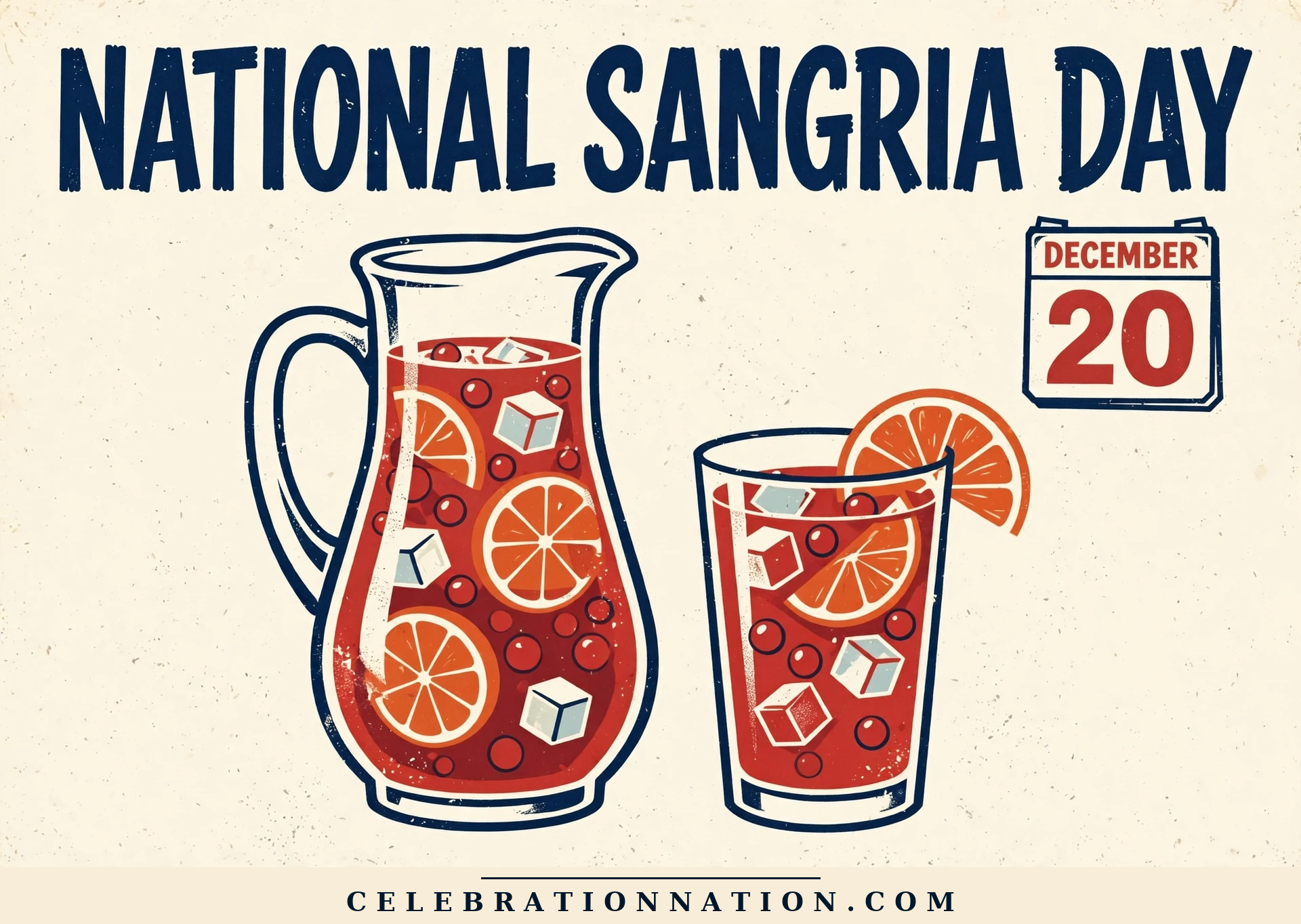
National Sangria Day
Gather your friends and family for a festive drink that celebrates flavor and community.
- Roots
- Spain
- Vibe
- Festive, social, and refreshing.
- Also on Dec 20
- Go Caroling Day · International Human Solidarity Day · Mudd Day
- Hashtag
- #NationalSangriaDay
3 ways to celebrate
Mix your blend
Chop fruit, pick a red wine, and let a pitcher chill until the flavors come together.
Pour a pitcher party
Invite friends over, set out sangria with tapas, and keep the glasses coming.
Swap recipes
Bring your favorite sangria recipe to share at the office and trade ideas.
Plan ahead
National Sangria Day is observed on December 20 every year. Here is where it lands for the next ten years, handy for planners, marketers and party people.
Fast facts
The story
Sangria, a refreshing blend of wine, fruit, and often a splash of brandy, has its roots in Spain and Portugal, where it has been enjoyed for centuries. Traditionally made with red wine, sangria can also be crafted using white or rosé varieties, depending on personal preference. The drink embodies the essence of summer, often served chilled and garnished with vibrant fruits like oranges, lemons, and berries. Its lively colors and flavors make it an appealing choice for gatherings and celebrations.
Read the full story
In the United States, National Sangria Day has gained popularity, especially as people embrace the drink's versatility. The holiday encourages both home mixologists and professional bartenders to experiment with recipes. Many variations exist, allowing for creativity in choosing fruits, sweeteners, and additional spirits. This adaptability has helped sangria find a place in bars and restaurants across the country, from coastal beach towns to bustling metropolitan areas.
Celebrating National Sangria Day offers an opportunity to not only enjoy a delicious beverage but also to connect with others. Whether hosting a party or enjoying a quiet evening at home, sangria encourages sharing and togetherness. Many people enjoy making their own versions, incorporating local fruits or unique ingredients to create something special. The experience of crafting and sipping sangria can be as enjoyable as the drink itself.
As December 20 approaches, it's time to prepare for the festivities. Whether you're planning a large gathering or a small get-together, consider exploring different sangria recipes to delight your guests. With its rich history and cultural significance, National Sangria Day serves as a reminder of the joys of sharing good food and drink with good company.
Did you know?
Sangria's Name
The word 'sangria' comes from 'sangre,' which means blood in Spanish, referring to the drink's deep red color.
Cultural Significance
In Spain, sangria is often enjoyed during festivals and gatherings, symbolizing hospitality.
Historical Roots
The term sangria used for the drink can be traced back to the 18th century.
Variations Worldwide
Different countries have their unique takes on sangria, incorporating local wines and fruits.
Sangria in the U.S.
Sangria gained popularity in the United States during the 1964 World's Fair in New York.
Popular Ingredients
Common sangria ingredients include citrus fruits, berries, and sometimes soda or sparkling water.
Health Benefits
Sangria can be a healthier option compared to other cocktails, especially when made with fresh fruit and lower-alcohol wines.
Around the world
Every culture celebrates a little differently.
- ESSpainThe birthplace of sangria, where traditional recipes are celebrated.
- USUnited StatesNational Sangria Day is widely recognized across the country.
- PTPortugalKnown for its own variations of fruit-infused wine drinks.
- ARArgentinaOffers its own take on sangria with local wines and fruits.
- FRFranceEnjoys refreshing sangria styles, especially in summer.
- BRBrazilSangria is embraced in beach parties and social gatherings.
Keep the party going
See the calendar
Celebrate every day, all year
Official gear from the people who track 1,700+ celebrations.
Browse the shop National Day Celebration Card GameA party in a box, any day of the year.
Never miss a reason to celebrate.
One quick morning email with today's celebrations, ideas and posters. Free, unsubscribe anytime.
🎉 You're on the list! Watch your inbox for The Daily Confetti.