





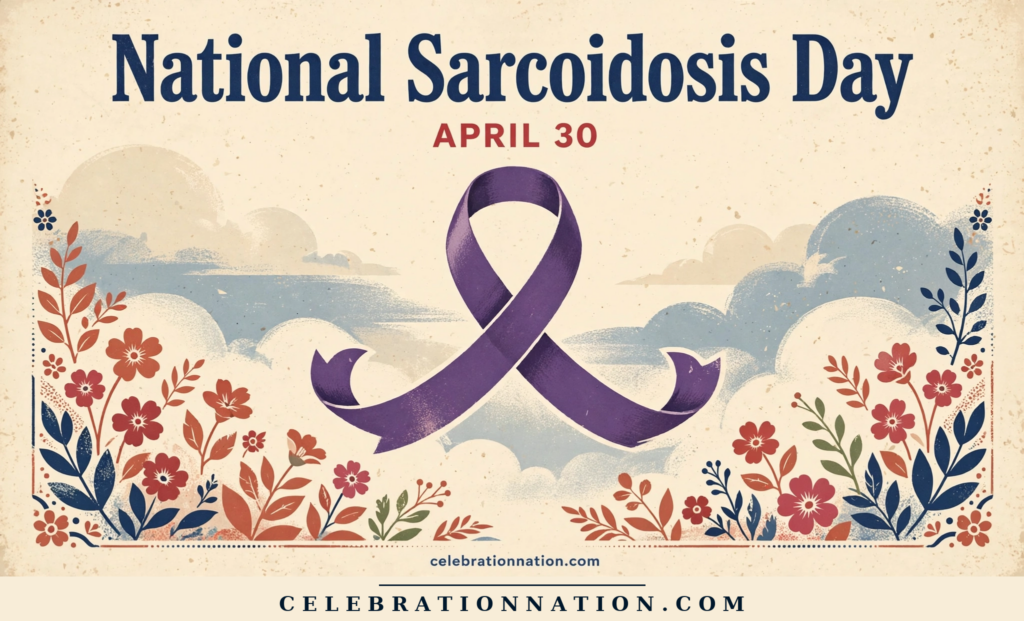
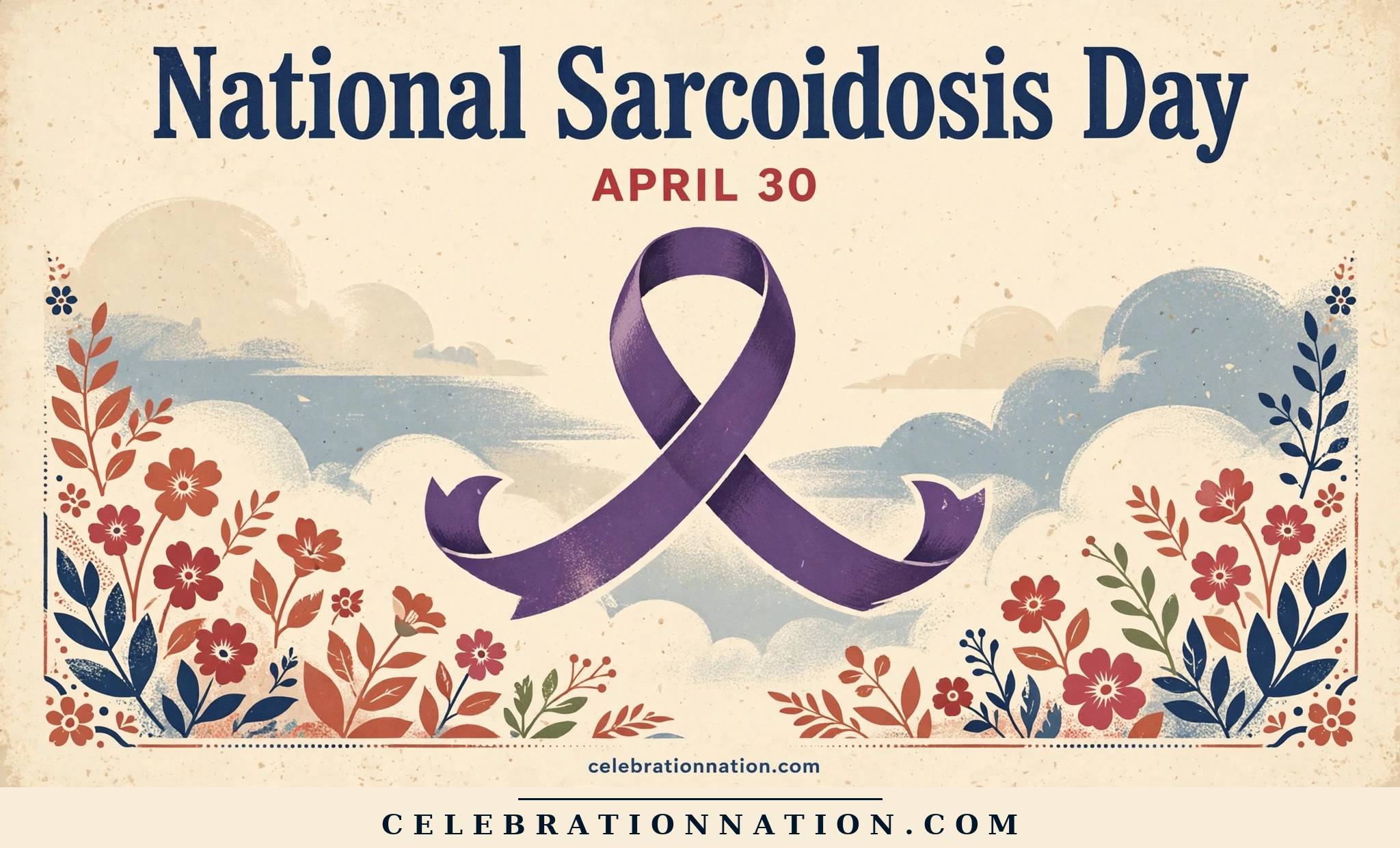
National Sarcoidosis Day
National Sarcoidosis Day isn't about diagnosis — it's about dignity. About showing up, showing support, and pushing for change.
- Roots
- Established in 2015; inspired by Carl DeLine and David Sohl, with the Foundation for Sarcoidosis Research also credited.
- Vibe
- Supportive community engagement
- Also on Apr 30
- International Jazz Day · Bugs Bunny Day · Hairstylist Appreciation Day
- Hashtag
- #NationalSarcoidosisDay
Ways to celebrate
Small, doable ways to celebrate National Sarcoidosis Day.
- Share one reputable resource with your network.
- Donate to a patient-led organization working on sarcoidosis.
- Check in on someone you know who's living with it.
- Book the screening or appointment you've been putting off.
- Listen more than you speak.
Make it your kind of celebration
Family
Have the real conversation at the table — stigma-free, no lecture.
Kids
Answer questions honestly and age-appropriately.
Couples
Check in with each other's appointments, screenings, and follow-ups.
Office
Share vetted resources and encourage people to use their benefits.
School
Bring in an expert, survivor, or advocate to speak for a class period.
Community
Run a donation drive, a walk, or a listening session for those affected.
Just me
Reach out to someone you know is living with it. Ask how they're doing for real.
Plan ahead
National Sarcoidosis Day is observed on April 30 every year. Here is where it lands for the next ten years, handy for planners, marketers and party people.
Fast facts
The story
Sarcoidosis is an inflammatory disease that can affect various organs, most commonly the lungs, skin, and lymph nodes. While the exact cause remains unknown, it is believed to arise from an abnormal immune response. This condition affects approximately 200,000 people in the United States, with a higher prevalence among African Americans and those of Scandinavian descent. National Sarcoidosis Day, first recognized in 2015, serves to educate the public and promote understanding of this complex disease.
Read the full story
Patients with sarcoidosis often face challenges due to the disease's unpredictable nature. Symptoms can vary widely, from mild to severe, and may include fatigue, cough, and skin rashes. Some individuals may experience long-term complications, while others find their symptoms resolve spontaneously. This variability underscores the importance of research and support for patients and their families. Organizations like the Foundation for Sarcoidosis Research are instrumental in advancing studies that seek to uncover the underlying mechanisms of the disease.
On this day, numerous events are held across the country to raise awareness and support for those affected by sarcoidosis. Health fairs, educational workshops, and community gatherings provide platforms for patients to connect and share their experiences. These events also serve to inform the public about the condition, dispelling myths and encouraging conversations about health management. By fostering a supportive environment, National Sarcoidosis Day helps to empower individuals affected by the disease.
As we observe National Sarcoidosis Day, we encourage communities to come together in solidarity. Sharing stories, resources, and insights not only raises awareness but also builds a network of support for patients and families navigating this challenging diagnosis. Whether through social media campaigns or local events, every effort contributes to a broader understanding of sarcoidosis, ultimately paving the way for advancements in treatment and care.
Did you know?
First Observance
National Sarcoidosis Day was first observed in 2015.
Age Factor
Sarcoidosis commonly affects adults between 20 and 40.
Global Reach
Sarcoidosis has been reported worldwide.
Symptoms Variety
Symptoms can vary significantly among individuals.
Healthcare Disparities
Higher incidence in African American populations.
Research Need
Ongoing research aims to identify effective treatments.
Community Support
Support groups play a crucial role in patient care.
Around the world
Every culture celebrates a little differently.
- USUnited StatesHome to many organizations raising awareness.
- GBUnited KingdomIncreasing focus on sarcoidosis research.
- CACanadaActive support communities for patients.
- AUAustraliaGrowing focus on health awareness.
- NLNetherlandsStudies on sarcoidosis prevalence.
- DEGermanyResearch initiatives in chronic diseases.
Keep the party going
See the calendar


Celebrate every day, all year
Official gear from the people who track 1,700+ celebrations.
Browse the shop 2027 Wall + Desk Calendar BundleCelebrate every day at home and at work.
Never miss a reason to celebrate.
One quick morning email with today's celebrations, ideas and posters. Free, unsubscribe anytime.
🎉 You're on the list! Watch your inbox for The Daily Confetti.