


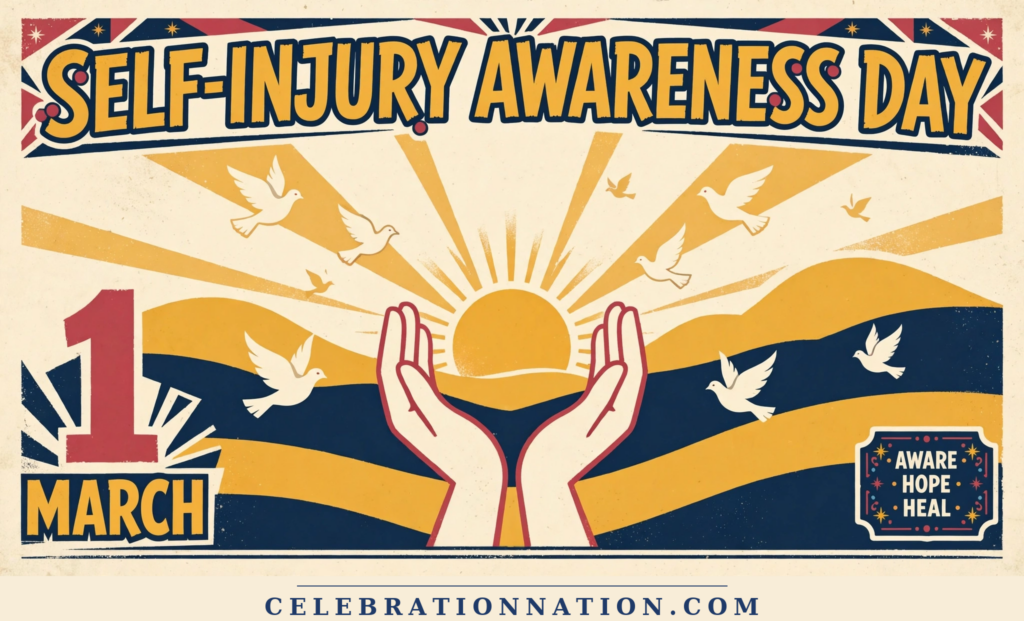
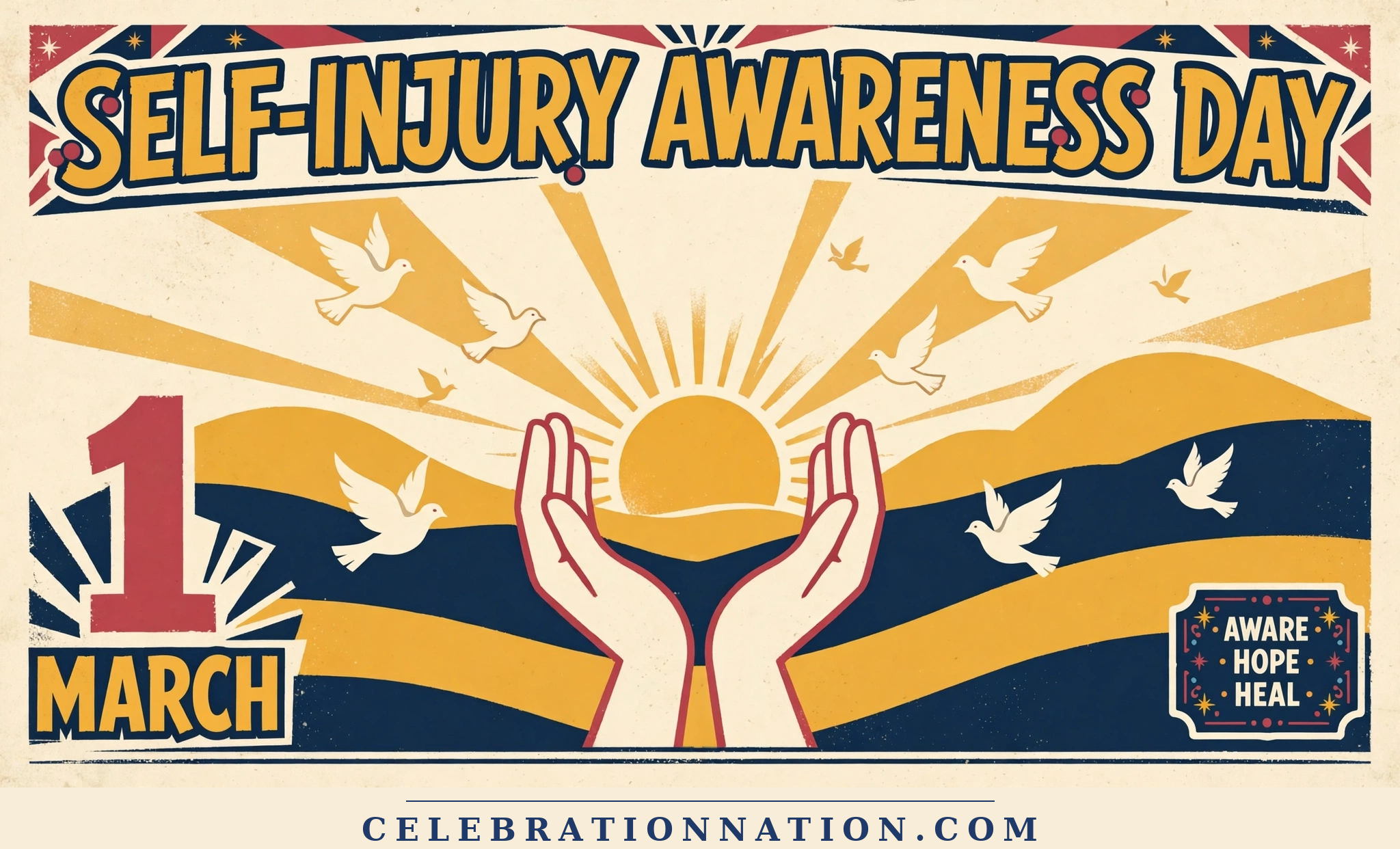
Self-Injury Awareness Day
This day emphasizes the importance of mental health awareness and compassion.
- Roots
- Several organizations promote this annual observance; no single founder is documented.
- Vibe
- Promoting understanding and empathy towards mental health
- Also on Mar 1
- Finisher’s Medal Day · Barista Day · Dadgum That’s Good Day
- Hashtag
- #SelfInjuryAwarenessDay
3 ways to celebrate
Learn the signs
Read trusted resources so you can support someone you love.
Check in kindly
Let a friend know you're there if they need to talk.
Share support resources
Post helpline information where people can find it privately.
Plan ahead
Self-Injury Awareness Day is observed on March 1 every year. Here is where it lands for the next ten years, handy for planners, marketers and party people.
Fast facts
The story
Self-Injury Awareness Day, held annually on March 1, was founded in 2004 by a group of mental health advocates seeking to raise awareness about the complexities of self-harm. The day encourages individuals, families, and communities to have open conversations about mental health and the stigma surrounding self-injury. It is a day for support, understanding, and education, crucial elements in combating the isolation that often accompanies these struggles.
Read the full story
Self-injury, or self-harm, is often a coping mechanism for emotional distress. Many individuals who self-harm do so as a way to manage overwhelming feelings, expressing pain through physical means. It's important to understand that self-injury is not always a suicide attempt but rather a cry for help or a means of dealing with internal turmoil. Awareness days like this serve to foster a supportive environment where individuals can seek help without fear of judgment.
Mental health resources are essential in supporting those who self-harm. Various organizations, like the National Alliance on Mental Illness (NAMI) and the Self-Injury Foundation, provide information and guidance for individuals and families. By sharing available resources, we can empower those struggling with self-injury to seek help and find healthier coping strategies. Community support plays a vital role in the recovery process.
As we observe Self-Injury Awareness Day, it's crucial to recognize the importance of compassion and understanding. Whether through social media campaigns or community events, each effort contributes to reducing stigma and fostering a more supportive society. We can all play a part in creating an environment where individuals feel safe to express their feelings and seek help, ultimately leading to healthier outcomes.
Did you know?
Global Participation
Self-Injury Awareness Day is recognized worldwide.
Color Symbolism
Orange is the color associated with self-injury awareness.
Youth Focus
Most self-harm incidents occur among adolescents.
Not Always Suicidal
Self-harm is often a coping mechanism, not a suicide attempt.
Online Resources
Many organizations provide online help for those in need.
Raising Awareness
Social media plays a vital role in spreading awareness.
Community Support
Community involvement can significantly aid recovery efforts.
Around the world
Every culture celebrates a little differently.
- USUnited StatesSelf-Injury Awareness Day is recognized across the U.S., promoting mental health resources.
- CACanadaCanadian organizations also participate in raising awareness and support.
- GBUnited KingdomThe UK observes the day with various mental health initiatives.
- AUAustraliaAwareness events are held to educate communities about self-harm.
- DEGermanyGermany promotes self-injury awareness through educational campaigns.
- NZNew ZealandNew Zealanders engage in activities to support mental health awareness.
Keep the party going
See the calendar
Celebrate every day, all year
Official gear from the people who track 1,700+ celebrations.
Browse the shop 2027 Wall + Desk Calendar BundleCelebrate every day at home and at work.
Never miss a reason to celebrate.
One quick morning email with today's celebrations, ideas and posters. Free, unsubscribe anytime.
🎉 You're on the list! Watch your inbox for The Daily Confetti.