
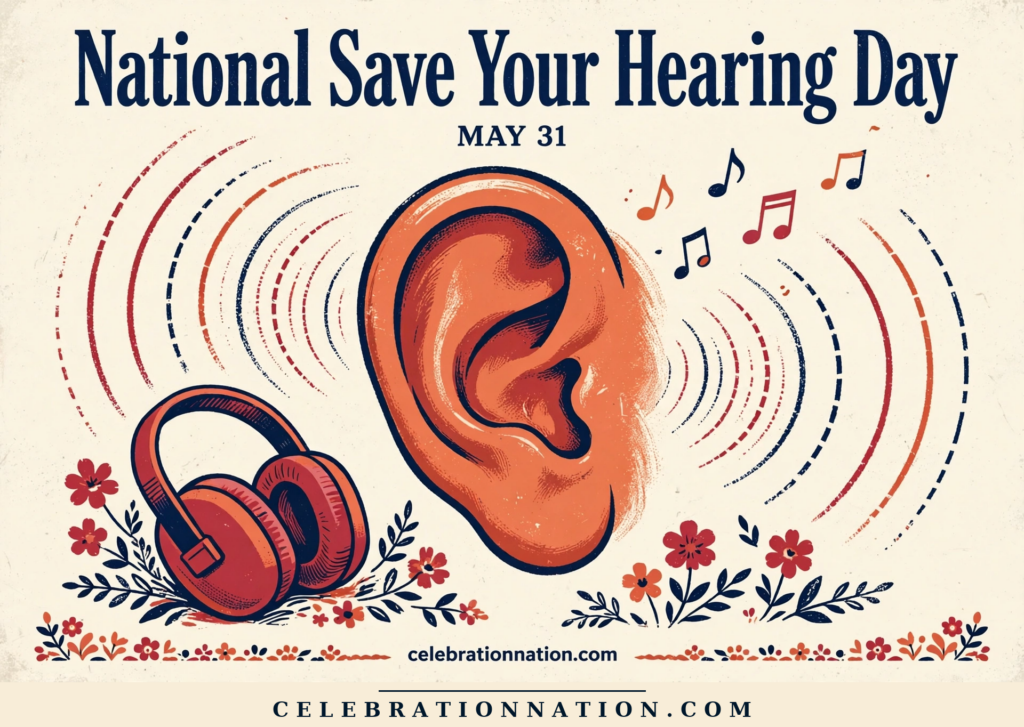
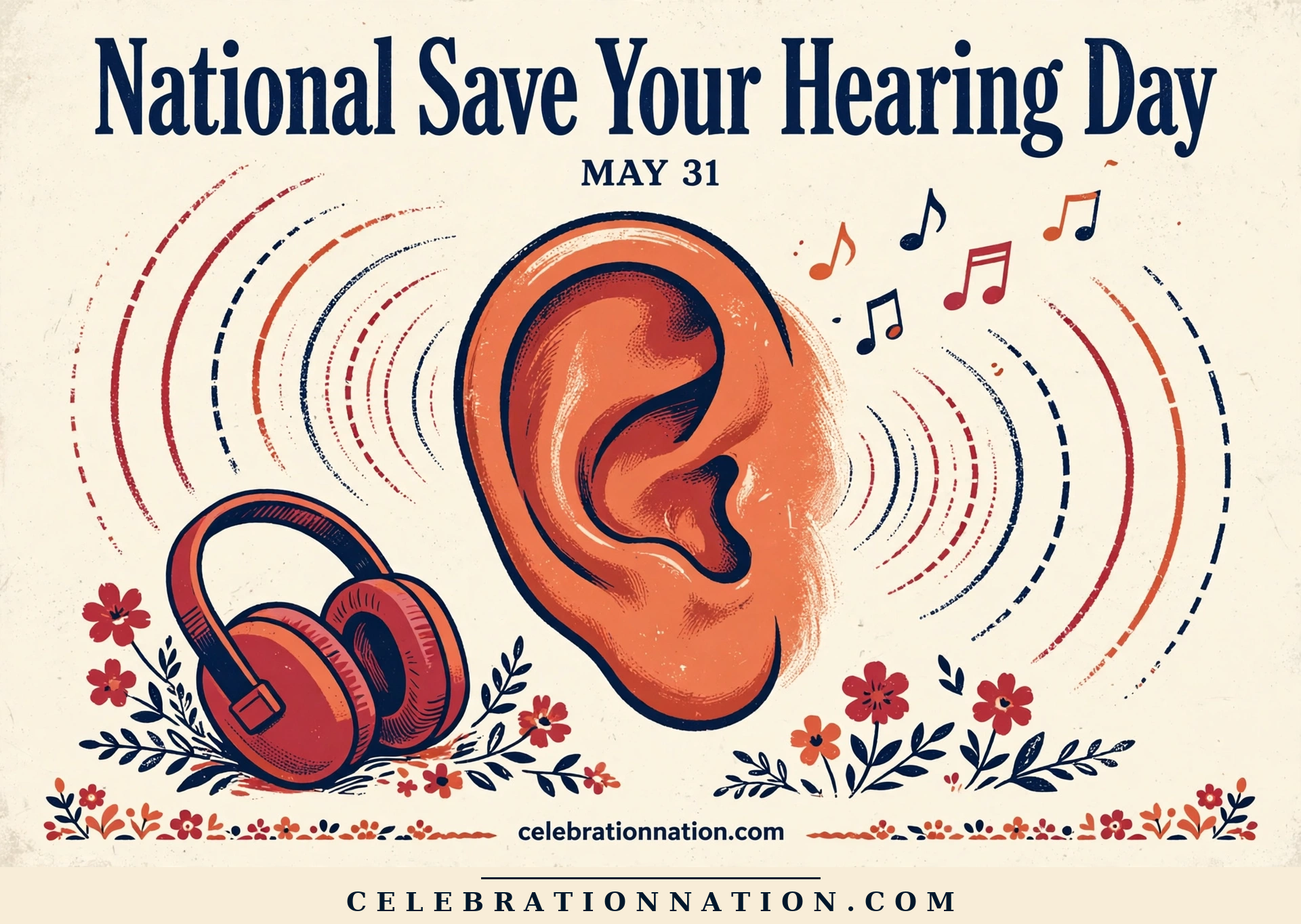
National Save Your Hearing Day
National Save Your Hearing Day is the kind of day that rewards a little intention and a lot of heart.
- Roots
- The founder and origin of this observance are unknown.
- Vibe
- Community-driven awareness and education
- Also on May 31
- International Flight Attendant Day · Autonomous Vehicle Day · Macaroon Day
- Hashtag
- #NationalSaveYourHearingDay
Ways to celebrate
Small, doable ways to celebrate National Save Your Hearing Day.
- Do one small thing that makes the day feel marked.
- Tell someone what you're celebrating and why.
- Share a post, a photo, or a memory connected to it.
- Make a tiny tradition — something you could do again next year.
- Let it be simple. Not every celebration has to be a production.
Make it your kind of celebration
Family
Do one small thing together that everyone will remember.
Kids
Turn it into a craft, a story, or a snack — meet them where they are.
Couples
Use the day as an excuse for a little intentional time together.
Office
Acknowledge the day in the team chat or at a stand-up. Small, sincere, fast.
School
Anchor a short lesson or activity around the day.
Community
Share, volunteer, or donate to make the day mean something locally.
Just me
Celebrate quietly and completely. One person can still mark a day.
Plan ahead
National Save Your Hearing Day is observed on May 31 every year. Here is where it lands for the next ten years, handy for planners, marketers and party people.
Fast facts
The story
National Save Your Hearing Day, celebrated on May 31, raises awareness about hearing health. This day serves as a reminder to individuals of all ages to take proactive steps in preserving their auditory abilities. With the prevalence of loud environments and personal listening devices, the risk of hearing loss is higher than ever, making awareness crucial.
Read the full story
About 37.5 million American adults report some trouble hearing, with factors such as aging, exposure to loud noises, and genetics playing significant roles. Unfortunately, many people are unaware of how to protect their hearing. The day aims to educate the public on simple lifestyle changes that can significantly reduce the risk of damage to their ears.
In addition to individual efforts, community involvement plays a vital role in spreading awareness. Organizations across the country host events, distribute literature, and offer hearing screenings to engage the public. From schools to workplaces, the conversation around hearing health is expanding, emphasizing prevention and education.
As we observe National Save Your Hearing Day, it is essential to remember that hearing health is a lifelong commitment. By making small changes today, like reducing volume levels and taking breaks from noise, we can ensure a future filled with rich and vibrant sounds.
Did you know?
Hearing Loss Statistics
Approximately 1 in 5 people worldwide suffer from hearing loss.
Noise-Induced Hearing Loss
Can occur after just one exposure to loud sounds.
Ear Health
Proper ear hygiene is essential for preventing infections.
Hearing Aids
Over 30 million Americans could benefit from hearing aids.
Protective Gear
Earplugs can reduce noise exposure by 15-30 decibels.
Tinnitus
A common condition affecting over 50 million Americans.
Long-Term Effects
Ignoring hearing health can lead to cognitive decline.
Around the world
Every culture celebrates a little differently.
- USUnited StatesHome to National Save Your Hearing Day.
- CACanadaParticipates in global awareness efforts.
- GBUnited KingdomPromotes similar initiatives on hearing health.
- AUAustraliaEngages in campaigns for hearing preservation.
- DEGermanyOffers resources for hearing protection.
- JPJapanFocuses on noise pollution and hearing health education.
Keep the party going
See the calendar
Celebrate every day, all year
Official gear from the people who track 1,700+ celebrations.
Browse the shop 2027 National Day Wall CalendarGet the 2026 edition free. 1,700+ observances.
Never miss a reason to celebrate.
One quick morning email with today's celebrations, ideas and posters. Free, unsubscribe anytime.
🎉 You're on the list! Watch your inbox for The Daily Confetti.