



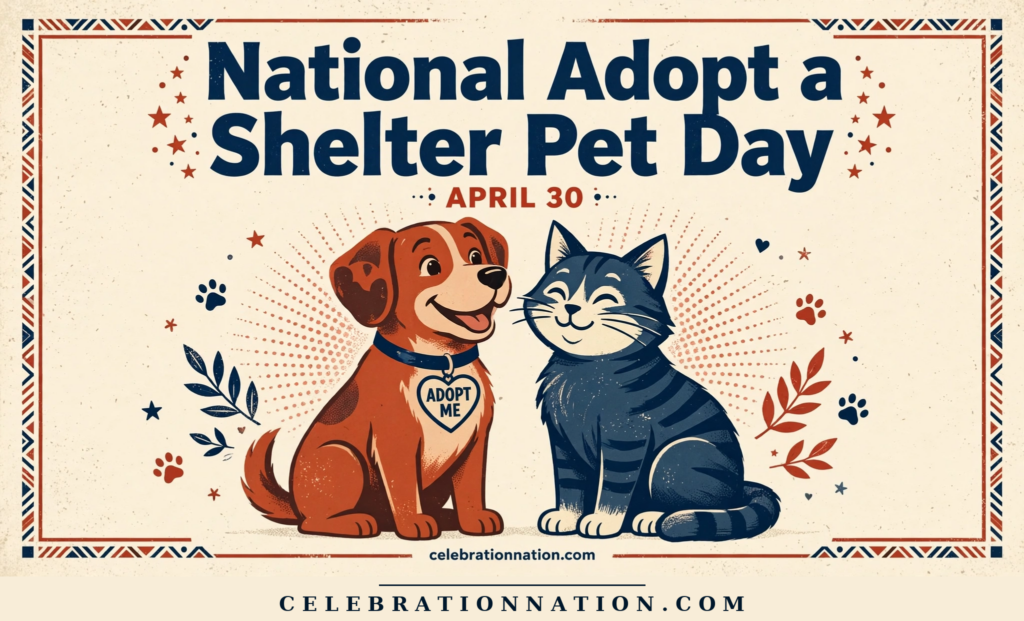
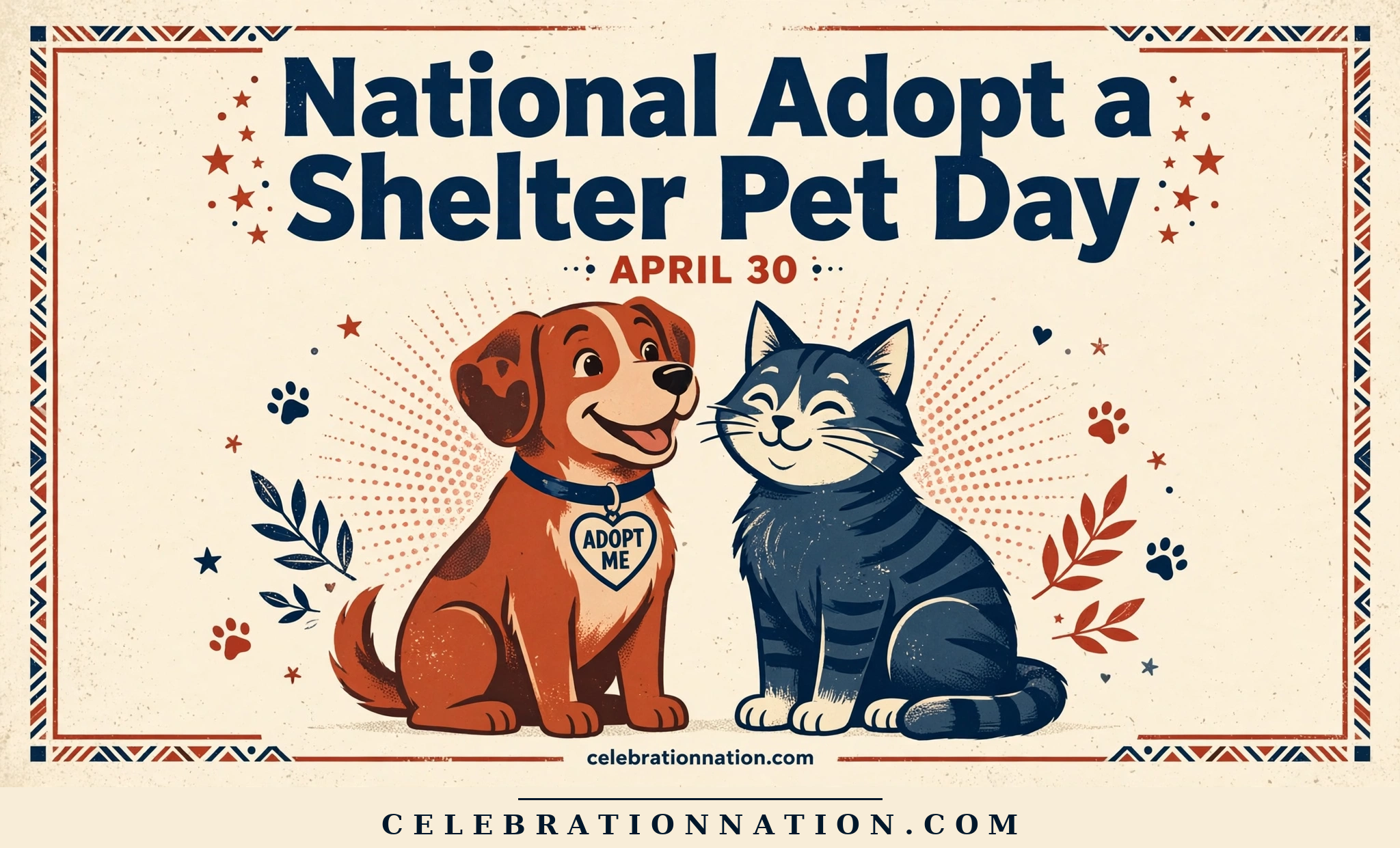
National Adopt a Shelter Pet Day
Six million dogs and cats enter American shelters every year. Half find homes. The other half — 3 million animals — don't. National Adopt a Shelter Pet Day on April 30 exists to change that number.
- Vibe
- Life-Changing
- Also on Apr 30
- International Jazz Day · Prepareathon! Day · Raisin Day
- Hashtag
- #NationalAdoptAShelterPetDay
Ways to celebrate
Help a shelter pet today in whatever way you can:
- 🐕 Adopt. If you've been ready, today's a meaningful day for it. Many shelters waive adoption fees this week.
- 🏡 Foster. If you can't commit long-term, fostering saves lives. Shelters desperately need foster homes.
- 💰 Donate. Small donations fund food, medical care, spay/neuter. Every $25 matters.
- 🧡 Volunteer. Dog walking, cat socialization, cleaning. A few hours a month; enormous impact.
- 📢 Share. A shelter pet's photo on your social media can change their whole life. Costs nothing; means everything.
Make it your kind of celebration
Family
Adopting a family pet is a milestone. Research together, visit the shelter together, pick together. The process is the bonding.
Kids
Shelter visits (not necessarily to adopt) are formative for kids. They see the reality of animal care. Many grow up to volunteer.
Couples
A shelter pet is often the first "shared responsibility" for a new couple. Good practice; more than that, real love.
Office
Office donation drive or shelter volunteer day. Easy team bonding with real community impact.
School
Many schools partner with local shelters for humane education programs. Kids learn, shelters get volunteers.
Community
Most shelters have critical volunteer needs. Dog walkers, cat socializers, event staff. A few hours a month transforms lives — theirs and yours.
Just me
Fostering is the ideal for independent households. You provide temporary home; shelter provides food + vet; pet gets placed into forever home. Repeat.
Plan ahead
National Adopt a Shelter Pet Day is observed on April 30 every year. Here is where it lands for the next ten years, handy for planners, marketers and party people.
Fast facts
The story
The American animal shelter system saves millions of lives every year, and still can't save them all.
Read the full story
The modern American shelter system emerged in the late 19th century as a response to urban animal cruelty. Henry Bergh founded the American Society for the Prevention of Cruelty to Animals (ASPCA) in New York in 1866, the first animal welfare organization in the United States. By the 1880s, humane societies had opened in most major American cities. The work was slow, unglamorous, and desperately underfunded.
By the mid-20th century, the scale of pet overpopulation had become catastrophic. In 1970, American shelters euthanized an estimated 23 million pets per year simply because there weren't enough homes. Spay-neuter programs, coordinated adoption efforts, and shelter reform movements in the 1970s-90s reduced that number dramatically.
Today, roughly 6 million dogs and cats enter American shelters annually. About 3.2 million are adopted. About 1 million are euthanized. Another 1 million are returned to owners (strays found and reunited). The rest are transferred to other shelters or die in care. The euthanasia number is down 90% from 1970, but 1 million per year is still staggering, and fully preventable.
National Adopt a Shelter Pet Day, April 30, was established informally in the 2010s by the American Society for the Prevention of Cruelty to Animals, the Humane Society, and allied groups. The goal is singular: reduce the number of pets euthanized each year by increasing adoption rates. Every adoption saves a life. Every foster home saves a life. Every donation saves a life. The math is brutal and simple.
Four reasons shelter adoption is the right choice:
Six categories worth considering. Each has strengths:
Did you know?
The ASPCA was the first animal welfare org in America.
Founded 1866 by Henry Bergh in New York. Predates the U.S. SPCA for children (founded 1875). Literally, Americans protected animals legally before children.
Dogs wait 30-60 days; cats 60-90.
Average shelter stay. Older pets wait 3-4x longer than puppies and kittens. Black cats and black dogs also wait disproportionately long.
Pit bull bias has shifted.
Pit bull-type dogs were historically over-represented in shelters and undertaken for adoption. Public education and breed-advocacy organizations have substantially improved their adoption rates in the last decade.
Every mixed-breed is genetically unique.
DNA tests (Embark, Wisdom Panel) can reveal 5-15 breeds in a single shelter dog. Each is statistically one-of-a-kind genetic stew.
Keep the party going
See the calendar



Celebrate every day, all year
Official gear from the people who track 1,700+ celebrations.
Browse the shop 2027 Wall Calendar, signed by Marlo AndersonSigned by the founder of National Day Calendar.
Never miss a reason to celebrate.
One quick morning email with today's celebrations, ideas and posters. Free, unsubscribe anytime.
🎉 You're on the list! Watch your inbox for The Daily Confetti.