






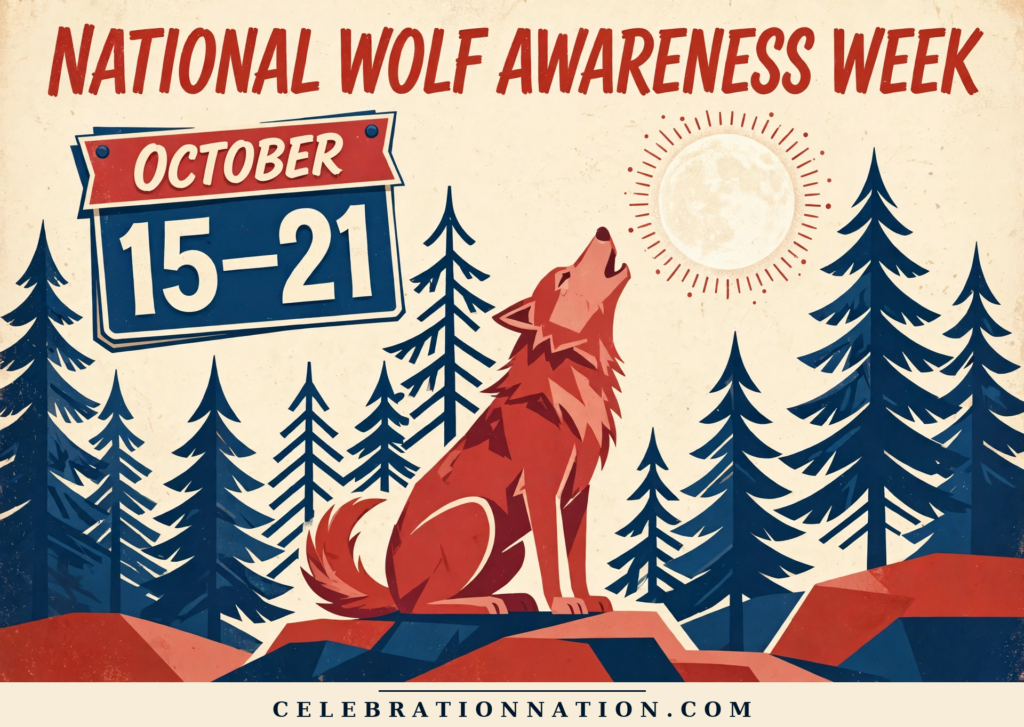
National Wolf Awareness Week
This week we honor wolves, their role in nature is vital to our ecosystems.
- Roots
- Established in 2000 by the Wolf Education and Research Center
- Vibe
- A celebration of wildlife advocacy and education
- Hashtag
- #NationalWolfAwarenessWeek
Fast facts
The story
Wolves have long occupied a complex space in American culture, embodying both fear and fascination. These apex predators play a critical role in maintaining the balance of ecosystems. By controlling deer populations, wolves help promote healthy vegetation, which in turn supports a variety of wildlife species. Their presence is vital, not just for their own survival but for the overall health of their habitats.
Read the full story
National Wolf Awareness Week, observed in mid-October, serves as a platform for educating the public about the ecological importance of wolves. This week features events across the country, including educational programs, guided tours, and workshops aimed at raising awareness about wolf conservation. Organizations like the National Park Service and various wildlife rehabilitators participate actively in spreading knowledge and fostering appreciation for these animals.
Despite their important role in nature, wolves face numerous threats, including habitat loss and negative public perceptions. Myths about their nature, often fueled by folklore and media portrayals, can lead to misunderstandings and fear. National Wolf Awareness Week seeks to combat these misconceptions through education and outreach, emphasizing the need for coexistence and respect for wildlife.
As advocates for conservation, communities are encouraged to participate in various activities, from wildlife watching to attending lectures. Engaging with local conservation groups can amplify efforts to protect wolves and their habitats. By fostering a deeper understanding and appreciation for these animals, we can contribute to their preservation and ensure they continue to roam the wilds of America.
Worth knowing
Wolf Facts
Learn about the social structure and hunting strategies of wolves.
Ecosystem Role
Wolves help maintain healthy ecosystems by controlling prey populations.
Reading Resources
Explore books and documentaries to learn more about wolves.
Global Perspective
Wolves are found in various cultures worldwide, symbolizing different values.
Did you know?
Wolves in Mythology
Wolves feature prominently in various mythologies, often symbolizing loyalty and courage.
Pack Dynamics
Wolves live in packs that can range from 2 to 20 individuals.
Communication Skills
Wolves communicate through a variety of vocalizations, body language, and scent marking.
Dietary Habits
Wolves primarily hunt large ungulates but can adapt to various food sources.
Endangered Species
Some wolf species are considered endangered and are protected by law.
Lifespan
Wild wolves typically live around 6-8 years, while those in captivity can live up to 15.
Cultural Symbols
Wolves have been used as symbols in literature, art, and folklore across cultures.
Around the world
Every culture celebrates a little differently.
- USNorth AmericaHome to the gray wolf, which has a significant cultural presence.
- CACanadaWolves roam vast wilderness areas, playing crucial ecological roles.
- RURussiaHome to the largest population of wolves in the world.
- DEGermanyWolves are returning to their historical ranges, sparking interest in conservation.
- AUAustraliaThough wolves are not native, they influence conservation discussions.
- FRFranceWolves in the French Alps are part of ongoing wildlife management efforts.
Coming up next
See the calendar



Celebrate every day, all year
Official gear from the people who track 1,700+ celebrations.
Browse the shop 2027 Wall + Desk Calendar BundleCelebrate every day at home and at work.
Never miss a reason to celebrate.
One quick morning email with today's celebrations, ideas and posters. Free, unsubscribe anytime.
🎉 You're on the list! Watch your inbox for The Daily Confetti.