




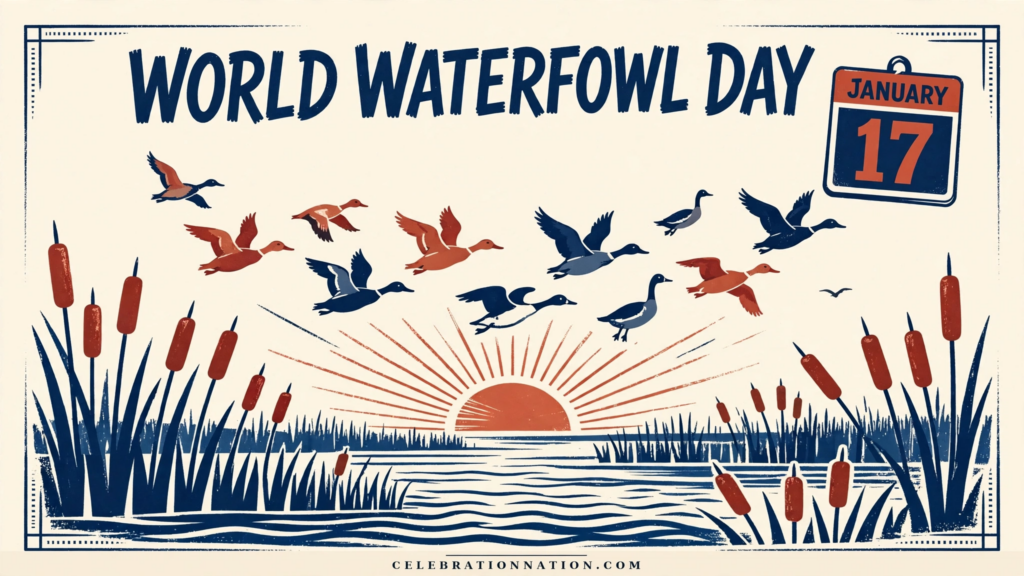
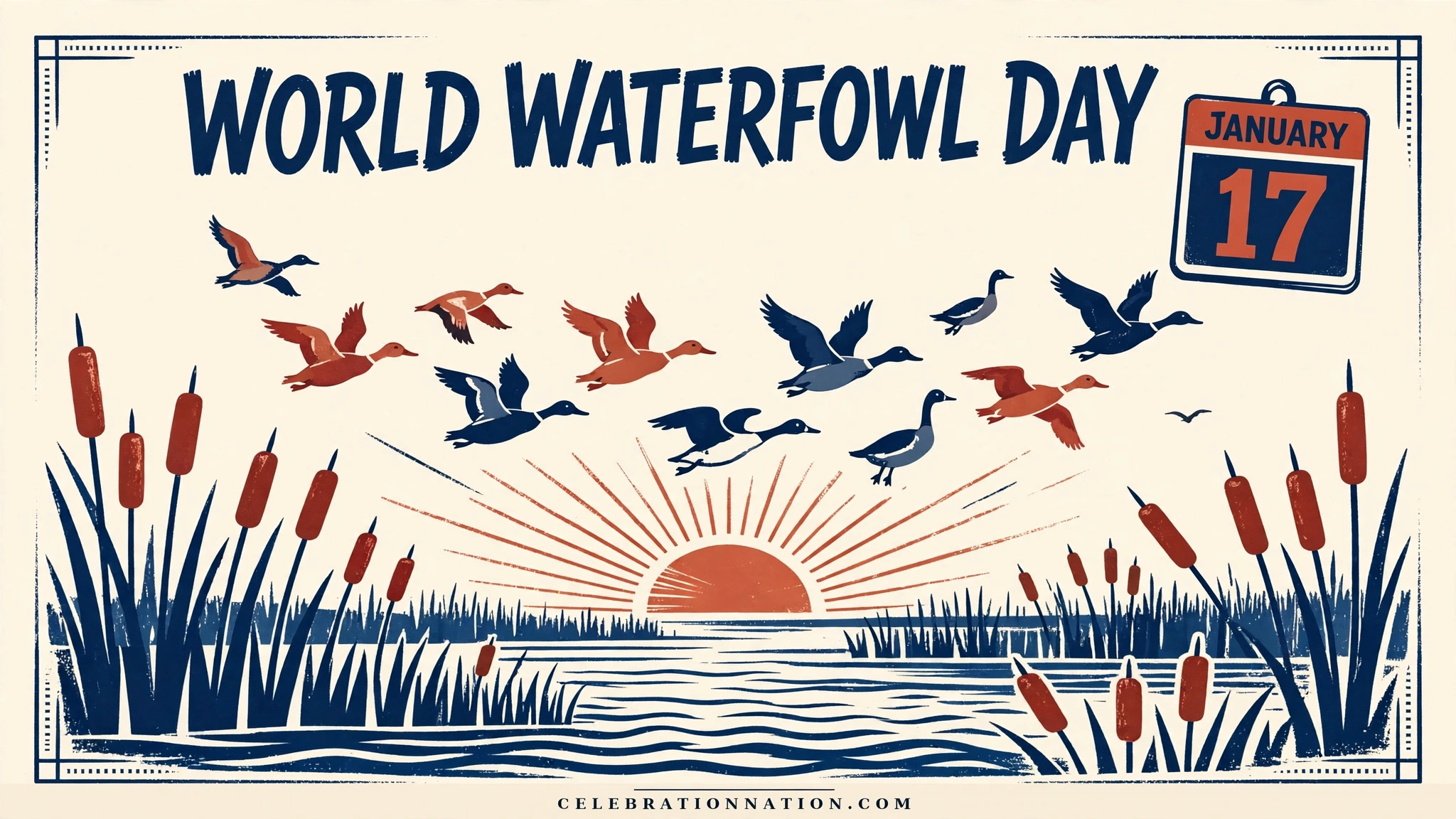
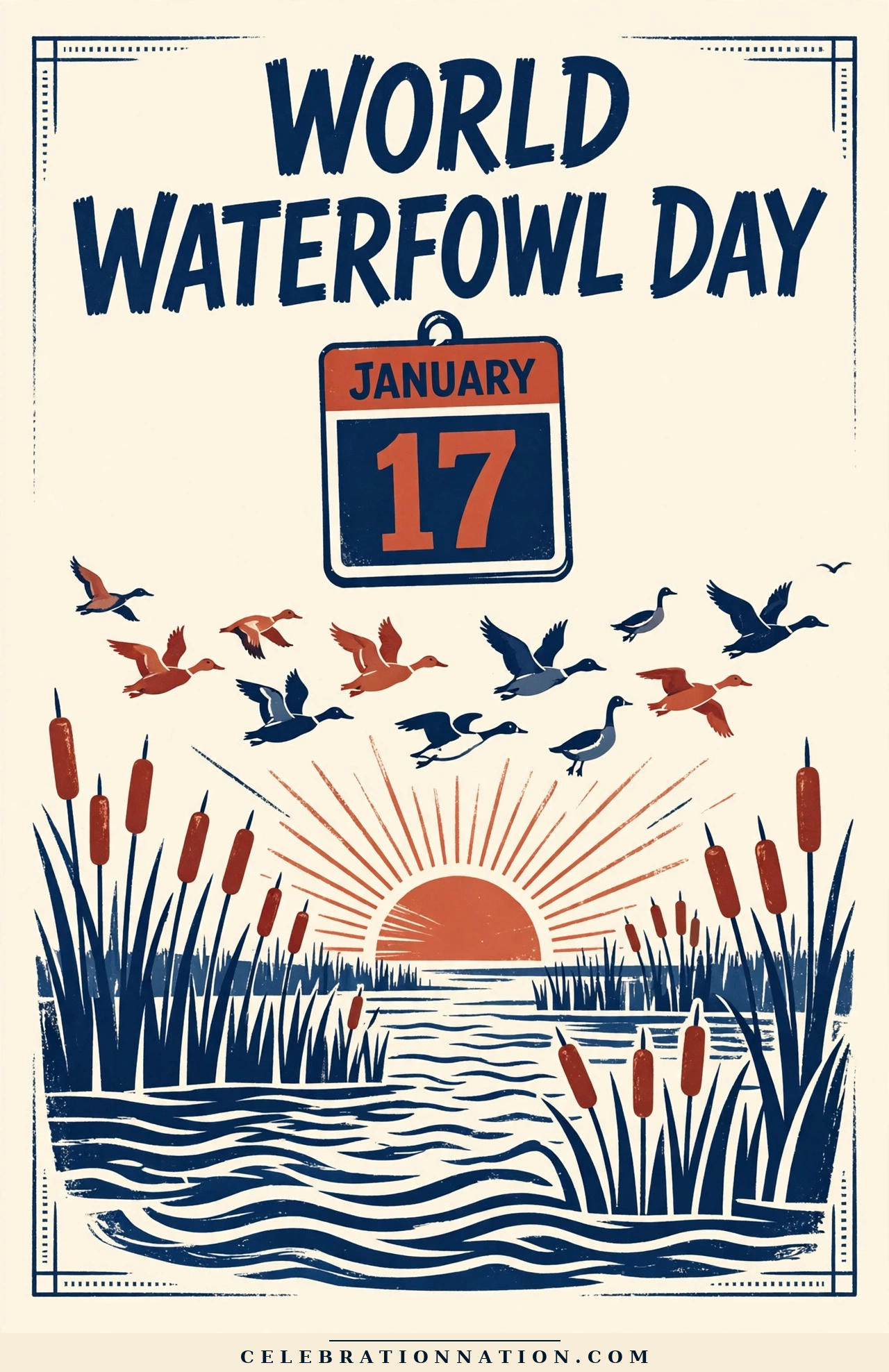
World Waterfowl Day
Join us in honoring these majestic creatures and their habitats with a commitment to conservation.
- Roots
- Created in 2024 by Sylvan Heights Bird Park
- Vibe
- Joyful celebration of nature and conservation
- Also on Jan 17
- Popeye® the Sailor Man Day · International Mentoring Day · Bootlegger’s Day
- Hashtag
- #WorldWaterfowlDay
3 ways to celebrate
Watch local ducks
Grab binoculars and spot ducks and geese at a nearby pond.
Visit a refuge together
Walk a wildlife trail and count how many species you identify.
Share duck photos
Post your best waterfowl sighting in the team chat.
Plan ahead
World Waterfowl Day is observed on January 17 every year. Here is where it lands for the next ten years, handy for planners, marketers and party people.
Fast facts
The story
World Waterfowl Day, celebrated on January 17, was created in 2024 by Sylvan Heights Bird Park to raise awareness about the importance of waterfowl and their habitats. The day serves as a reminder of the critical role these birds play in our ecosystems. Waterfowl, including ducks, geese, and swans, contribute significantly to biodiversity and are often indicators of environmental health.
Read the full story
As migratory birds, many waterfowl species travel thousands of miles each year. Across North America, migrating waterfowl are a vital part of the continent's ecological tapestry. Their seasonal movements not only showcase their resilience but also highlight the need for safe migratory routes and healthy wetlands.
The observance of World Waterfowl Day encourages individuals and communities to engage in conservation efforts. Local events, such as birdwatching tours and educational workshops, aim to foster a deeper understanding of waterfowl and the challenges they face, including habitat loss and climate change. By participating in these activities, people can contribute to the preservation of these species.
Globally, organizations and enthusiasts come together on this day to advocate for policies that protect waterfowl habitats. The celebration also encourages individuals to share their experiences and promote awareness through social media, highlighting the beauty and diversity of waterfowl. Together, we can ensure a future where these magnificent birds thrive.
Did you know?
Did you know?
Ducks can see in color and see better than humans.
Migration Patterns
Some waterfowl travel over 3,000 miles during migration.
Unique Adaptations
Many species have specialized bills for feeding.
Cultural Significance
Waterfowl feature prominently in folklore and art.
Vocalizations
Waterfowl communicate through various calls.
Habitat Loss
Wetland loss threatens many waterfowl populations.
Conservation Success
Efforts have helped some species recover from near extinction.
Around the world
Every culture celebrates a little differently.
- USNorth AmericaHome to diverse waterfowl migration routes.
- CACanadaA vital stopover point for migratory birds.
- MXMexicoHosts wintering grounds for many waterfowl.
- AUAustraliaFeatures unique species of waterfowl and habitats.
- GBUnited KingdomHome to several iconic waterfowl species.
- DEGermanyA leading country in waterfowl research and conservation.
Keep the party going
See the calendar
Celebrate every day, all year
Official gear from the people who track 1,700+ celebrations.
Browse the shop 2027 National Day Wall CalendarGet the 2026 edition free. 1,700+ observances.
Never miss a reason to celebrate.
One quick morning email with today's celebrations, ideas and posters. Free, unsubscribe anytime.
🎉 You're on the list! Watch your inbox for The Daily Confetti.