







World Chagas Disease Day
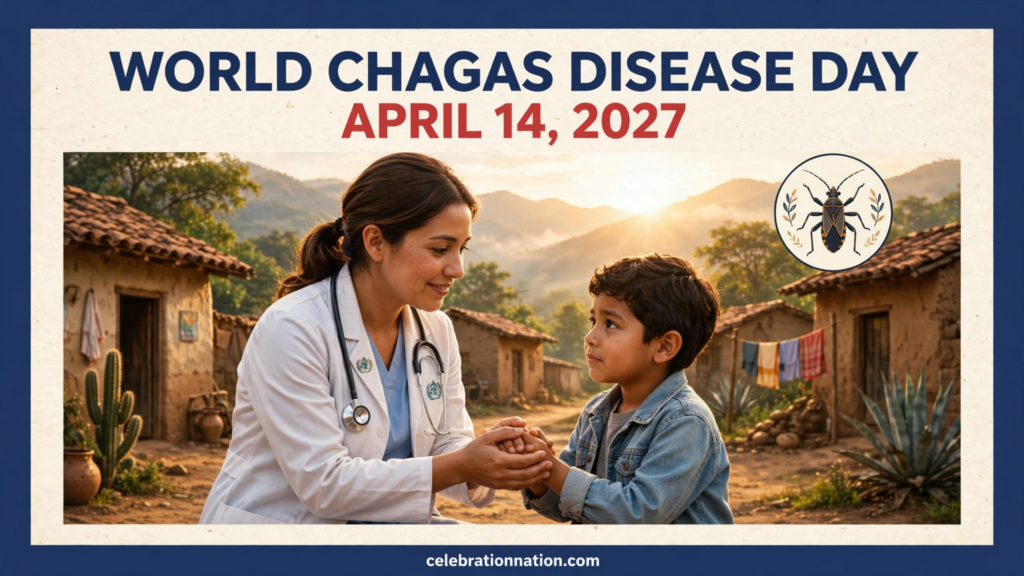
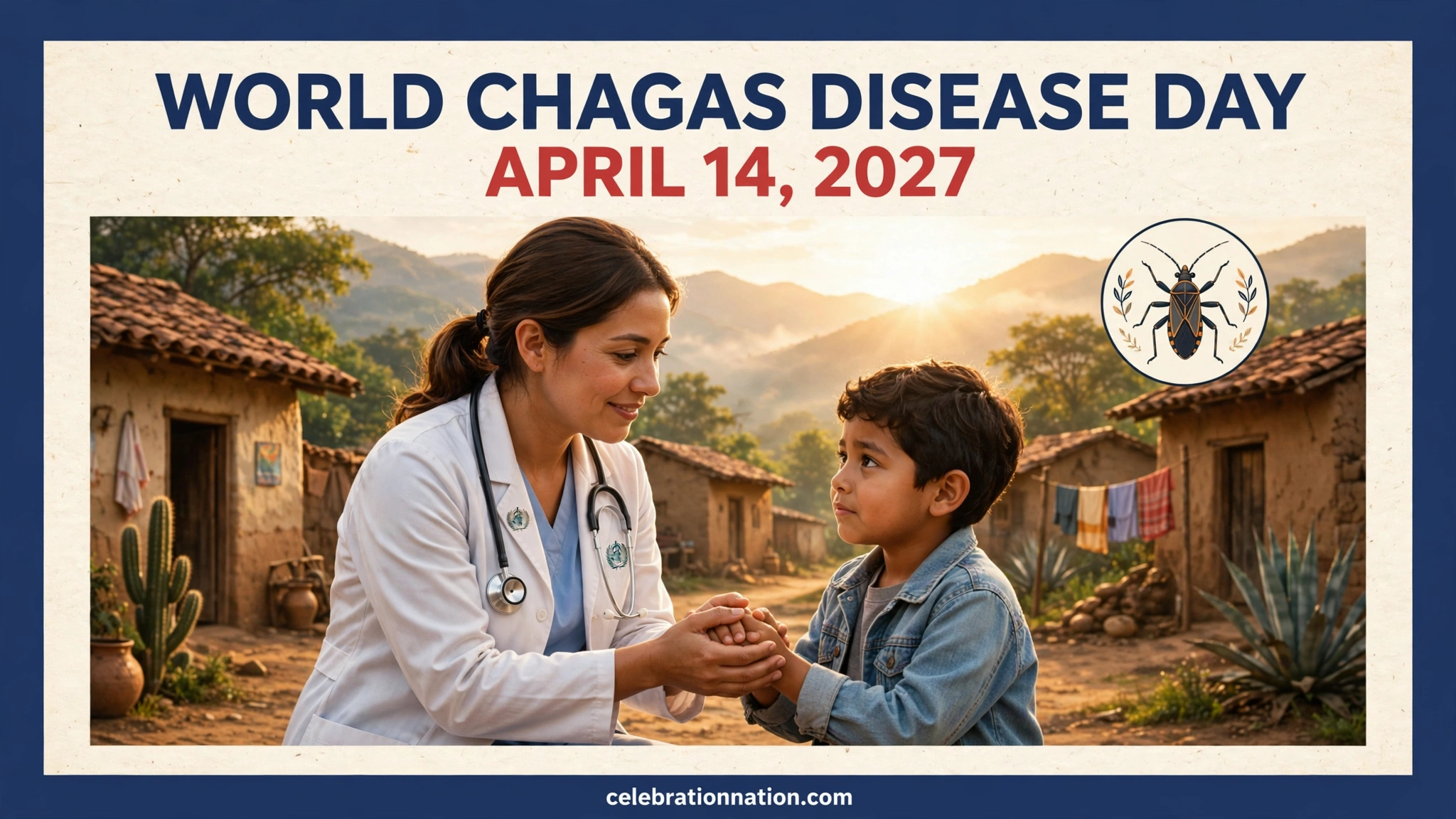
Every year on April 14, the world turns its attention to a disease that millions carry in silence. World Chagas Disease Day raises awareness of a neglected tropical illness that is entirely treatable when caught early, yet too often goes undiagnosed for years. It honors a Brazilian doctor's historic discovery and the millions still waiting for a diagnosis.
- Also on Apr 14
- International Moment of Laughter Day · Dolphin Day · Ex-Spouse Day
- Hashtag
- #WorldChagasDiseaseDay
WORLD CHAGAS DISEASE DAY
Every year on April 14, the world turns its attention to a disease that millions carry in silence. World Chagas Disease Day raises awareness of a neglected tropical illness that is entirely treatable when caught early, yet too often goes undiagnosed for years. It honors a Brazilian doctor’s historic discovery and the millions still waiting for a diagnosis.
Chagas disease, also known as American trypanosomiasis, is caused by the parasite Trypanosoma cruzi. It is transmitted mainly by triatomine bugs, bloodsucking insects nicknamed “kissing bugs” because they often bite the face at night. The bugs hide by day in cracks in walls and roofs, emerge after dark to feed on sleeping people, and leave droppings near the bite through which the parasite enters the body when the bite is scratched. The disease can also spread through contaminated food, blood transfusion, organ transplantation, and from mother to child, which is why screening matters far beyond rural villages. Soon after its blood meal, the bug defecates near the bite, and the parasites enter when the person rubs the droppings into the bite, the eyes, or the mouth. The bugs typically hide during the day and are active at night, feeding on exposed skin such as the face, which is how they earned their nickname. The bugs are most active at night, which is why bed nets are a key defense.
The illness is named for Dr. Carlos Ribeiro Justiniano Chagas, the Brazilian physician and researcher who discovered it in 1909. On April 14 of that year, in the town of Lassance, Minas Gerais, Chagas diagnosed the disease for the first time in a human patient: Berenice, a two-year-old girl. That date is why the world marks the day on April 14. Chagas published his findings in the scientific journal Memorias do Instituto Oswaldo Cruz, and he became the first scientist in history to describe the complete cycle of an infectious disease, from parasite to insect vector to human patient, one of the most remarkable achievements in the history of tropical medicine. Beyond naming the disease, Chagas identified the transmitting insect itself, completing a scientific trifecta no one had achieved before.
An estimated 6 to 7 million people worldwide are infected, most in 21 Latin American countries, though migration and urbanization have carried cases to the United States, Canada, Europe, and beyond. In the United States alone, experts at UCLA Health estimate more than 300,000 people are infected, and fewer than 2 percent of them know they carry the parasite. Chagas is called a silent disease because it can live quietly in the body for years, even decades, before causing serious heart damage or digestive complications. Only a small fraction of those infected ever receive a diagnosis, which is why awareness, testing, and better access to care matter so much. After the initial infection, symptoms often disappear for years, which is why the disease is called silent: the parasites persist quietly, periodically multiplying and damaging the heart and digestive organs. In endemic areas, the bugs live in wall and roof cracks of poorly constructed homes, which is why the disease weighs heaviest on poor rural populations.
In May 2019, the 72nd World Health Assembly established World Chagas Disease Day after years of advocacy by patient associations across the Americas, Europe, and the Pacific, and the first global observance took place on April 14, 2020. The World Health Organization calls Chagas a neglected tropical disease, and its message is hopeful: early diagnosis and treatment, including medicines such as benznidazole, can make all the difference. On April 14, we honor the patients, scientists, and health workers fighting to bring this silent disease into the light, and we recommit to a world where no one suffers in silence. The WHO’s 2025 theme for the day, ‘Prevent, Control, Care: Everyone’s Role in Chagas Disease,’ captured the spirit that carries into every observance: everyone has a part to play. Testing is a simple blood test, and treatment works best when it starts early.
THE STORY BEHIND WORLD CHAGAS DISEASE DAY
🐜 The Kissing Bug
The triatomine bug, nicknamed the ‘kissing bug’ for its habit of biting the face at night, is the main carrier of Trypanosoma cruzi. These insects hide in wall and roof cracks of rural homes and feed while people sleep, which is why improved housing, bed nets, and insect control are powerful prevention tools. Up to half of these insects in some areas can carry the parasite. Bed nets, plastered walls, and community spraying programs have all proven effective at pushing the bugs back.
🧭 Carlos Chagas, Disease Detective
In 1909, Brazilian physician Carlos Chagas did what no scientist had done before: he traced a disease from parasite to insect to patient. On April 14 that year he diagnosed the first human case in two-year-old Berenice of Lassance, Minas Gerais, giving the illness, and the awareness day, its name and its date. He published the full cycle in the Memorias do Instituto Oswaldo Cruz. His work remains one of the most complete single-handed descriptions of an infectious disease ever published.
🌐 A Silent, Global Burden
Chagas infects an estimated 6 to 7 million people, mostly in Latin America, but cases now appear far beyond the region as people move and cities grow. Because it can hide in the body for years without symptoms, most infected people never know they carry it until serious damage is done. In the United States, more than 300,000 people are estimated to be infected, and most are unaware. Because the silent phase can last decades, a person infected as a child may not face heart complications until middle age. Heart damage from chronic Chagas can include arrhythmias and heart failure, which is why early detection matters so much.
🏥 WHO Gives It a Day
After years of advocacy by patient associations across the Americas, Europe, and the Pacific, the 72nd World Health Assembly established World Chagas Disease Day in May 2019. First observed on April 14, 2020, it rallies the world around prevention, control, and care for everyone affected, with the WHO declaring that early diagnosis and treatment can change the story. Each April 14, health ministries, researchers, and patient groups coordinate testing drives and education campaigns.
WAYS TO CELEBRATE
📚 Learn the Basics
Read the WHO fact sheet on Chagas disease and learn how kissing bugs spread the parasite. Knowing the signs of a neglected disease is the first step toward ending the neglect, and it takes less time than your morning coffee. Share one fact you learned with someone who has never heard of Chagas. One new fact, shared well, can travel further than you think.
💬 Share the Story
Post about World Chagas Disease Day with #WorldChagasDiseaseDay and tell the story of Carlos Chagas and little Berenice. Awareness travels fastest person to person, and your share might reach someone who needs testing. A single post can plant the seed of a diagnosis. Tag a friend who loves science or medicine and start a thread.
💈 Support the Fight
Donate to an organization working on neglected tropical diseases, or ask a local clinic whether Chagas screening is available in your area. Early testing saves hearts and lives, and advocacy keeps the funding flowing. If you have roots in Latin America, talk to your family about getting screened; it is a simple blood test. Even sharing a WHO fact sheet with your network counts as action.
Celebrate World Chagas Disease Day
On April 14, remember that silence is this disease’s greatest ally, and awareness its greatest enemy. Learn, share, and stand with the millions waiting to be seen. The kissing bug may be small, but the movement against it grows stronger every April 14. Every share, every test, and every conversation brings the silent disease closer to the light.
Plan ahead
World Chagas Disease Day is observed on April 14 every year. Here is where it lands for the next ten years, handy for planners, marketers and party people.
Keep the party going
See the calendar



Celebrate every day, all year
Official gear from the people who track 1,700+ celebrations.
Browse the shop 2027 Wall + Desk Calendar BundleCelebrate every day at home and at work.
Never miss a reason to celebrate.
One quick morning email with today's celebrations, ideas and posters. Free, unsubscribe anytime.
🎉 You're on the list! Watch your inbox for The Daily Confetti.