






National Mmiw Awareness Day
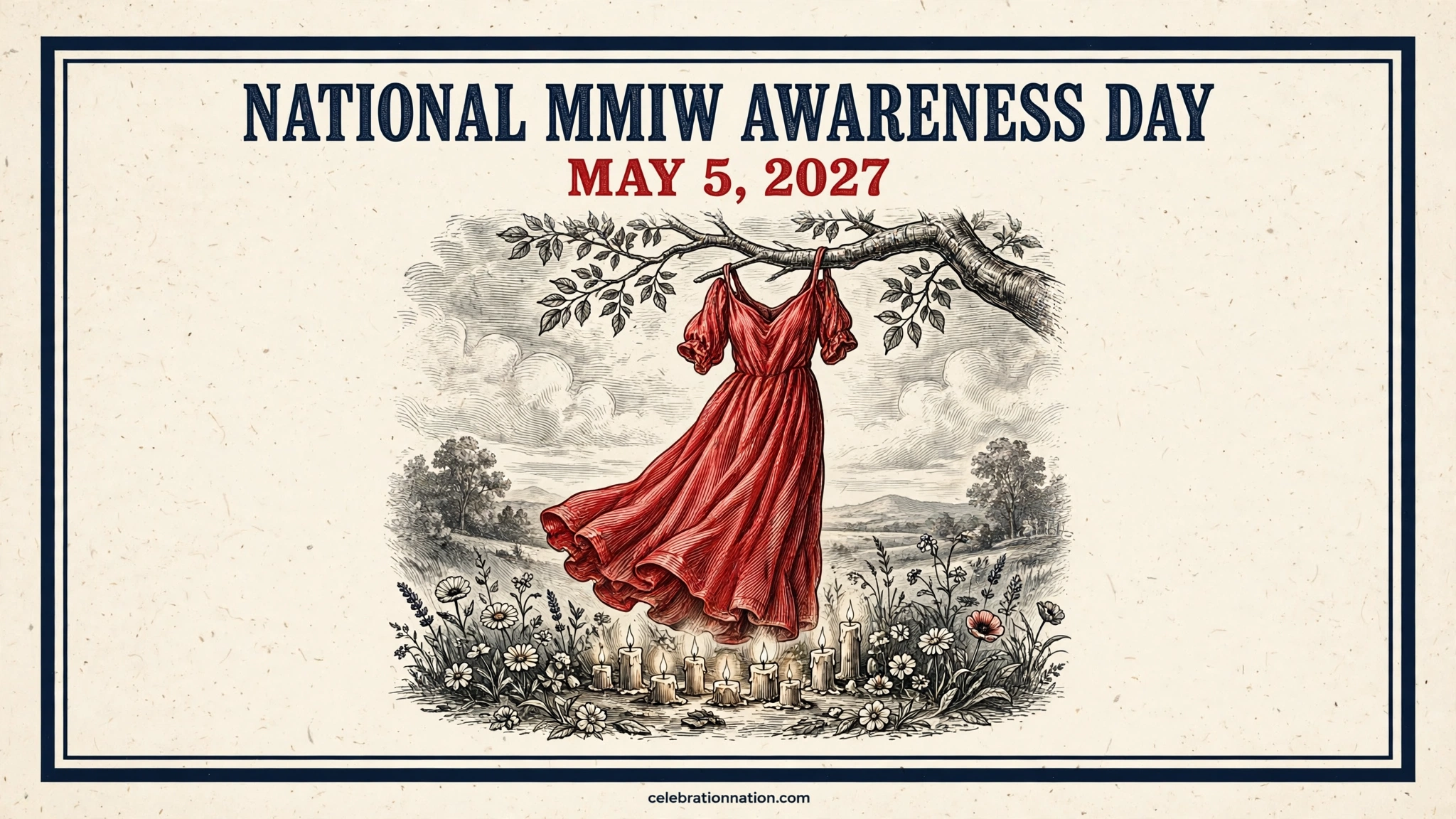
Every year on May 5, an empty red dress speaks for those who cannot speak. National MMIW Awareness Day honors missing and murdered Indigenous women, girls, and Two-Spirit people. It is a solemn day of remembrance, reflection, and an unflinching call for justice. In 2027, it falls on Tuesday, May 5.
- Also on May 5
- Teacher Appreciation Day · Foster Care Day · Hoagie Day
- Hashtag
- #NationalMmiwAwarenessDay
NATIONAL MMIW AWARENESS DAY
Every year on May 5, an empty red dress speaks for those who cannot speak. National MMIW Awareness Day honors missing and murdered Indigenous women, girls, and Two-Spirit people. It is a solemn day of remembrance, reflection, and an unflinching call for justice. In 2027, it falls on Tuesday, May 5.
The crisis this day confronts is staggering. Between 1980 and 2012, the RCMP documented 1,181 cases of missing and murdered Indigenous women and girls in Canada, including 1,017 homicides. Indigenous women made up roughly 4.3 percent of the female population during that period, yet accounted for about 16 percent of all female homicide victims, a homicide rate roughly 4.5 times higher than that of other women in Canada. Researchers and advocates agree these figures undercount the true toll, which remains unknown. The crisis crosses borders: in the United States in 2016, there were 5,712 reports of missing American Indian and Alaska Native women and girls, while the federal missing-person database logged only 116 cases.
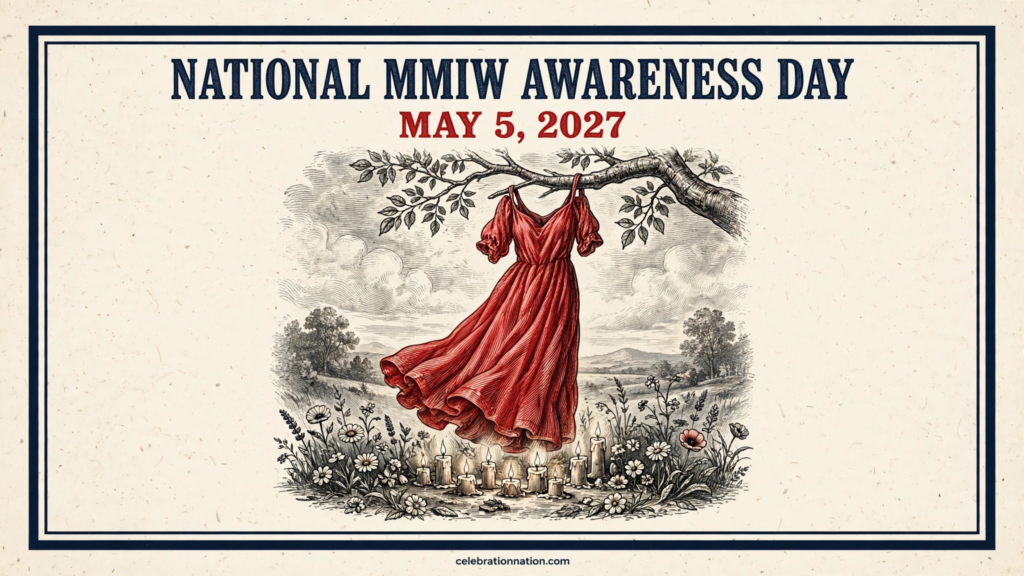
The day’s most powerful symbol was born from art. In 2010, Métis artist Jaime Black created the REDress Project, hanging empty red dresses in public spaces as an aesthetic response to more than 1,000 missing and murdered Indigenous women in Canada. The dresses, stark against trees and lamp posts, became a visual reminder of absence and a call to bring loved ones home. May 5 has been observed as the National Day of Awareness since that first installation, and the REDress Project now stands as a permanent installation at the Canadian Museum for Human Rights.
Red carries deep meaning. It represents lifeblood and interconnectedness, and holds profound significance in many Indigenous cultures. According to Indigenous teachings, red is the only color that spirits can see, so the dresses are hung to honor memory and symbolically call the spirits of the missing and murdered back to their loved ones. In June 2019, Canada’s National Inquiry into Missing and Murdered Indigenous Women and Girls released its Final Report with 231 Calls for Justice, naming the systemic roots of the violence: poverty, unsafe housing, gender-based violence, and systemic discrimination. May 5 is marked with marches, vigils, sacred fires, and red dress displays, each one a promise that these lives mattered and that the search for justice continues.
Today the day is observed in cities and towns across Canada and the United States. Families march carrying photographs of their loved ones, communities gather around sacred fires, and drum circles sound in public squares. Red dresses hang from porches, fences, and downtown storefronts, and the red dress symbol spreads widely online to carry the message further. Vigils open with moments of silence and close with commitments: to learn, to speak up, and to keep pressing for the justice the 231 Calls demand. The day does not end when the marches disperse; it asks every participant to carry its purpose into the other 364 days.
The first Red Dress Day was observed on May 5, 2010, the day Jaime Black’s installation first asked the public to confront the crisis. In the years since, Indigenous people and their allies have hung red dresses, created artwork, and marched together to remember loved ones and call those who are missing back home. The observance has grown beyond Canada’s borders, with marches and vigils held in the United States, where Native women face their own devastating rates of violence. Each May 5, the red dresses reappear, and each year they ask the same question: how many more, and what will it take to bring them home? The day offers no easy answers, only the insistence that the question be asked until it is answered.
THE STORY BEHIND NATIONAL MMIW AWARENESS DAY
👗 The REDress Project
In 2010, multidisciplinary artist Jaime Black, of Anishinaabe and Finnish background, began hanging empty red dresses in public spaces across Canada. She called it the REDress Project, “an aesthetic response to more than 1,000 missing and murdered Aboriginal women in Canada.” The dresses appeared on trees, lamp posts, and fences, their emptiness evoking both sorrow and resilience. The installation has since become a permanent exhibit at the Canadian Museum for Human Rights, and its image defines the day worldwide. Black has said the dresses speak to the absence left behind, each empty dress asking the viewer to imagine the woman who should be wearing it. The project has been shown in galleries, campuses, and legislatures, carrying its quiet accusation into rooms of power.
❤️ Why Red
The color red was chosen with intention. It represents lifeblood and interconnectedness and carries deep significance in many Indigenous cultures, from warriors’ face paint to clothing that enhances beauty. According to Indigenous teachings, red is the only color that spirits can see. Hanging red dresses is therefore both a memorial and a spiritual act: a way to honor the absent and symbolically call their spirits back to the families still waiting. The teaching gives the symbol its spiritual weight, turning a simple garment into a refusal to let a loved one disappear twice. Communities also distribute red dress pins and decals, small daily reminders of a crisis that does not pause between May fifths.
📜 The National Inquiry
In June 2019, Canada’s National Inquiry into Missing and Murdered Indigenous Women and Girls released its Final Report, the product of years of testimony from families and survivors. The report issued 231 Calls for Justice directed at governments, institutions, industries, and all Canadians. It identified the forces that increase risk: poverty, unsafe or inadequate housing, gender-based violence, and systemic discrimination. The calls remain the roadmap for ending the violence. Families of the missing testified for hundreds of hours, turning private grief into a public record the country could not ignore. The 231 Calls for Justice speak to everyone, not only governments: they ask all Canadians to help end the violence.
📊 The Numbers Behind the Crisis
The statistics are stark. From 1980 to 2012, the RCMP recorded 1,017 homicides of Indigenous women and girls in Canada, part of 1,181 total missing and murdered cases. Indigenous women faced a homicide rate approximately 4.5 times higher than other women, despite making up about 4.3 percent of the female population. In the United States, 5,712 missing American Indian and Alaska Native women and girls were reported in 2016, while the federal database captured only 116. Every number represents a person loved and missed. Advocates stress that every published figure is an undercount, and behind each statistic is a family still waiting for answers. On May 5, allies are asked to listen first, to center Indigenous voices, and to let families lead the remembrance.
WAYS TO CELEBRATE
👗 Wear Red
Wear red on May 5 to honor the missing and murdered and to show their families they are not forgotten. Join a local march, vigil, or red dress display, or simply hang a red dress where your neighbors will see it.
📖 Learn Their Stories
Read the Final Report of the National Inquiry and its 231 Calls for Justice. Learn the names and stories of the missing and murdered, and share what you learn with others.
🤝 Stand With Families
Support Indigenous-led organizations working for safety, justice, and healing. Donate, volunteer, or attend a sacred fire or drum circle held in their honor.
Celebrate National Mmiw Awareness Day
On May 5, wear red, speak their names, and stand with the families still searching for answers. Remembrance is only the beginning: let the day move you toward learning, action, and justice, so that no more dresses hang empty.
Plan ahead
National Mmiw Awareness Day is observed on May 5 every year. Here is where it lands for the next ten years, handy for planners, marketers and party people.
Keep the party going
See the calendar


Celebrate every day, all year
Official gear from the people who track 1,700+ celebrations.
Browse the shop 2027 National Day Wall CalendarGet the 2026 edition free. 1,700+ observances.
Never miss a reason to celebrate.
One quick morning email with today's celebrations, ideas and posters. Free, unsubscribe anytime.
🎉 You're on the list! Watch your inbox for The Daily Confetti.