






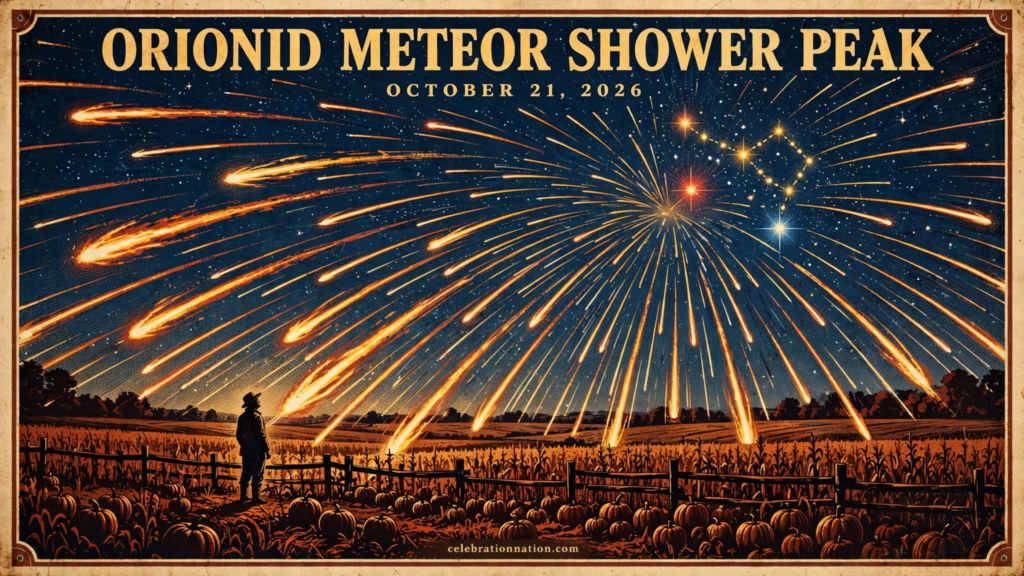
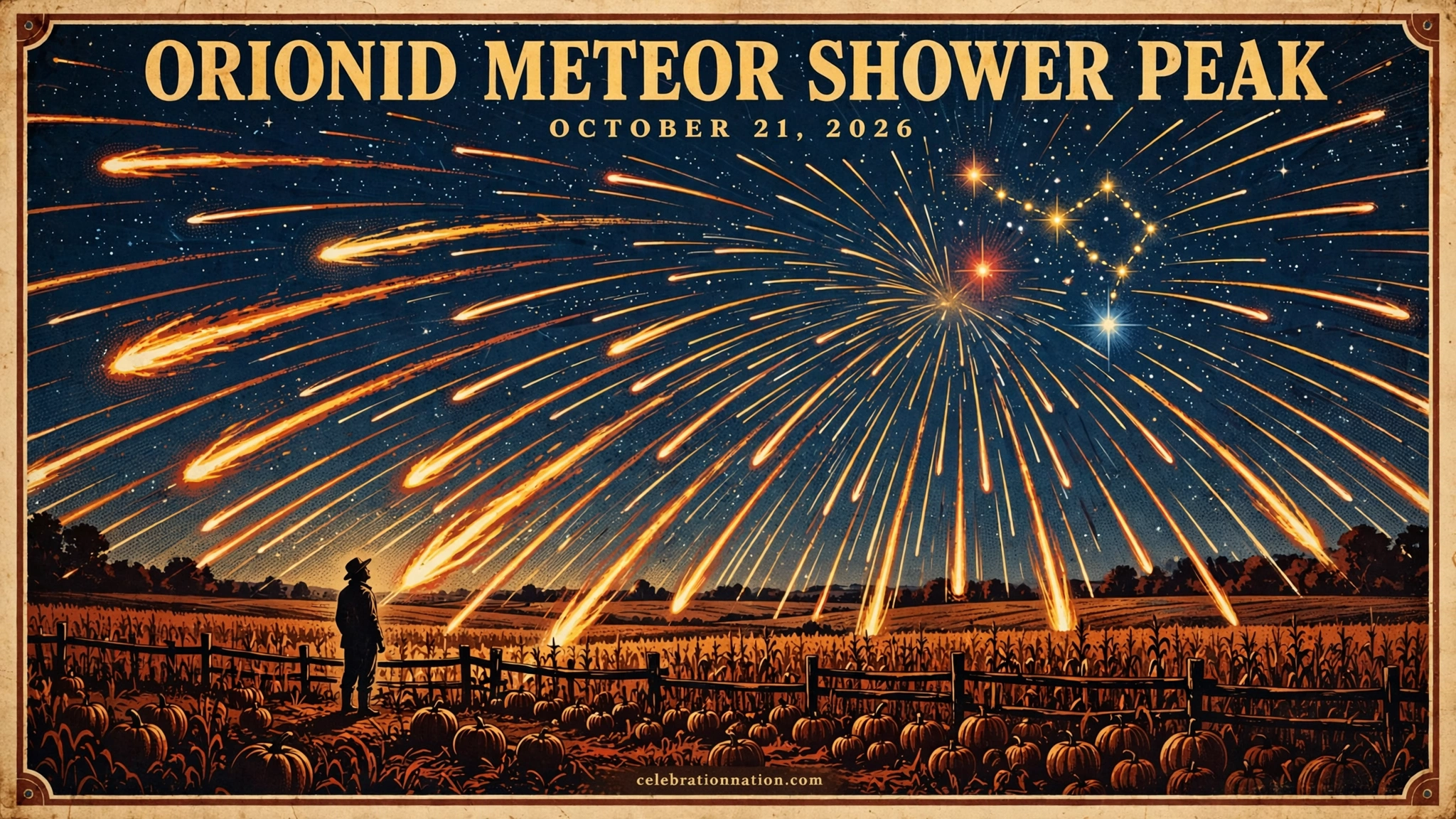
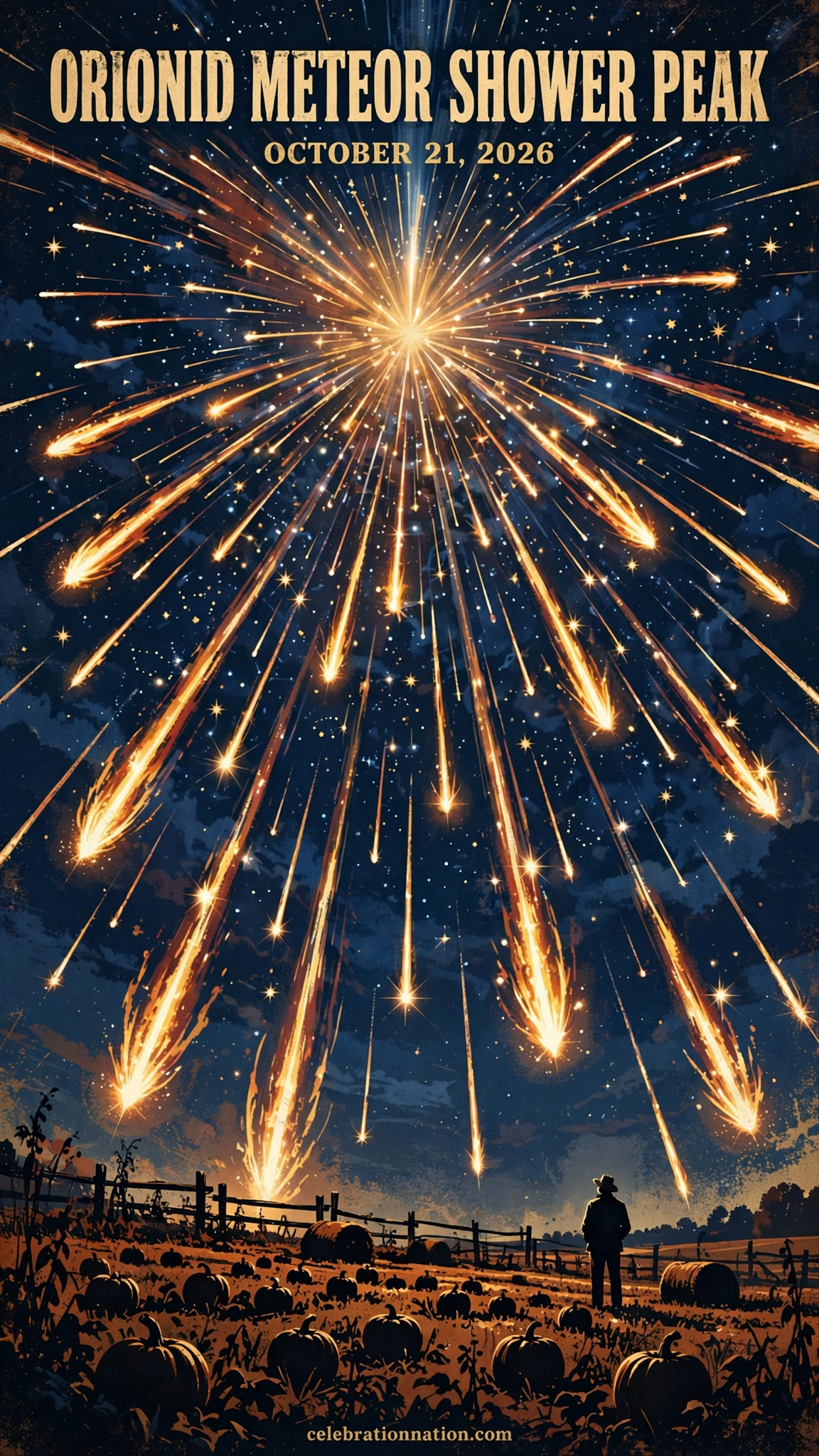
Orionid Meteor Shower Peak
This year on October 21, the night sky puts on one of autumn's great free shows as the Orionid meteor shower reaches its peak. The shooting stars are tiny pieces of Halley's Comet burning up overhead, a gift from the most famous comet in history.
- Roots
- The Orionids are debris from Halley's Comet, officially comet 1P/Halley.
- Also on Oct 21
- Global Dignity Day · International Nacho Day · World Iodine Deficiency Day
- Hashtag
- #OrionidMeteorShowerPeak
3 ways to celebrate
Head Out After Midnight
The shower is visible from both hemispheres after midnight. Find a dark spot away from city lights and give your eyes time to adjust to the dark.
Wait for Moonset
A bright waxing gibbous Moon lights the evening on peak night. The best viewing comes after the Moon sets, in the last hours before dawn.
Look Toward Orion
Meteors appear to radiate from the constellation Orion, just north of the bright star Betelgeuse. Scan the wide sky around the Hunter rather than staring at one small patch.
Plan ahead
Orionid Meteor Shower Peak is observed on October 21 every year. Here is where it lands for the next ten years, handy for planners, marketers and party people.
Fast facts
The story
Every Orionid meteor is a speck of Halley's Comet. The comet rounds the Sun every 76 years and last visited in 1986; it will not return until 2061, but each pass leaves a fresh dust trail behind, and Earth crosses that trail twice a year, feeding the Eta Aquariids in May and the Orionids in October.
Read the full story
The shower is active from October 2 to November 7, 2026, with the peak night on October 21-22. The meteors appear to radiate from the constellation Orion, just north of the bright star Betelgeuse, the upraised club of the Hunter. Because they hit the atmosphere at about 41 miles (66 kilometers) per second, Orionids are among the fastest meteors of any shower, and the fast ones often leave glowing trains that last several seconds.
In 2026 a bright waxing gibbous Moon lights the evening sky on peak night, so the best viewing comes after the Moon sets, in the last hours before dawn. The shower is visible from both the Northern and Southern hemispheres after midnight, so wherever you are, the small hours of October 22 are your window.
Keep the party going
See the calendar


Celebrate every day, all year
Official gear from the people who track 1,700+ celebrations.
Browse the shop National Day Celebration Card GameA party in a box, any day of the year.
Never miss a reason to celebrate.
One quick morning email with today's celebrations, ideas and posters. Free, unsubscribe anytime.
🎉 You're on the list! Watch your inbox for The Daily Confetti.