








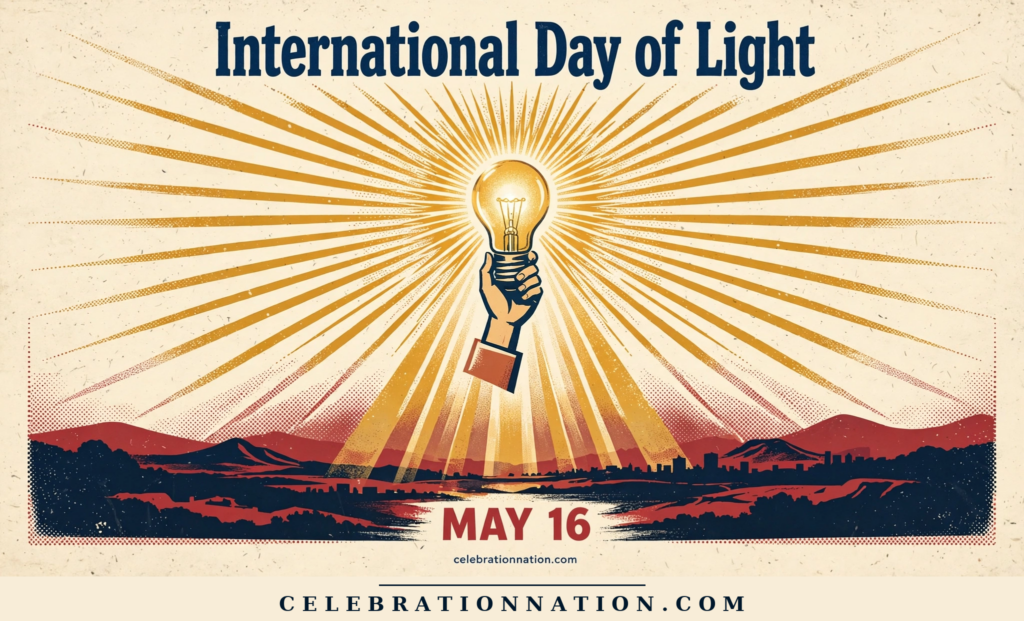
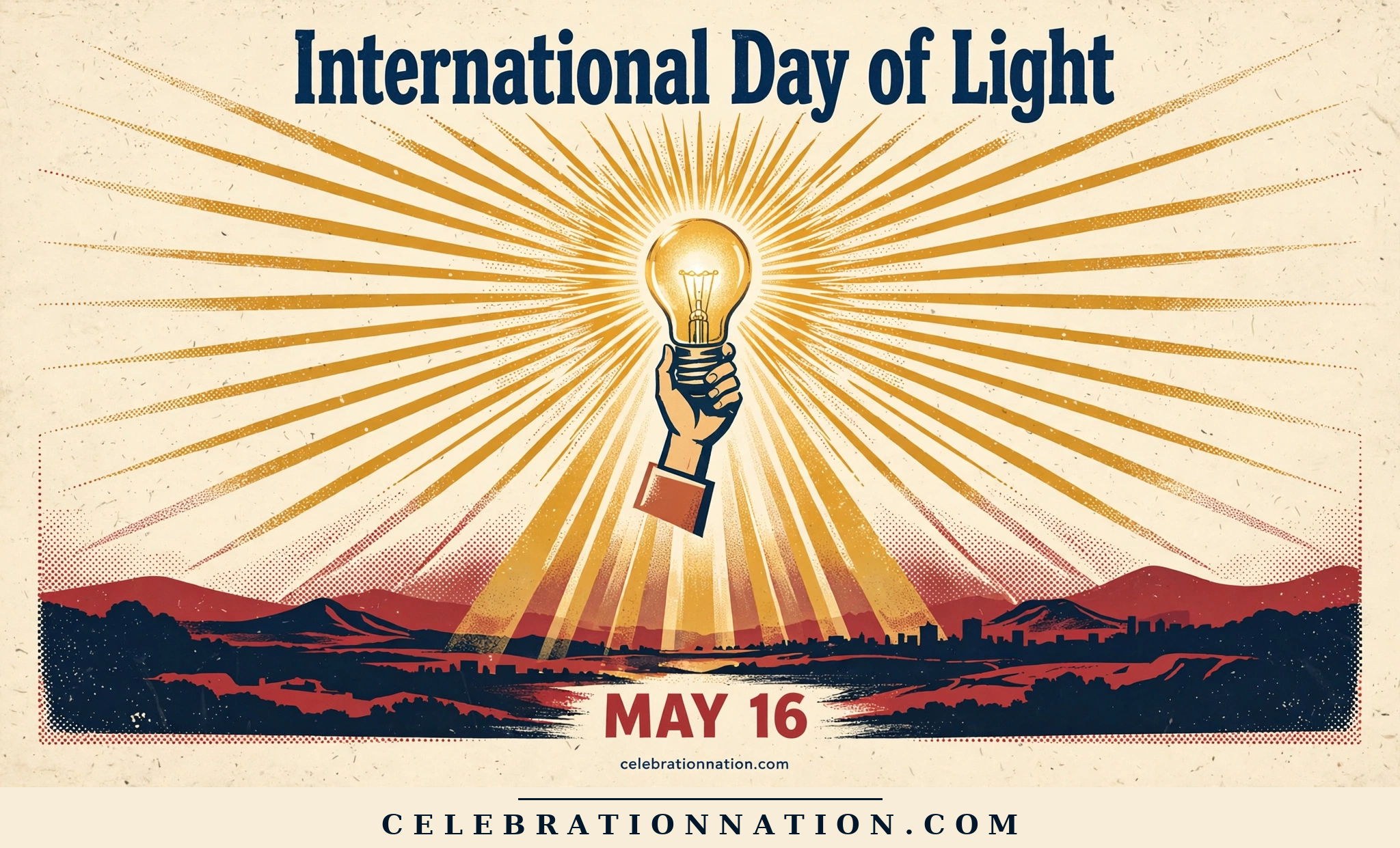
International Day of Light
International Day of Light reminds us that the local story is part of a much bigger one — told in many languages and many kitchens.
- Roots
- Established by UNESCO in 2017
- Vibe
- Celebration of science, art, and culture through light.
- Also on May 16
- Coquilles Saint Jacques Day · Do Something Good for Your Neighbor Day · Learn to Swim Day
- Hashtag
- #InternationalDayOfLight
Ways to celebrate
Small, doable ways to celebrate International Day of Light.
- Read or watch something made outside the U.S. today.
- Cook a dish from a country you've been curious about.
- Donate to an international organization doing good work.
- Learn one word in a language you don't speak.
- Send a message to a friend who lives elsewhere.
Make it your kind of celebration
Family
Eat, watch, or listen to something from another country tonight.
Kids
Pick a country to learn about this week — flag, food, language, one famous person.
Couples
Plan a trip — real or imagined — to someplace you've never been.
Office
Celebrate a team member's heritage — food, holiday, tradition.
School
Tie the day into a geography, language, or world history unit.
Community
Support an international nonprofit with a local presence.
Just me
Read long-form journalism from outside the U.S. today.
Plan ahead
International Day of Light is observed on May 16 every year. Here is where it lands for the next ten years, handy for planners, marketers and party people.
Fast facts
The story
International Day of Light is an initiative launched by UNESCO to highlight the significance of light in our world. Observed on May 16 each year, this day engages the global community in discussions about the importance of light in various fields such as science, culture, and art. It brings together individuals, organizations, and institutions to celebrate the many ways light impacts our daily lives.
Read the full story
The day commemorates the first successful laser operation in 1960, which opened new pathways in medical science and technology. Various events, including workshops, exhibitions, and public talks, take place worldwide, fostering greater understanding of light's role. Schools often participate by organizing educational activities that explore light's properties and its significance in various cultures.
One of the central themes of International Day of Light is the connection between light and sustainable development. As we face global challenges, innovative lighting solutions can lead to more energy-efficient technologies and promote well-being. By raising awareness about light, this day encourages us to think critically about how we utilize it in our homes and communities.
In addition to its scientific significance, light has profound cultural implications. Art installations worldwide explore the interplay of light and shadow, emphasizing creativity and expression. International Day of Light fosters appreciation for these artistic endeavors, inviting everyone to reflect on how light shapes our perceptions and experiences. Through education and celebration, we can recognize light as a vital resource that connects us all.
Did you know?
Light's Speed
Light travels at about 186,282 miles per second, making it the fastest thing in the universe.
Photons
Light is made up of particles called photons, which carry energy and information.
Colors of Light
Visible light is just a small part of the electromagnetic spectrum, which includes radio waves and X-rays.
Light Pollution
Excessive artificial light can disrupt ecosystems and affect human health.
Cultural Significance
Different cultures have unique traditions associated with light, such as Diwali in India and Hanukkah in Jewish culture.
Bioluminescence
Some organisms, like fireflies and certain jellyfish, produce their own light through biochemical reactions.
Historical Uses
Throughout history, humans have used light for navigation, signaling, and communication.
Around the world
Every culture celebrates a little differently.
- USUnited StatesCelebrations often include educational programs and community events across the country.
- GBUnited KingdomIn the UK, various organizations host light-themed exhibitions in museums and galleries.
- BRBrazilBrazilian schools engage students with hands-on activities related to light and science.
- FRFranceFrance celebrates with public art displays and light shows in cities like Paris.
- AUAustraliaAustralia hosts events focusing on the impact of light on health and well-being.
- JPJapanIn Japan, cultural festivals highlight traditional uses of light in ceremonies and art.
Keep the party going
See the calendar



Celebrate every day, all year
Official gear from the people who track 1,700+ celebrations.
Browse the shop 2027 National Day Desk CalendarA new celebration every morning. Daily tear-off.
Never miss a reason to celebrate.
One quick morning email with today's celebrations, ideas and posters. Free, unsubscribe anytime.
🎉 You're on the list! Watch your inbox for The Daily Confetti.