





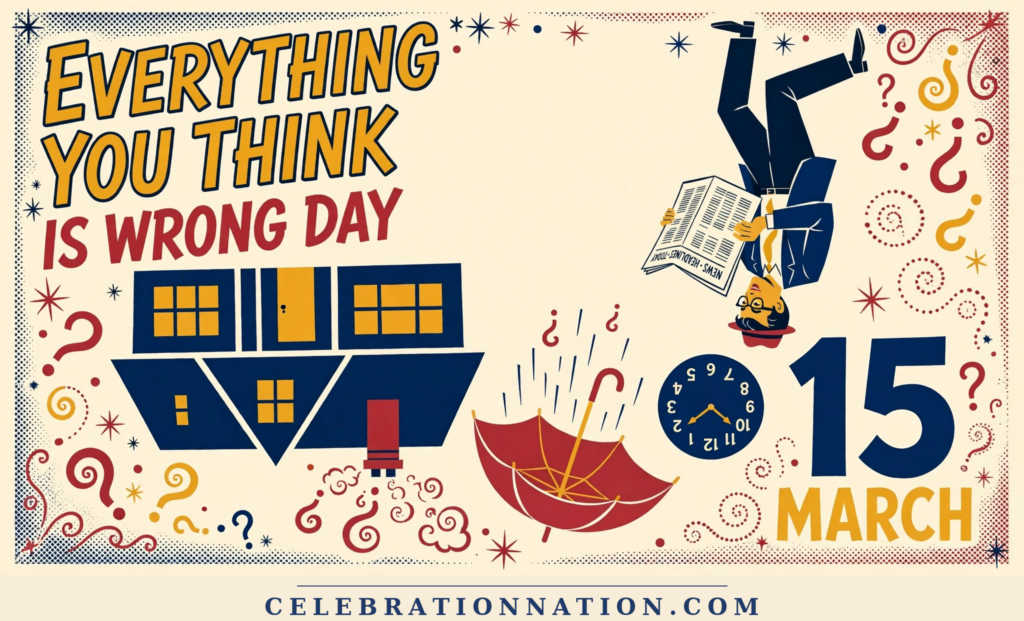
Everything You Think Is Wrong Day
This day encourages us to reflect and question our perceptions, promoting a deeper understanding of ourselves.
- Roots
- Unclear
- Vibe
- Reflective and introspective
- Also on Mar 15
- Kansas Day · Pears Helene Day · Shoe the World Day
- Hashtag
- #EverythingYouThinkIsWrongDay
3 ways to celebrate
Question one belief
Pick something you assume is true and research the other side.
Debate for fun
Argue the opposite of your real opinion, just for the exercise.
Flip the script
Ask what the team would do if their main assumption were wrong.
Plan ahead
Everything You Think Is Wrong Day is observed on March 15 every year. Here is where it lands for the next ten years, handy for planners, marketers and party people.
Fast facts
The story
Everything You Think Is Wrong Day, observed annually on March 15, serves as a profound reminder to reflect on our beliefs. In a society where opinions can often seem polarized, this day encourages us to question the very foundations of our understanding. By doing so, we not only foster personal growth, but we also open the door to constructive dialogue that can lead to greater empathy and understanding among others.
Read the full story
The origins of Everything You Think Is Wrong Day remain somewhat murky, yet its significance is clear. It invites individuals to confront the comfort of their established viewpoints and consider alternative perspectives. This challenge is not just an intellectual exercise; it is a vital practice in developing critical thinking skills and emotional intelligence, both of which are essential in today’s interconnected world.
On this day, engaging in conversations that challenge our assumptions can be particularly enlightening. A meaningful discussion may reveal insights we had not previously considered. Whether with friends, family, or even strangers, these exchanges can lead to a richer understanding of diverse perspectives and beliefs.
As we navigate the complexities of modern society, celebrating Everything You Think Is Wrong Day reminds us of the importance of humility and openness in our beliefs. By acknowledging that we might be wrong, we embrace the opportunity for lifelong learning. This day is not merely about doubt, but about growth, both personally and as a community.
Did you know?
Questioning is Key
Psychologists suggest that questioning beliefs can lead to greater happiness and satisfaction.
Cognitive Dissonance
This psychological phenomenon occurs when holding two conflicting beliefs, often leading to discomfort.
Belief Persistence
Research shows that once a belief is formed, it can be difficult to change, even in the face of contradictory evidence.
The Power of Dialogue
Open discussions and debates can significantly alter one's perspective and beliefs.
Historical Context
Many social movements have begun with individuals challenging prevailing beliefs.
Empathy and Understanding
Challenging beliefs fosters empathy, as it encourages individuals to understand different perspectives.
Self-Reflection Benefits
Engaging in self-reflection can lead to improved mental health and personal growth.
Around the world
Every culture celebrates a little differently.
- USUnited StatesEverything You Think Is Wrong Day is celebrated across the U.S., encouraging citizens to reflect and challenge their beliefs.
- GBUnited KingdomIn the UK, this day promotes open discussions about societal norms and personal beliefs.
- CACanadaCanadians use this day to engage in thoughtful dialogues, often in community forums.
- AUAustraliaAustralians celebrate by inviting diverse opinions into discussions, fostering a culture of open-mindedness.
- DEGermanyIn Germany, this day is marked by public debates and discussions on various topics.
- INIndiaIn India, individuals reflect on cultural beliefs and challenge societal norms to promote change.
Keep the party going
See the calendar



Celebrate every day, all year
Official gear from the people who track 1,700+ celebrations.
Browse the shop National Day Celebration Card GameA party in a box, any day of the year.
Never miss a reason to celebrate.
One quick morning email with today's celebrations, ideas and posters. Free, unsubscribe anytime.
🎉 You're on the list! Watch your inbox for The Daily Confetti.