





International Sudoku Day
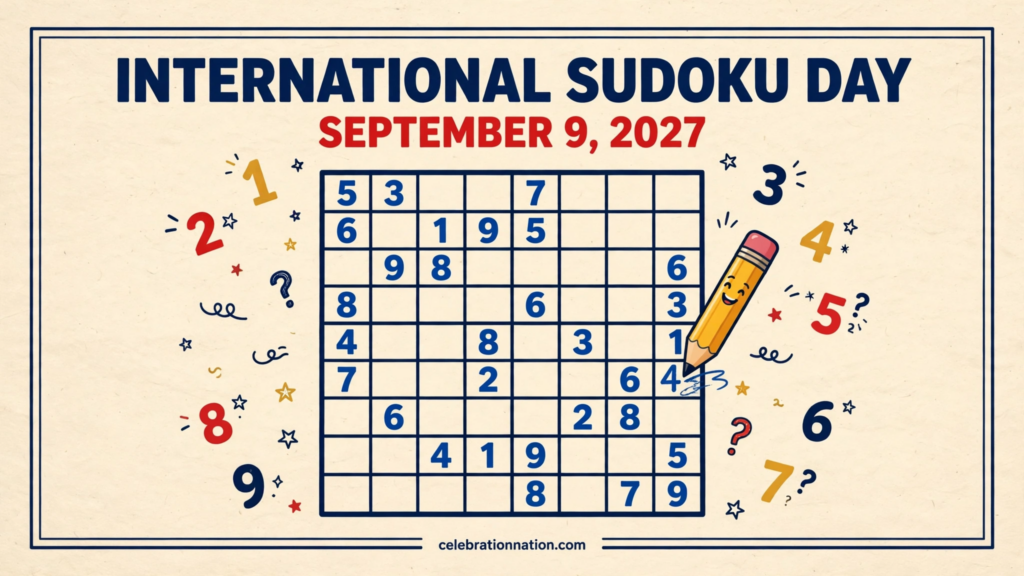
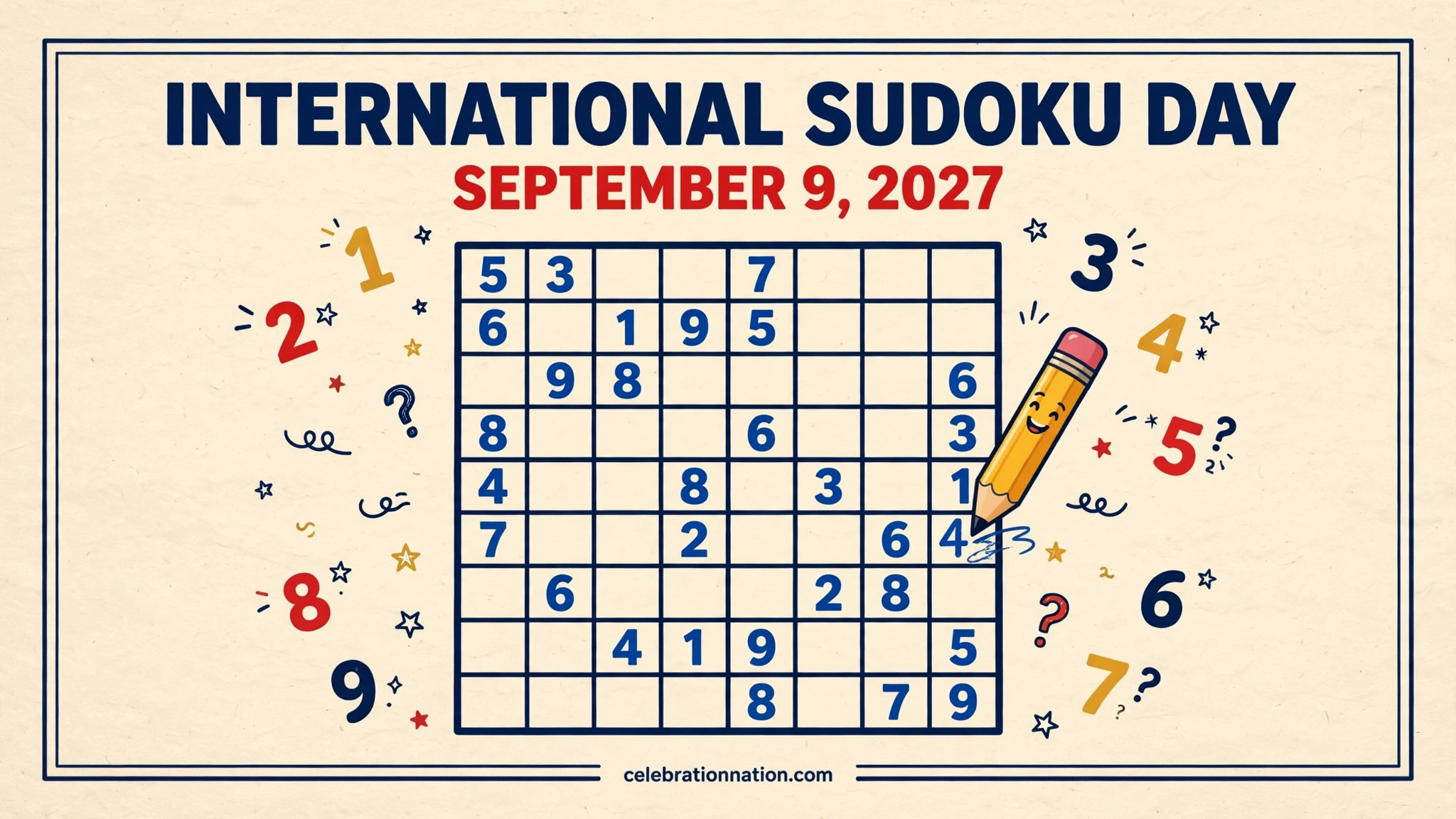
Every year on September 9, puzzle lovers everywhere sharpen their pencils and take on the nine-by-nine grid. Sudoku asks just one thing of you: fill every row, column, and three-by-three box with the digits 1 through 9, each appearing exactly once. It looks simple, it feels impossible, and that delicious tension is why millions of people cannot put it down. In 2027 the day falls on Thursday, September 9. This is International Sudoku Day, a celebration of the little number puzzle that turned a pencil grid into a worldwide obsession.
- Also on Sep 9
- International National Fetal Alcohol Spectrum Disorders Day · Wonderful Weirdos Day · Care Bears Share Your Care Day
- Hashtag
- #InternationalSudokuDay
INTERNATIONAL SUDOKU DAY
Every year on September 9, puzzle lovers everywhere sharpen their pencils and take on the nine-by-nine grid. Sudoku asks just one thing of you: fill every row, column, and three-by-three box with the digits 1 through 9, each appearing exactly once. It looks simple, it feels impossible, and that delicious tension is why millions of people cannot put it down. In 2027 the day falls on Thursday, September 9. This is International Sudoku Day, a celebration of the little number puzzle that turned a pencil grid into a worldwide obsession.
A Sudoku puzzle is a logic puzzle, not a math test. No arithmetic is required: the digits could just as easily be colors, letters, or tiny drawings of sandwiches. The rule is one clean line: every row, every column, and every three-by-three box must contain the digits 1 through 9 exactly once. From a scattering of given clues, the solver reasons their way to a single unique solution. Easy grids can fall in minutes; the hardest ones have humbled champions.
The date of September 9, written 9/9, is a little joke told in numbers: a nine-by-nine grid gets a day with two nines. In 2013, the World Puzzle Federation made it official and designated September 9 as International Sudoku Day. The Federation promotes puzzle culture around the world, and giving Sudoku its own day was a nod to a puzzle that had already conquered newspaper pages, commutes, and kitchen tables on every continent.
Sudoku is older than most of its fans realize. In 1892, the French newspaper La Siècle printed a game with a familiar demand: every row and column had to contain all the designated numbers. Those early French puzzles used numerals higher than nine and leaned on arithmetic rather than pure logic, and their popularity faded around the time of World War I. But the seed was planted.
The modern puzzle was born in Indiana. In 1979, architect Howard Garns published a puzzle he called “Number Place” in Dell Magazine. Garns built the grid we recognize today, complete with its nine three-by-three boxes, and he passed away before his invention became a global sensation. His puzzle crossed the Pacific, caught fire in Japan, and picked up a brand-new name: Sudoku, from the Japanese words “su,” meaning number, and “doku,” meaning single.
The final spark came from a retired judge. In 1997, Wayne Gould developed a computer program that could generate fresh, unique Sudoku puzzles on demand. He pitched the puzzle as a daily newspaper feature in the United Kingdom, and in 2004 the Times of London began printing it. Readers were hooked within weeks. Soon newspapers everywhere carried a daily Sudoku, and the puzzle that had started in a magazine, crossed an ocean, and learned a Japanese name became a full-blown international craze.
Players swear by the side effects. Sudoku sharpens logic, concentration, and memory, and plenty of solvers treat a quiet grid as a form of stress relief and mental wellness. The puzzle lives on in smartphone apps, puzzle books, and daily newspapers, and it has starred in documentaries and game shows. It even inspired an award-nominated original song by songwriter Peter Levy. Not bad for a grid of eighty-one little boxes.
New to the grid? Start with easy puzzles and scan for the low-hanging fruit: rows, columns, or boxes missing only one or two digits. Pencil small candidate numbers into empty cells and watch the grid surrender one cell at a time. There is a rush solvers know well, the snap of a finished grid, and once you feel it, you will understand exactly why September 9 belongs to this puzzle.
Sudoku is a rare equalizer: it can be solved by anyone old enough to count to nine, and it is played by children as young as six and grandparents in their nineties. No language barrier stands in the way, no expensive equipment is needed, and a whole puzzle fits in a shirt pocket. That universality is a big part of why the grid spread so fast: it asks nothing of you but attention.
Among puzzle hunters, one creation is whispered about with respect: AI Escargot, a fiendishly difficult puzzle often cited as one of the toughest ever published. Most solvers will never touch anything that hard, and that is fine. The beauty of September 9 is that the day belongs equally to the five-minute easy grid on a coffee break and the championship-level monsters that take a whole weekend.
Ask a devoted solver about technique and you will get an earful. The classic approach is the scan: sweep each row, column, and box for a digit that has only one possible home left. When the easy wins dry up, solvers switch to pencil marks, writing tiny candidate numbers in each empty cell and eliminating them as the grid fills in. Then comes the best part: the cascade, when cracking one stubborn cell suddenly unlocks five more in a row, and the whole puzzle seems to solve itself. That cascade is the reason September 9 has a day at all. It is a small, repeatable, entirely legal thrill, and on International Sudoku Day, the whole world gets to feel it together.
The puzzle world also tips its hat to the man widely known as the Godfather of Sudoku, who championed the puzzle’s spread through countless publications and helped turn a Japanese pastime into a planetary habit. His evangelism is a big reason the grid leapt from magazine pages to morning rituals. So on September 9, join the ritual: pour something warm, open a fresh grid, and give the day’s namesake puzzle the hour it deserves.
THE STORY BEHIND INTERNATIONAL SUDOKU DAY
🧮 A Date That Is a Grid
September 9 is written 9/9, a wink at the nine-by-nine grid at the heart of every Sudoku. In 2013 the World Puzzle Federation made September 9 the official International Sudoku Day, and puzzle fans have celebrated it ever since.
📰 Born in a French Newspaper
In 1892, the Paris newspaper La Siècle printed a puzzle demanding that every row and column contain all the designated numbers. It used numbers above nine and required real math, unlike the logic-only Sudoku we know, and its popularity faded around World War I.
✏️ The Architect’s “Number Place”
Indiana architect Howard Garns created the modern Sudoku grid and published it as “Number Place” in Dell Magazine in 1979. Garns passed away before his puzzle became famous, never knowing it would conquer the world.
🗾 Japan Gave It a Name
The puzzle set Japan’s puzzle world on fire and earned its lasting name there: Sudoku, from “su” (number) and “doku” (single). Millions of devoted players made it a national pastime long before the rest of the world caught on.
🌎 From One Computer to Every Newspaper
In 1997, Wayne Gould built a computer program that could generate endless unique puzzles. He sold the idea to British newspapers, the Times of London started printing Sudoku in 2004, and the craze swept the planet within months.
WAYS TO CELEBRATE
🧮 Solve One Grid Today
Print a puzzle, open an app, or grab the newspaper and work a full Sudoku from start to finish. Start easy if you are new, and do not peek at the solution until the grid is done.
⏱️ Race a Friend
Print two copies of the same puzzle and see who finishes first, or take turns calling out the next number over coffee. A little friendly competition makes the logic sing.
📢 Share Your Strategy
Post your favorite solving trick, your fastest time, or a photo of a finished grid with #InternationalSudokuDay. The community loves a clever technique almost as much as a perfect solve.
Celebrate International Sudoku Day
On September 9, 2027, grab a pencil and take on the grid that charmed the planet. Fill the rows, mind the boxes, and enjoy every small victory from 1 to 9. Whether it is your first puzzle or your five-thousandth, the day is yours: nine rows, nine columns, and one very good reason to play hooky with a pencil.
Plan ahead
International Sudoku Day is observed on September 9 every year. Here is where it lands for the next ten years, handy for planners, marketers and party people.
Keep the party going
See the calendar



Celebrate every day, all year
Official gear from the people who track 1,700+ celebrations.
Browse the shop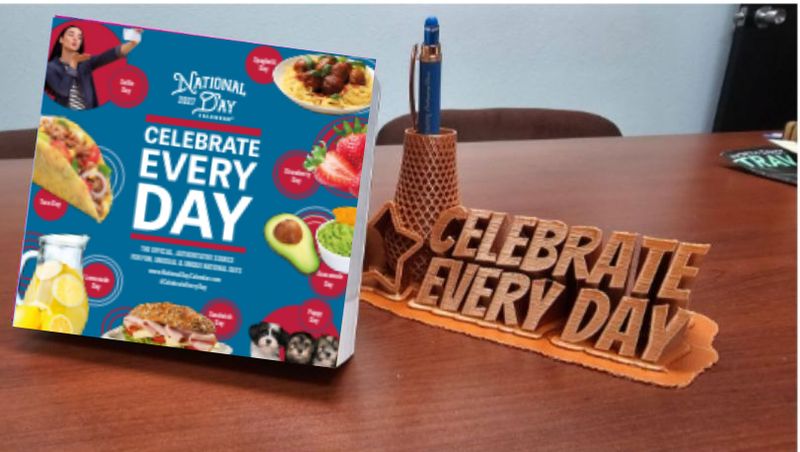 2027 National Day Desk CalendarA new celebration every morning. Daily tear-off.
Never miss a reason to celebrate.
One quick morning email with today's celebrations, ideas and posters. Free, unsubscribe anytime.
🎉 You're on the list! Watch your inbox for The Daily Confetti.