National Beer Day
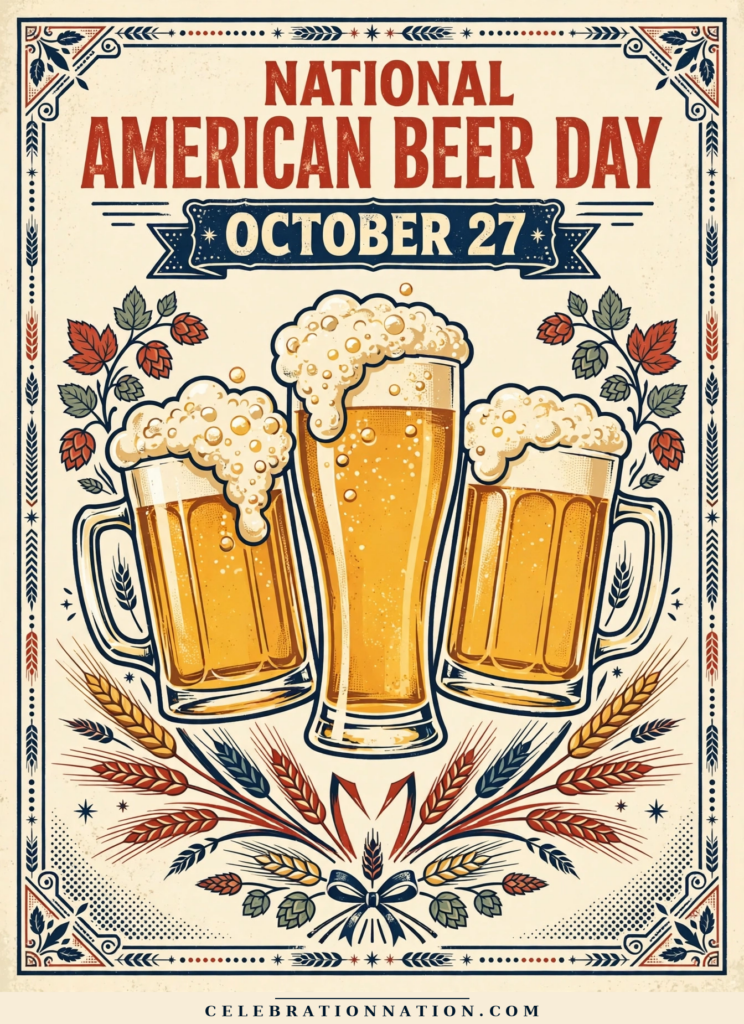
National Beer Day on April 7 marks the anniversary of the 1933 Cullen-Harrison Act that effectively ended Prohibition — the day Americans could legally drink beer again after 13 years of enforced dryness. A day to toast American brewing, the craft beer revolution, and the 9,000+ independent American breweries that made the US a global beer destination.
- Vibe
- Celebratory & Independent
- Also on Apr 7
- International Beaver Day · International Day of Reflection on the 1994 Genocide in Rwanda · Coffee Cake Day
- Hashtag
- #NationalBeerDay
Ways to celebrate
Raise a glass:
- 🍺 Visit a local craft brewery. Every American city now has multiple. Taste local, drink local, support the local brewing economy.
- 🏛️ Take a brewery tour. Samuel Adams (Boston), Sierra Nevada (Chico CA), Dogfish Head (Milton DE), Yuengling (Pottsville PA) — historic American breweries all offer tours.
- 🍻 Host a beer tasting. 4-6 different styles, small pours, side-by-side comparison. Learn to distinguish lager from ale, IPA from stout, Belgian from German.
- 📚 Read 'The Beer Bible' by Jeff Alworth. The definitive modern American beer reference — comprehensive, clear, beautifully written.
- 🎬 Watch 'Beer Wars' (2009). The documentary about America's craft beer revolution. Worth the 90 minutes.
Make it your kind of celebration
Family
Adult-only beverage — but a family brewery tour (without tasting) with good food is surprisingly family-friendly. Most breweries welcome kids in dining areas.
Kids
Not for kids. But 'root beer' history is fascinating — it began as a non-alcoholic alternative during Prohibition. A fun Americana lesson.
Couples
Brewery-hop date night. 3 local breweries, small pours at each, walk between them. One of the best date-nights in modern American cities.
Office
Team outing to a local brewery. Low-stakes team building; most have private spaces for groups.
School
Obviously not for students — but beer history is a legitimate adult-education topic. Prohibition, brewing science, the German immigrant influence on American brewing.
Community
Support local craft breweries. Many are small businesses with thin margins; community patronage matters.
Just me
A quality beer + a good book + a quiet evening. One of the greatest American solo-evening pleasures.
Plan ahead
National Beer Day is observed on April 7 every year. Here is where it lands for the next ten years, handy for planners, marketers and party people.
Fast facts
The story
America has been a beer-brewing country since colonial times. The Mayflower's log mentions beer as one reason the ship stopped at Plymouth instead of continuing to Virginia ('we could not now take time for further search, our victuals being much spent, especially our beer'). George Washington brewed beer at Mount Vernon. Thomas Jefferson distilled and fermented at Monticello. Benjamin Franklin, despite the apocryphal 'beer is proof God loves us' quote (he never said it), was a brewer. Early American beer was an everyday drink, safer than water, consumed by men, women, and children.
Read the full story
Prohibition (1920-1933) nearly destroyed American brewing. The Volstead Act banned the manufacture, sale, and transport of intoxicating liquors, defined as over 0.5% alcohol. Breweries converted to soft drinks, malt extract, ice cream, or simply closed. Of roughly 1,600 pre-Prohibition American breweries, only ~750 reopened after. The craft of American brewing, particularly German-American and lager traditions, was severely damaged. Home brewing, speakeasies, and organized crime flourished.
The Cullen-Harrison Act, signed by President Franklin D. Roosevelt on March 22, 1933 and effective April 7, 1933, legalized beer of 3.2% alcohol or less. FDR reportedly said "I think this would be a good time for a beer" while signing. Americans drank 1.5 million barrels that first legal day. The 21st Amendment, ratified December 5, 1933, fully repealed Prohibition. But April 7 is still celebrated as "National Beer Day" the day beer itself came back.
The craft beer revolution began slowly in the 1970s, accelerated dramatically in the 2000s, and has reshaped American brewing. Anchor Brewing (San Francisco, reopened 1965) and Sierra Nevada (Chico, 1979) were the first wave. Boston's Samuel Adams (1984) democratized craft. The 2000s and 2010s saw an explosion, Dogfish Head, Stone, Founders, Bell's, Russian River, Tree House, Other Half, countless more. Today there are thousands of independent American breweries, near the highest number in American history. The craft segment represents roughly 13% of U.S. beer sales by volume. American beer has never been more diverse, more interesting, or more genuinely local.
Styles that American brewers have defined or redefined:
Six regional traditions in American beer:
Did you know?
Prohibition never ended on Mount Vernon.
George Washington's Mount Vernon estate has not served alcohol on the grounds since 1860s (management decision). Despite Washington himself being a commercial distiller. A quirky American historical footnote.
FDR's beer toast is unverified.
The famous 'I think this would be a good time for a beer' FDR quote upon signing Cullen-Harrison is often attributed to him, but no contemporary source records it. The sentiment, though, was true, FDR was an outspoken critic of Prohibition.
The brewery workers' union celebrated April 7.
The International Union of United Brewery Workers officially declared April 7 'National Beer Day' in 1933 to celebrate the re-legalization. The day has been observed as National Beer Day continuously for 90+ years, though it's not a federal holiday.
Yuengling's 'Black and Tan' is a classic.
Yuengling's pre-mixed 'Black and Tan' (40% Yuengling Premium / 60% Yuengling Dark Porter) was first brewed during Prohibition as a dessert drink. Still in production. One of the most distinctive American commercial beer styles.
Keep the party going
See the calendar
Celebrate every day, all year
Official gear from the people who track 1,700+ celebrations.
Browse the shop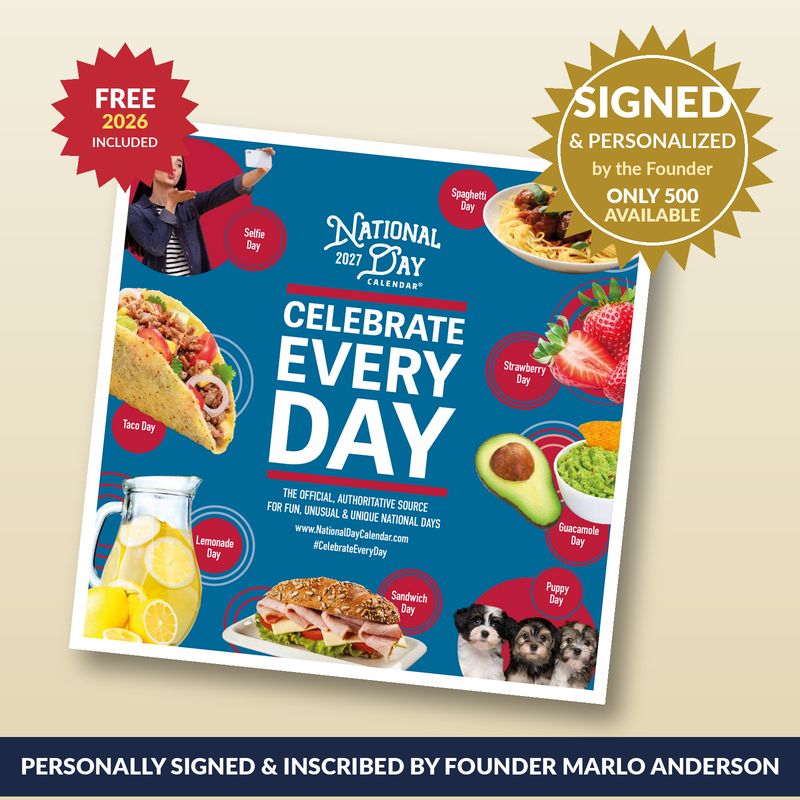 2027 Wall Calendar, signed by Marlo AndersonSigned by the founder of National Day Calendar.
Never miss a reason to celebrate.
One quick morning email with today's celebrations, ideas and posters. Free, unsubscribe anytime.
🎉 You're on the list! Watch your inbox for The Daily Confetti.