




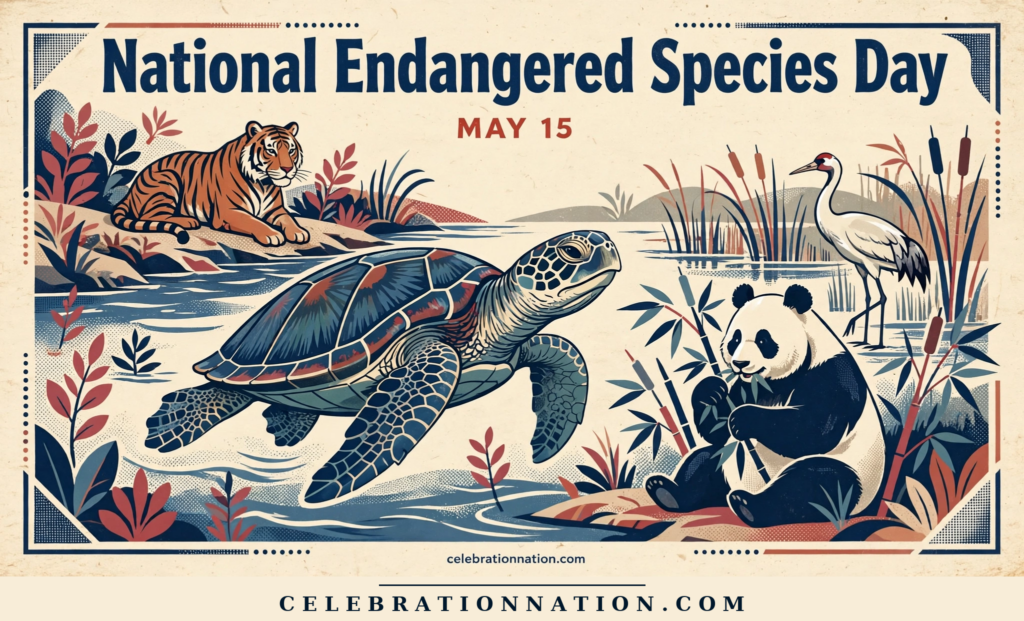
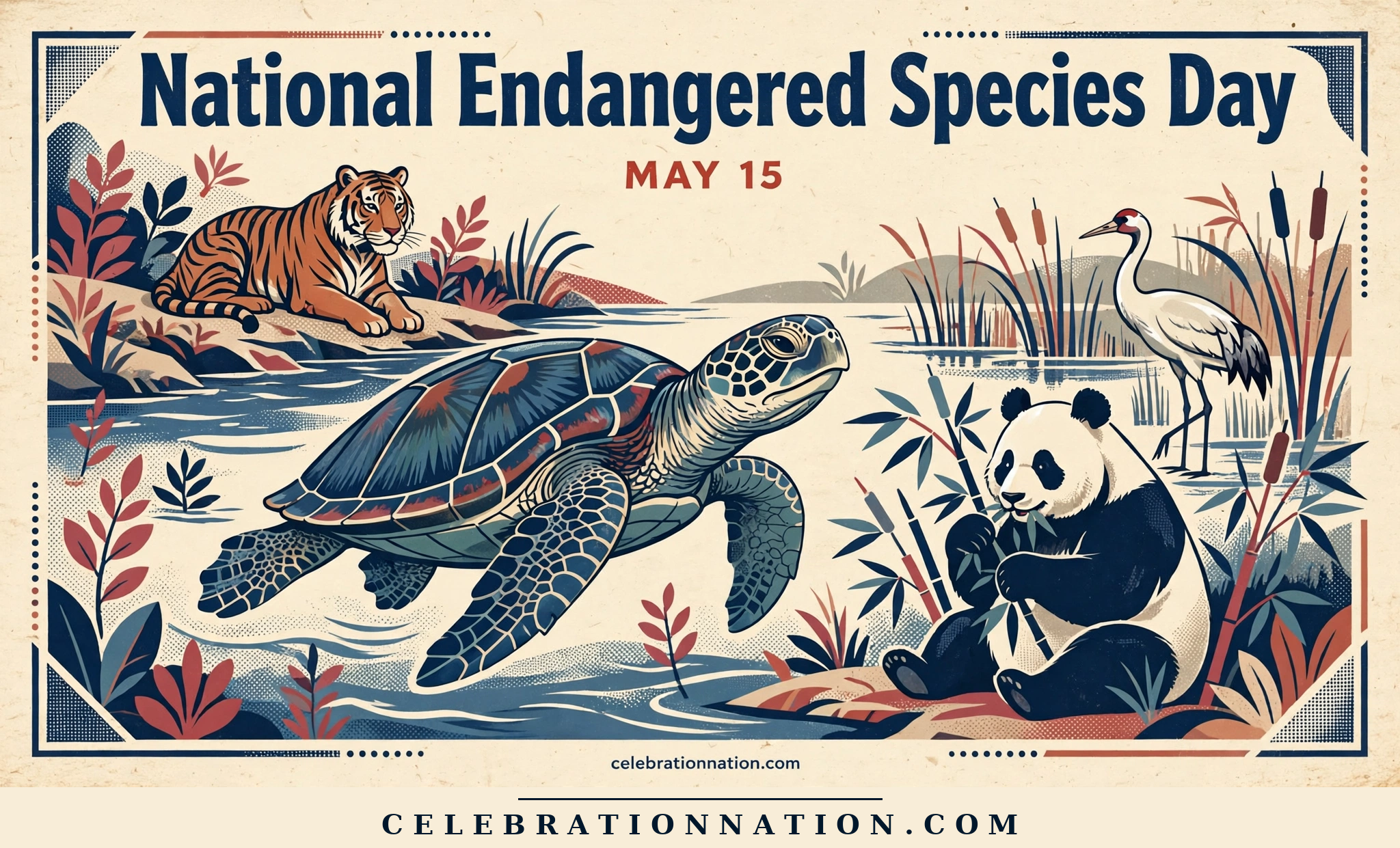
National Endangered Species Day
On National Endangered Species Day, we listen louder, learn more, and make sure no one feels invisible.
- Roots
- Established in 2006 by the U.S. Congress
- Vibe
- Awareness and action for conservation
- Also on May 15
- Defense Transportation Day · Nylon Stocking Day · Pizza Party Day
- Hashtag
- #NationalEndangeredSpeciesDay
Ways to celebrate
Small, doable ways to celebrate National Endangered Species Day.
- Share one reputable resource with your network.
- Donate to a patient-led organization working on endangered species.
- Check in on someone you know who's living with it.
- Book the screening or appointment you've been putting off.
- Listen more than you speak.
Make it your kind of celebration
Family
Have the real conversation at the table — stigma-free, no lecture.
Kids
Answer questions honestly and age-appropriately.
Couples
Check in with each other's appointments, screenings, and follow-ups.
Office
Share vetted resources and encourage people to use their benefits.
School
Bring in an expert, survivor, or advocate to speak for a class period.
Community
Run a donation drive, a walk, or a listening session for those affected.
Just me
Reach out to someone you know is living with it. Ask how they're doing for real.
Plan ahead
National Endangered Species Day is observed on the third Friday in May. Here is where it lands for the next ten years, handy for planners, marketers and party people.
Fast facts
The story
National Endangered Species Day was first recognized in 2006 as a way to emphasize the need for conservation efforts across the globe. This day serves as an opportunity to reflect on the various species that are at risk of extinction and the actions we can take to protect them. By raising awareness about these issues, we can inspire individuals and communities to engage in conservation efforts.
Read the full story
In the United States, the Endangered Species Act of 1973 laid the groundwork for protecting imperiled species and their habitats. The act has successfully prevented the extinction of numerous species by providing critical protections. However, challenges remain, and the need for continued advocacy and public engagement is essential in ensuring the survival of our planet's biodiversity.
Globally, habitat loss, climate change, and poaching are significant threats to wildlife. This is where the importance of conservation comes into play. By supporting various organizations dedicated to protecting endangered species, we can contribute to meaningful change. Each action, no matter how small, can create ripple effects that benefit wildlife and ecosystems.
As we observe National Endangered Species Day, consider how you can make a difference. Whether it's through education, advocacy, or direct action, every effort counts. Together, we can work towards a future where endangered species are no longer at risk and biodiversity thrives for generations to come.
Did you know?
Endangered Species Act
The U.S. Endangered Species Act has successfully recovered species like the American alligator.
Habitat Loss
Urbanization and agriculture are leading causes of habitat loss for many species around the world.
Biodiversity Crisis
The current extinction rate is estimated to be 1,000 times higher than the natural background rate.
Conservation Success
Efforts to protect the bald eagle have resulted in its delisting from the endangered species list.
Global Species
Over 90% of the world's biodiversity is found in the tropics, highlighting the need for tropical conservation.
Public Engagement
Public awareness campaigns have led to increased support for conservation initiatives.
Species Recovery
Some species, like the gray wolf, have made a comeback due to successful conservation strategies.
Around the world
Every culture celebrates a little differently.
- USUnited StatesHome to many endangered species, including the California condor and the gray wolf.
- CACanadaThe country works to protect species like the whooping crane and the northern spotted owl.
- AUAustraliaUnique species such as the orange-bellied parrot face significant threats.
- GBUnited KingdomEfforts are being made to protect native species like the red squirrel and the hazel dormouse.
- ZASouth AfricaHome to the critically endangered black rhino and various unique ecosystems.
- HUHungaryConservation programs aim to protect species like the Hungarian grey cattle and the European bison.
Keep the party going
See the calendar



Celebrate every day, all year
Official gear from the people who track 1,700+ celebrations.
Browse the shop 2027 National Day Desk CalendarA new celebration every morning. Daily tear-off.
Never miss a reason to celebrate.
One quick morning email with today's celebrations, ideas and posters. Free, unsubscribe anytime.
🎉 You're on the list! Watch your inbox for The Daily Confetti.