




National Meteor Watch Day
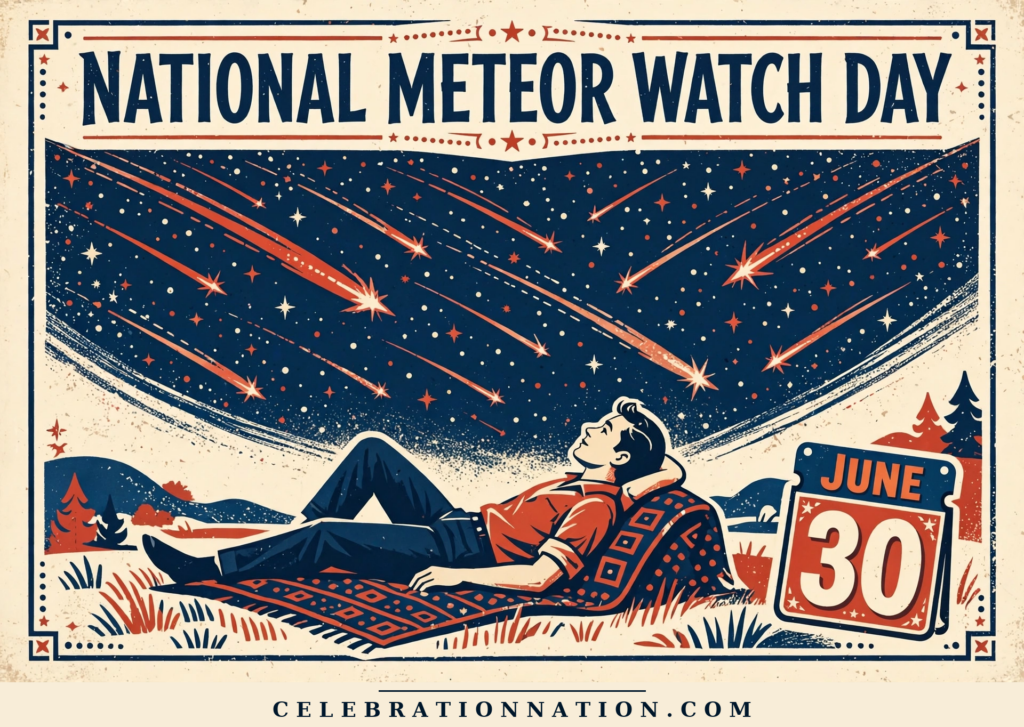
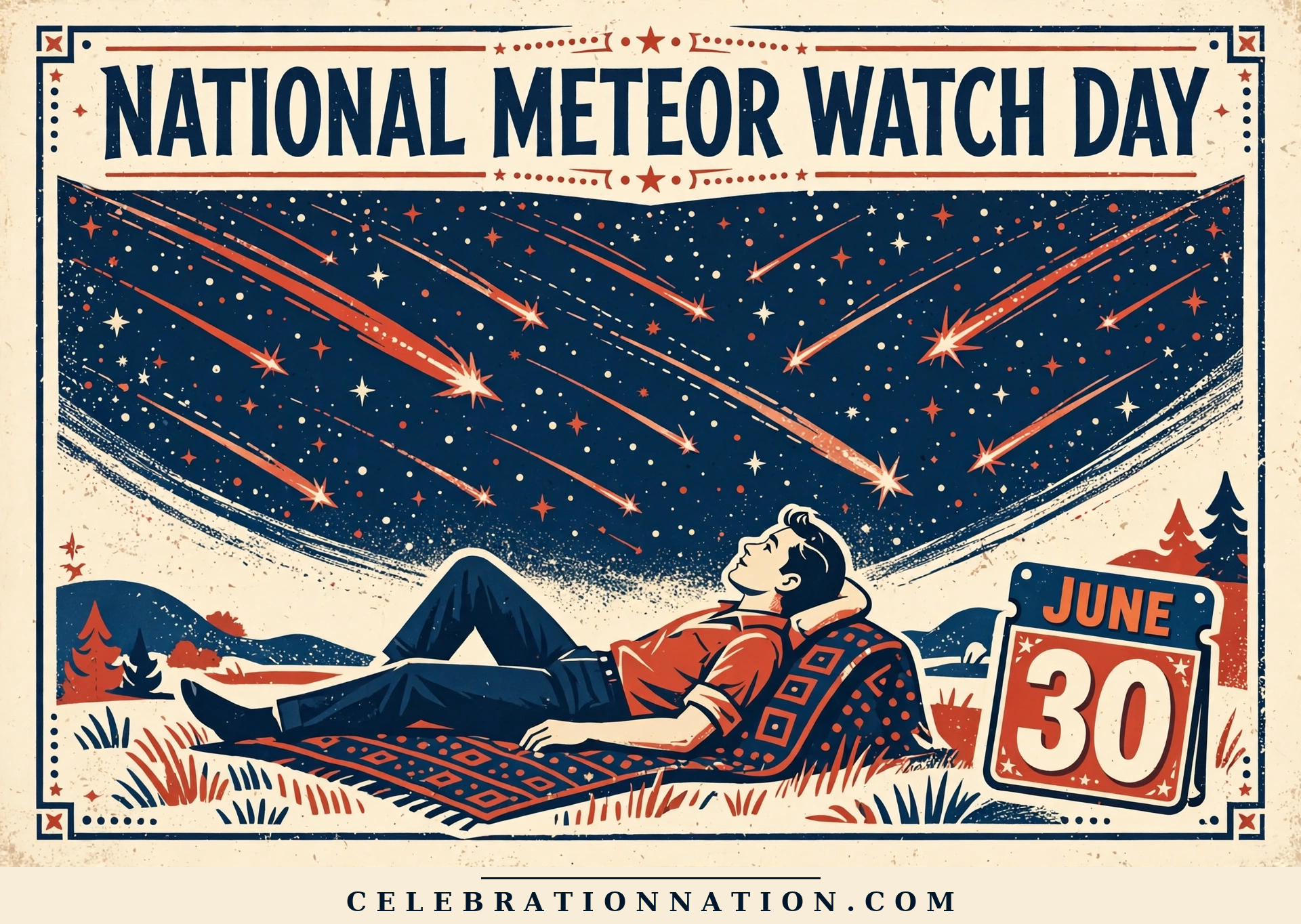
On National Meteor Watch Day, let the night sky inspire awe and wonder as meteors streak across the heavens.
- Roots
- Established in 2021 to promote astronomy
- Vibe
- A blend of wonder, science, and community
- Also on Jun 30
- Day of Parliamentarism · International Asteroid Day · OOTD Day
- Hashtag
- #NationalMeteorWatchDay
3 ways to celebrate
Watch the night sky
Lie on a blanket and count shooting stars after dark.
Host a meteor party
Gather blankets and snacks for a late-night sky watch.
Plan a stargazing trip
Organize an evening outing to a dark-sky spot.
Plan ahead
National Meteor Watch Day is observed on June 30 every year. Here is where it lands for the next ten years, handy for planners, marketers and party people.
Fast facts
The story
National Meteor Watch Day, celebrated on June 30 each year, encourages people to step outside and look skyward. This observance highlights the beauty of meteor showers, which occur when Earth passes through the debris left by comets. Acknowledging the majesty of the cosmos, this day invites individuals and families to connect with nature and marvel at the universe's wonders.
Read the full story
Meteor showers can be a breathtaking spectacle, with some events producing dozens of meteors per hour. The most famous is the Perseid meteor shower, peaking around August 12 each year, but several others, including the Geminids and Quadrantids, offer spectacular displays. By tracking meteor shower calendars, enthusiasts can plan their observations for optimal viewing conditions.
Celebrating National Meteor Watch Day can foster a sense of community, as people gather in parks or backyards to share in the experience. Whether it's a family outing or a gathering of friends, the shared enjoyment of observing meteors can create lasting memories. Stargazing also encourages discussions about space, science, and our place in the universe, enhancing educational opportunities for participants of all ages.
Beyond the United States, meteor watching is a global phenomenon. Countries around the world celebrate their own meteor watching events, fostering international connections through shared experiences. From the Andes in South America to the deserts of Australia, people unite under the night sky, reminding us of the beauty that transcends borders.
Did you know?
Shooting Stars
Meteors are often called shooting stars.
Meteorites
Meteors that reach the ground are called meteorites.
Brightest Meteor
The brightest meteors are known as fireballs.
Meteor Showers
Meteor showers occur when Earth passes through debris.
Historical Observations
Meteor showers have been recorded for centuries.
Meteor Counting
Astronomers often count meteors per hour for data.
Space Debris
Meteors can originate from comets or asteroids.
Around the world
Every culture celebrates a little differently.
- USUnited StatesNational Meteor Watch Day is celebrated nationwide.
- GBUnited KingdomStargazing events draw crowds in rural areas.
- CACanadaWide-open spaces provide excellent viewing opportunities.
- AUAustraliaSouthern skies showcase unique meteor showers.
- DEGermanyAstronomy clubs host public events for enthusiasts.
- JPJapanMeteor watching is a popular evening activity.
Keep the party going
See the calendar



Celebrate every day, all year
Official gear from the people who track 1,700+ celebrations.
Browse the shop 2027 National Day Wall CalendarGet the 2026 edition free. 1,700+ observances.
Never miss a reason to celebrate.
One quick morning email with today's celebrations, ideas and posters. Free, unsubscribe anytime.
🎉 You're on the list! Watch your inbox for The Daily Confetti.