
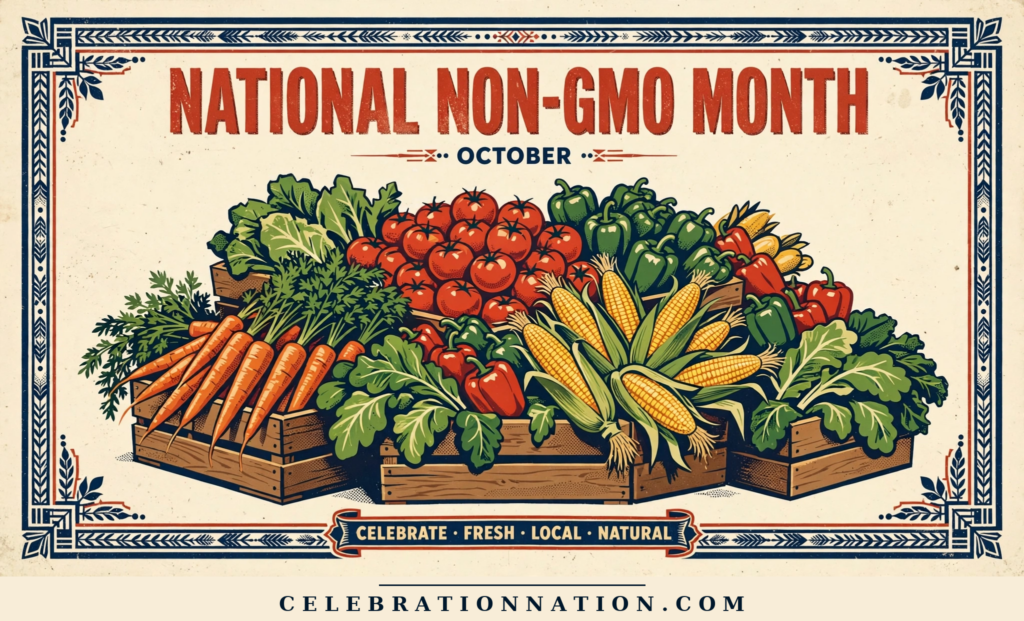
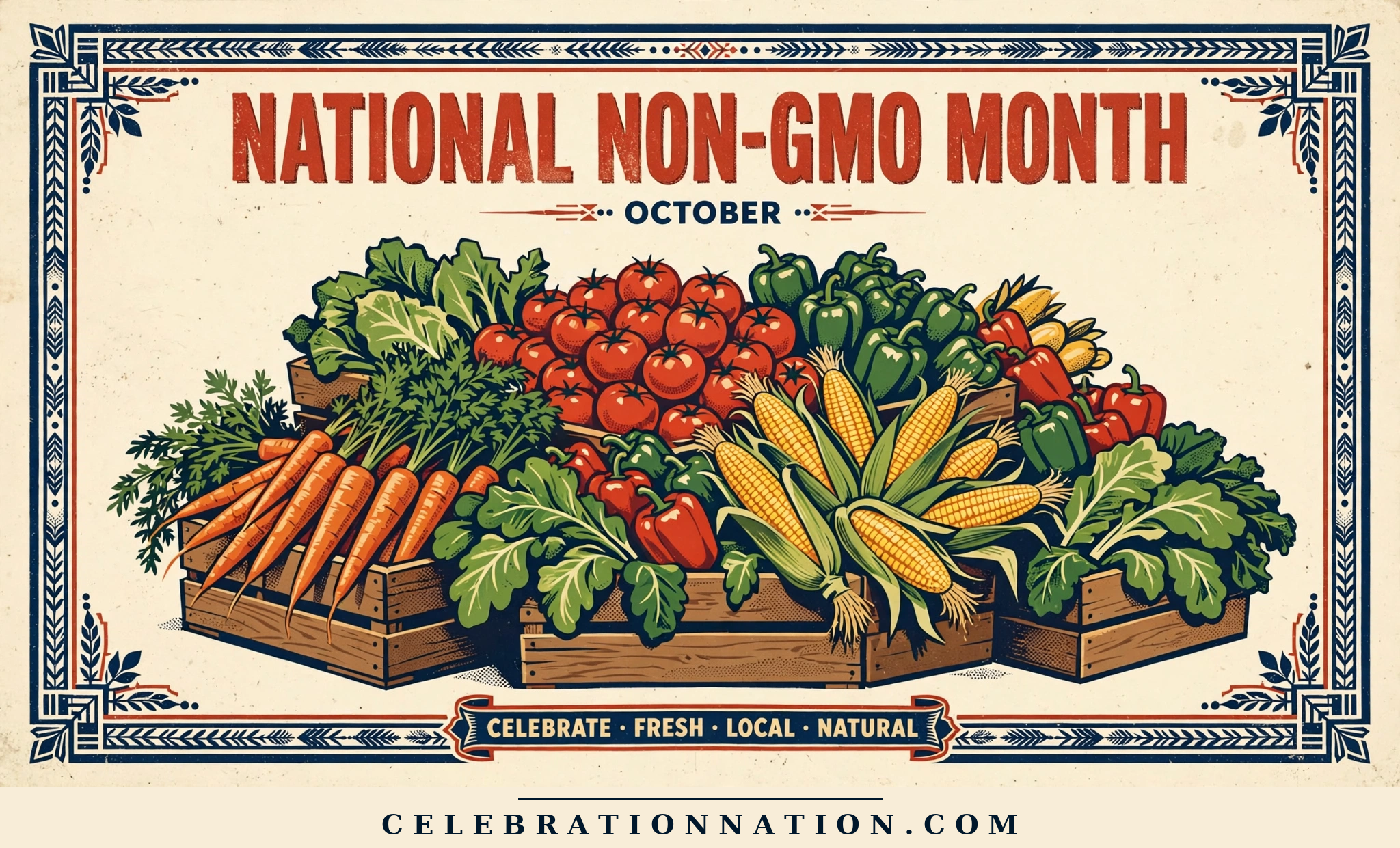
National Non-GMO Month
October invites shoppers to look closer at labels and learn the story behind the butterfly seal.
- Roots
- Created by the Non-GMO Project in 2010
- Vibe
- Informed, curious, and label-savvy
- Hashtag
- #NationalNonGMOMonth
Fast facts
The story
Every October, grocery aisles get a little more transparent. National Non-GMO Month invites shoppers to learn what genetically modified organisms are, where they appear in the food supply, and what that small butterfly seal on a package actually means.
Read the full story
The month was created in 2010 by the Non-GMO Project, a nonprofit founded in 2006 by a small group of natural foods retailers who wanted a single, trustworthy label for non-GMO products. The project's butterfly verification seal began appearing on products that same year, with early adopters like Numi Organic Tea, and it has since grown into one of the most recognized food certifications in North America.
A GMO, or genetically modified organism, is a living thing whose genes have been altered in a laboratory through genetic engineering. GMO foods have been on the market since 1994, when Calgene introduced the Flavr Savr tomato, though mandatory U.S. labeling did not arrive until Congress passed the National Bioengineered Food Disclosure Law in 2016. Today the most common genetically engineered crops in the United States include soybeans, corn, sugar beets, canola, and cotton, many of which become ingredients in packaged foods.
The Non-GMO Project's verification requires producers to meet standards for GMO testing, segregation, and traceability. More than 66,000 products now carry the seal, representing over $45 billion in annual sales, and thousands of retailers take part in October with promotions and educational events. For supporters, the month rests on a simple principle: shoppers have a right to know what is in their food and to choose accordingly.
Observing the month is as easy as reading a label. Look for the butterfly on your next grocery run, explore the Non-GMO Project's resources, or host a potluck featuring verified ingredients and see what conversation starts. However you mark it, October is a good time to shop with your eyes open.
Worth knowing
The Butterfly Seal
The Non-GMO Project Verified mark launched in 2010 and signals that a product met standards for GMO testing, segregation, and traceability.
A Short Timeline
1982: the first GMO insulin is approved. 1994: the first GMO tomato reaches stores. 2016: the U.S. passes its bioengineered food labeling law.
Common GMO Crops
Soybeans, corn, sugar beets, canola, and cotton top the list of genetically engineered crops grown in the United States.
Retailers Join In
Thousands of stores mark October with promotions, shelf tags, and educational events built around the butterfly seal.
Coming up next
See the calendar
Celebrate every day, all year
Official gear from the people who track 1,700+ celebrations.
Browse the shop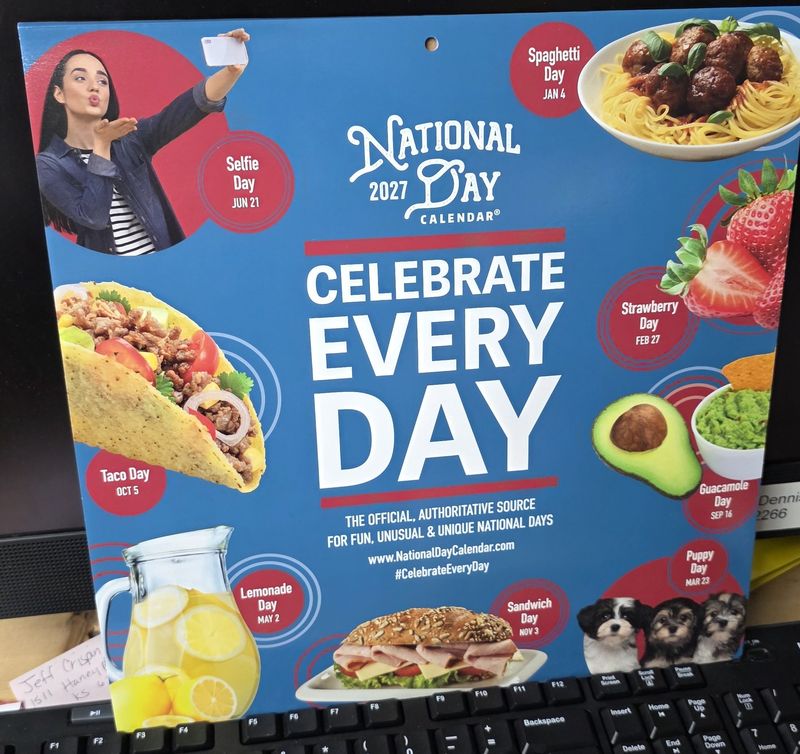 2027 Wall + Desk Calendar BundleCelebrate every day at home and at work.
Never miss a reason to celebrate.
One quick morning email with today's celebrations, ideas and posters. Free, unsubscribe anytime.
🎉 You're on the list! Watch your inbox for The Daily Confetti.