

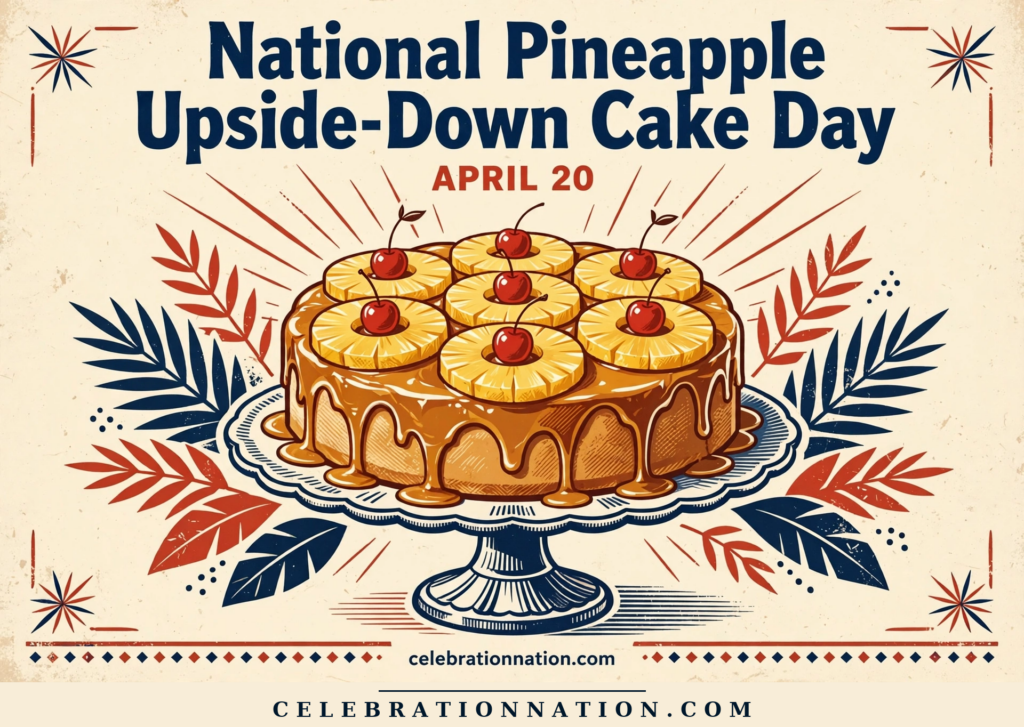
National Pineapple Upside-Down Cake Day
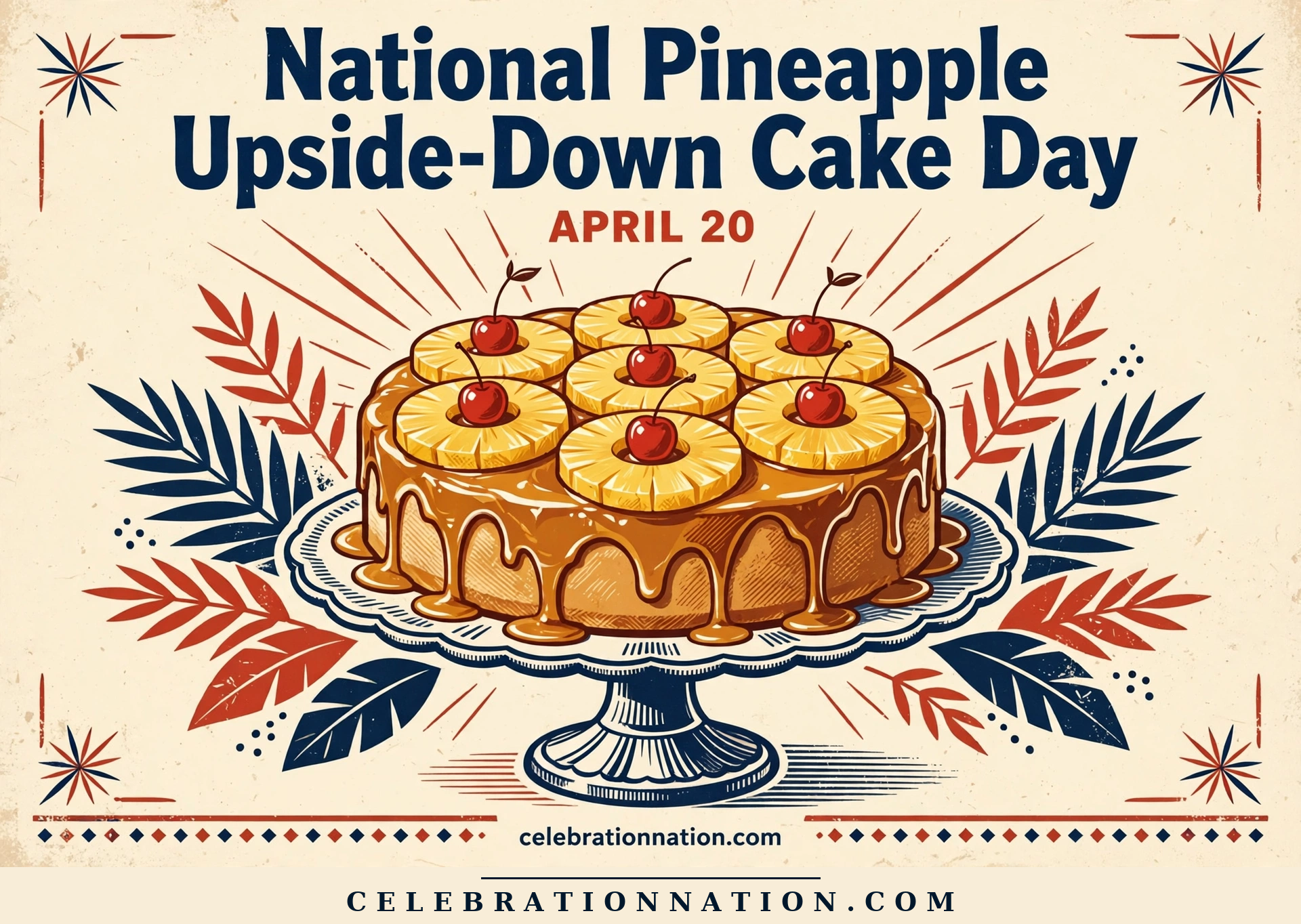
National Pineapple Upside-Down Cake Day on April 20 honors the most gloriously retro dessert in the American canon — a caramelized pineapple ring cake that looks exactly like 1955 and tastes like pure mid-century joy. Born of a Dole pineapple marketing campaign, adopted by every church potluck in America, still capable of stealing the show at any dinner party.
- Vibe
- Gloriously Retro
- Also on Apr 20
- Chinese Language Day · Volunteer Recognition Day · 420 Day
- Hashtag
- #NationalPineappleUpsideDownCakeDay
Ways to celebrate
Embrace the retro — unapologetically:
- 🎂 Bake the classic. Cast-iron skillet + brown sugar caramel + pineapple rings + maraschino cherries. 45 minutes. Ridiculously photogenic.
- 📷 Photograph the flip. The moment of truth: inverting the pan onto a plate. Videograph it. Best food moment of the year.
- 🎉 Host a retro dessert night. Pair with Jell-O mold salad, deviled eggs, and a tuna casserole. Commit to the bit.
- 🛒 Buy the right pineapple. Canned pineapple rings (not fresh) are historically accurate and actually better — they're sweeter and hold their shape. Dole brand is iconic.
- 🍒 Don't skip the cherries. Maraschino cherries are the whole visual. Buy the bright-red ones. This is not the day for 'natural' or 'artisanal' cherries.
Make it your kind of celebration
Family
The flip is a family event. Gather around; countdown; flip. Guaranteed universal cheer.
Kids
Beginner-friendly baking — let them arrange pineapple and cherries. Ages 4+. The flip is the best part; stand back for safety but let them witness.
Couples
Retro date night: pineapple cake + a classic film (Casablanca, Sunset Boulevard). Just commit to the era.
Office
Retro dessert contest — everyone brings a mid-century dessert. Pineapple upside-down cake is the frontrunner.
School
Teaches the Maillard reaction, caramelization, food advertising history, and American food marketing. Cross-curricular gold.
Community
Church potluck champion. Everyone loves it; travels well in the pan.
Just me
Small 6-inch cast iron, one cake, one afternoon. Make one for yourself; share or don't. Either way: joy.
Plan ahead
National Pineapple Upside-Down Cake Day is observed on April 20 every year. Here is where it lands for the next ten years, handy for planners, marketers and party people.
Fast facts
The story
The technique of 'upside-down' cake, caramelized fruit on the bottom, batter on top, inverted onto a plate, goes back to the 14th century in Europe. Medieval European cooks were making cakes this way because they lacked proper baking pans, so they baked on hot stones or in skillets and flipped the finished product. The French 'tarte Tatin' (apple) is the most famous international cousin.
Read the full story
Pineapple, though, that's an American story. Pineapples were wildly expensive in the US throughout the 19th century (they had to be shipped from Hawaii or the Caribbean). James D. Dole established the Hawaiian Pineapple Company at Wahiawa in 1901, and canned pineapple soon followed. Within a decade, canned pineapple rings were affordable American pantry staples. The pre-cut perfect ring shape, a Dole marketing triumph, practically begged to be the centerpiece of a dessert.
In 1925, Dole (then the Hawaiian Pineapple Company) ran a recipe contest in Ladies' Home Journal, asking readers to submit their best pineapple recipes. They got 60,000 entries. 2,500 of them were variations of pineapple upside-down cake. Dole recognized a cultural phenomenon and put massive marketing behind it, the cake became the defining Dole recipe, printed on every pineapple can for decades.
The maraschino cherry came along a few years later. Preserved cherries in bright-red syrup were a Prohibition-era American invention (real maraschino liqueur was banned, so cherries were made with corn syrup and red dye instead). They made their debut on pineapple upside-down cakes in the 1930s and never left. By 1950, the pineapple-ring + cherry-center + cast-iron-skillet version was the definitive American cake, a symbol of abundance, domesticity, and the rising middle class.
Four things that make or break a pineapple upside-down cake:
Six regional and creative variations worth baking:
Did you know?
The recipe used to be printed on every Dole pineapple can.
From 1925 through the 1980s, Dole printed the official pineapple upside-down cake recipe on the can labels. Generations of Americans learned to bake it just from reading a can.
Maraschino cherries are a Prohibition invention.
Real maraschino cherries (preserved in maraschino liqueur) were banned during Prohibition (1920-1933). American food scientists invented the bright-red corn-syrup-and-dye version as a replacement. It became so popular the original was largely forgotten.
'Upside-down' is the wrong name.
In England and Australia, the same cake is called a 'topsy-turvy' cake or a 'caramelized pineapple cake.' The 'upside-down' terminology is purely American, dating to the 1920s.
James Dole invented the pineapple industry in Hawaii.
In 1899, fresh out of Harvard, Dole went to Hawaii with $1,500 and a plan. By 1922, he owned an entire island (Lanai, 98% of it) for pineapple growing. At peak, Hawaii produced 75% of the world's pineapples.
Keep the party going
See the calendar

Celebrate every day, all year
Official gear from the people who track 1,700+ celebrations.
Browse the shop Women's Cake Crew Socks (3-pack)For the sweetest days of the year.
Never miss a reason to celebrate.
One quick morning email with today's celebrations, ideas and posters. Free, unsubscribe anytime.
🎉 You're on the list! Watch your inbox for The Daily Confetti.