


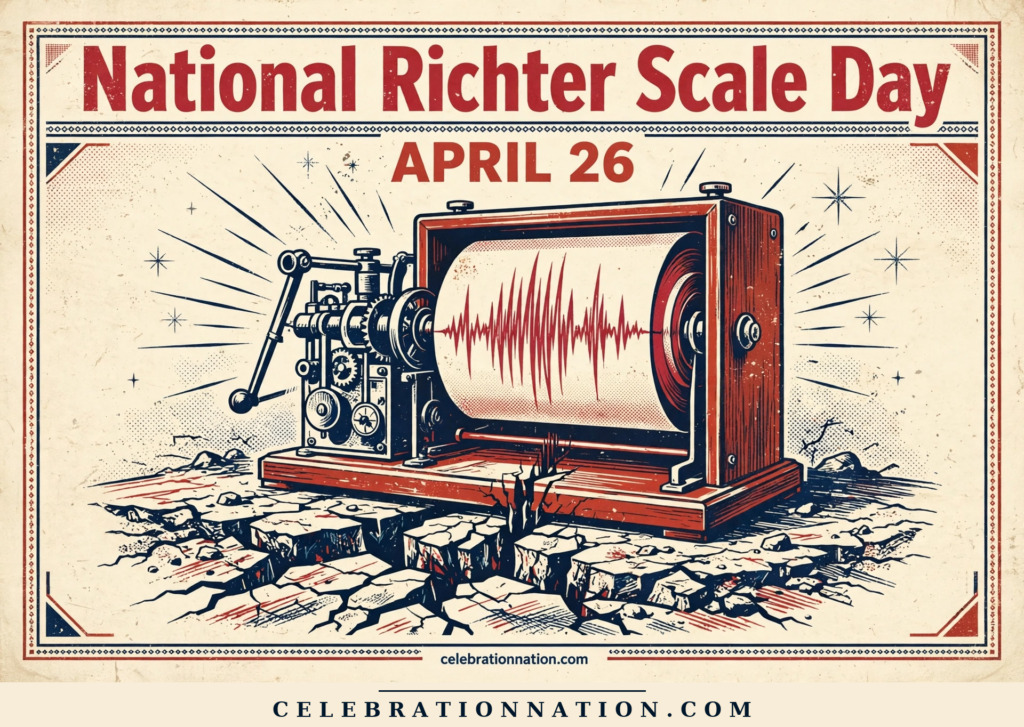
National Richter Scale Day
On National Richter Scale Day, we make a little room on the calendar for the thing that makes us who we are.
- Roots
- The observance's founder is unknown; it honors Charles F. Richter's April 26, 1900 birthday.
- Vibe
- A mix of scientific appreciation and community awareness
- Also on Apr 26
- World Intellectual Property Day · International Chernobyl Remembrance Day · Dissertation Day
- Hashtag
- #NationalRichterScaleDay
Ways to celebrate
Small, doable ways to celebrate National Richter Scale Day.
- Do one small thing that makes the day feel marked.
- Tell someone what you're celebrating and why.
- Share a post, a photo, or a memory connected to it.
- Make a tiny tradition — something you could do again next year.
- Let it be simple. Not every celebration has to be a production.
Make it your kind of celebration
Family
Do one small thing together that everyone will remember.
Kids
Turn it into a craft, a story, or a snack — meet them where they are.
Couples
Use the day as an excuse for a little intentional time together.
Office
Acknowledge the day in the team chat or at a stand-up. Small, sincere, fast.
School
Anchor a short lesson or activity around the day.
Community
Share, volunteer, or donate to make the day mean something locally.
Just me
Celebrate quietly and completely. One person can still mark a day.
Plan ahead
National Richter Scale Day is observed on April 26 every year. Here is where it lands for the next ten years, handy for planners, marketers and party people.
Fast facts
The story
National Richter Scale Day, celebrated on April 26, honors the legacy of Charles F. Richter, an American seismologist who introduced a logarithmic scale to measure the magnitude of earthquakes. Richter's scale transformed how scientists and the public understand seismic events, providing a standardized way to communicate the size of an earthquake. The scale ranges from 0 to 10, with each whole number increase representing a tenfold increase in measured amplitude and roughly 31.6 times more energy release.
Read the full story
The Richter Scale, while widely known, has been largely replaced by the Moment Magnitude Scale (Mw) in recent years for measuring larger earthquakes. However, the original Richter Scale remains an important cultural touchstone, emphasizing the scientific advancements in understanding earthquakes. The legacy of Richter's work continues to inform earthquake preparedness and response strategies, which are crucial in seismically active regions across the globe.
In the United States, California is particularly prone to earthquakes, making Richter's work especially relevant. The state experiences thousands of tremors each year, with significant quakes leading to extensive damage and loss of life. National Richter Scale Day serves as a reminder for residents to stay informed and prepared, emphasizing the importance of building codes and emergency kits in earthquake-prone areas.
Beyond the United States, the significance of Richter's contributions extends globally. Countries like Japan, Indonesia, and Chile, which frequently experience seismic activity, have adopted advanced techniques to measure and respond to earthquakes. On National Richter Scale Day, individuals around the world are encouraged to reflect on the impact of earthquakes and the ongoing need for research and preparedness in mitigating their effects.
Did you know?
First Earthquake Recorded
The first known earthquake was recorded in ancient China around 1177 BC.
Richter's Background
Charles F. Richter was born in 1900 in Hamilton, Ohio.
Revised Scale
The Moment Magnitude Scale was introduced in the 1970s.
Famous Quakes
The 1906 San Francisco earthquake registered a magnitude of 7.9.
Global Monitoring
More than 100 countries have seismic monitoring networks.
Public Awareness
Earthquake drills are crucial for public safety.
Seismology as a Science
Seismology began as a formal science in the late 19th century.
Around the world
Every culture celebrates a little differently.
- USCaliforniaHome to the San Andreas Fault.
- JPSeismic ActivityFrequent earthquakes and tsunamis.
- IDRing of FireHigh seismic activity due to tectonic plates.
- CLMajor EarthquakesSite of the largest recorded earthquake.
- MXEarthquake PreparednessRegular drills and safety measures in place.
- AUMinor ActivityRare but noteworthy seismic events.
Keep the party going
See the calendar



Celebrate every day, all year
Official gear from the people who track 1,700+ celebrations.
Browse the shop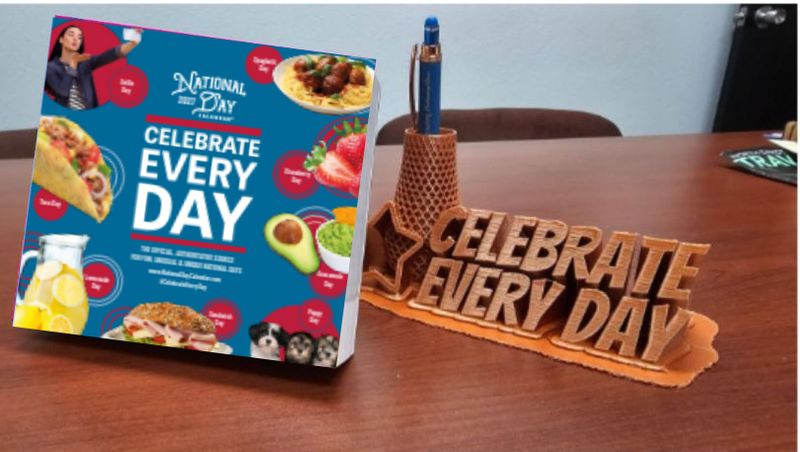 2027 National Day Desk CalendarA new celebration every morning. Daily tear-off.
Never miss a reason to celebrate.
One quick morning email with today's celebrations, ideas and posters. Free, unsubscribe anytime.
🎉 You're on the list! Watch your inbox for The Daily Confetti.