

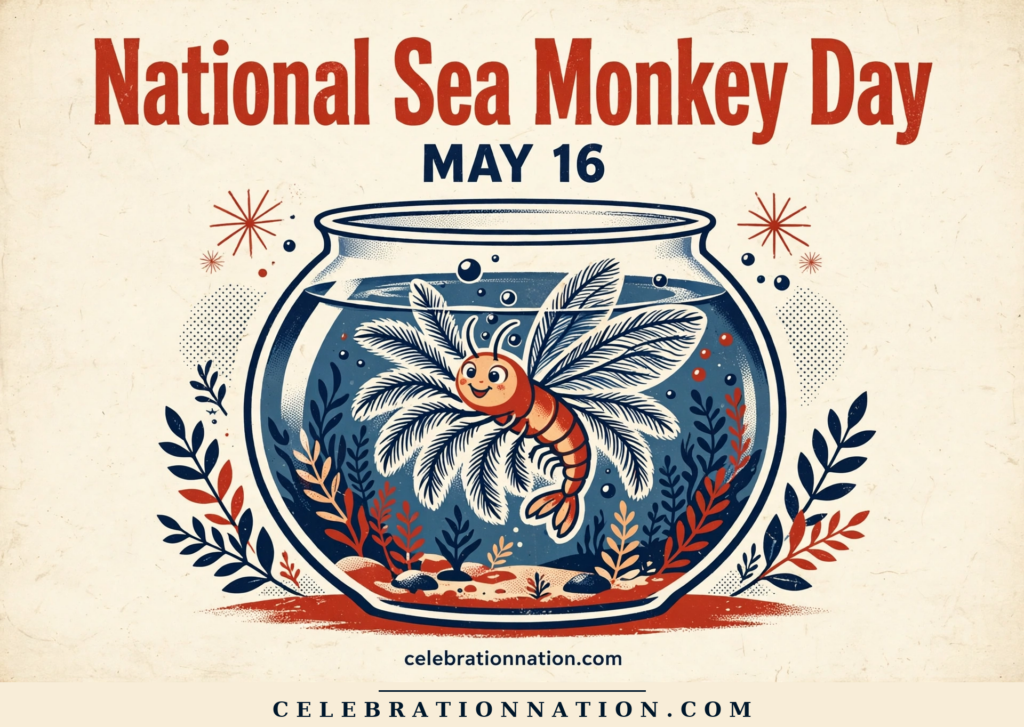
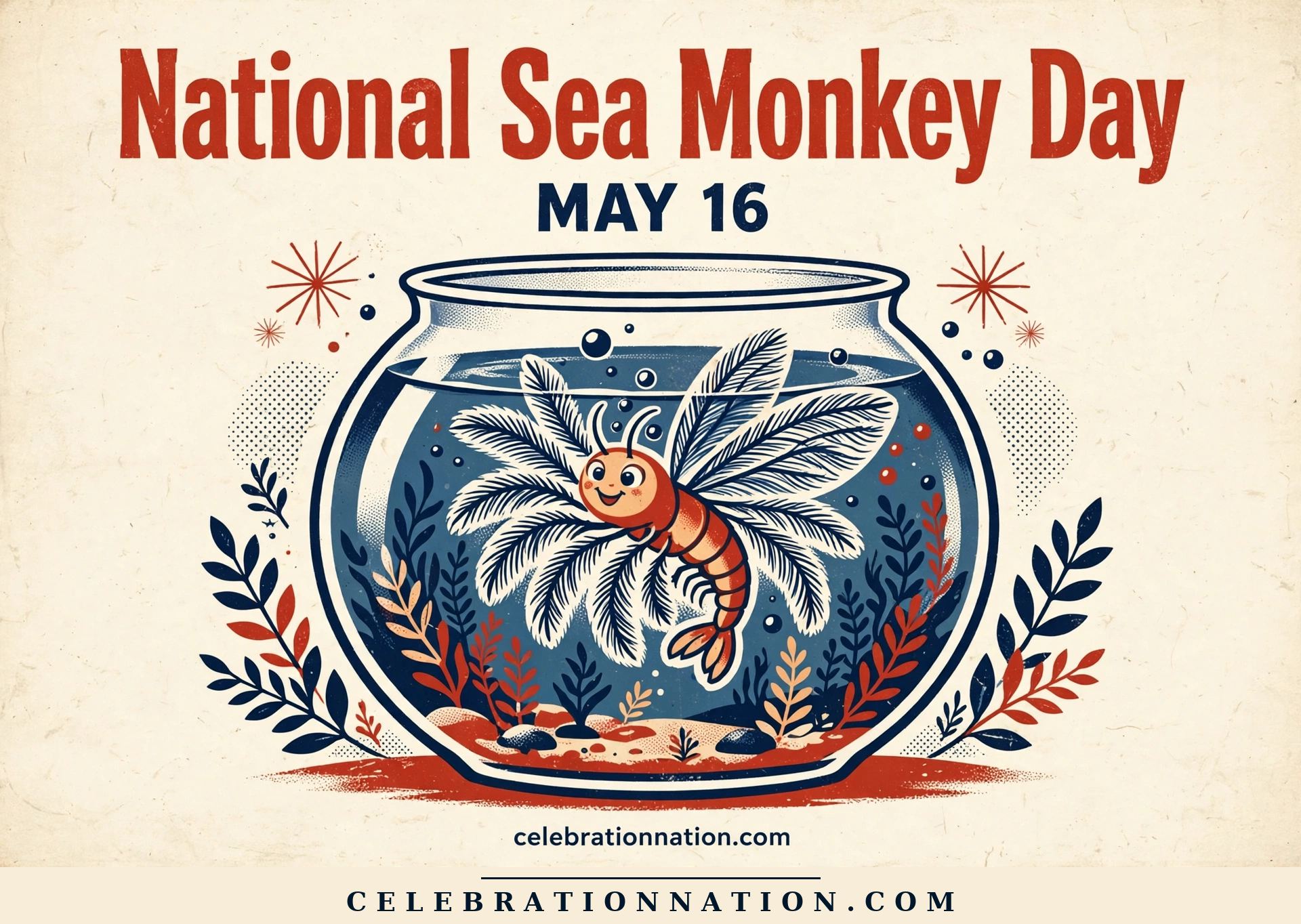
National Sea Monkey Day
National Sea Monkey Day shines a light on an animal that deserves more of our attention and a lot more of our care.
- Roots
- 1960s, created by Harold von Braunhut
- Vibe
- A blend of nostalgia and scientific curiosity.
- Also on May 16
- Armed Forces Day · Check Your Wipers Day · Honor Our LGBT Elders Day
- Hashtag
- #NationalSeaMonkeyDay
Ways to celebrate
Small, doable ways to celebrate National Sea Monkey Day.
- Learn something specific about the species — one surprising fact.
- Donate to an organization doing real work for them.
- Choose one product at the store with the animal's welfare in mind.
- Share what you learn with a kid who'll care.
- Spend 10 minutes outside looking for them or their tracks.
Make it your kind of celebration
Family
Watch one short documentary together about the animal and talk about what you learned.
Kids
Help them research it, then have them teach you one new fact at dinner.
Couples
Plan a zoo, aquarium, or sanctuary visit and go as a real date.
Office
Share a quick 'did you know' on the team chat or a lunchtime Learning session.
School
Run a one-day classroom mini-project about the species and its ecosystem.
Community
Donate to or volunteer with a conservation nonprofit focused on the animal.
Just me
Read one long-form article about them. Let yourself get into it.
Plan ahead
National Sea Monkey Day is observed on May 16 every year. Here is where it lands for the next ten years, handy for planners, marketers and party people.
Fast facts
The story
National Sea Monkey Day was established to honor the playful nature of these unique creatures that have become synonymous with childhood memories for many. First introduced by Harold von Braunhut in 1957, Sea Monkeys are actually a type of brine shrimp known scientifically as Artemia salina. Their charm lies not only in their appearance but also in their ability to hatch from dried eggs when exposed to water, an astonishing process that seems almost magical to children and adults alike.
Read the full story
The Sea Monkey phenomenon took off in the 1960s when they were marketed as 'instant pets,' and they quickly became popular among kids and families. The whimsical advertising campaigns, often featuring animated illustrations, captured the imagination of a generation. Today, Sea Monkeys continue to be a nostalgic symbol of childhood, evoking fond memories of watching these tiny creatures swim in their aquariums.
Celebrating National Sea Monkey Day can be as simple as setting up your own Sea Monkey habitat or engaging in educational activities that explore marine ecosystems. Schools and families often use this day to encourage curiosity about marine life, making it a perfect opportunity for hands-on learning. Plus, sharing experiences on social media can help create a sense of community among Sea Monkey enthusiasts.
As we celebrate this quirky observance, let's also reflect on the larger implications of our fascination with tiny life forms. Sea Monkeys serve as a reminder of the importance of biodiversity and the delicate balance of aquatic environments. Whether you're nurturing a new batch of Sea Monkeys or reminiscing about past adventures, this day invites us to appreciate the wonders of life in even the smallest forms.
Did you know?
Instant Pets
Sea Monkeys are marketed as 'instant pets'.
Hatch Time
They typically hatch within 24 to 48 hours.
Unique Lifespan
Can live for several years with proper care.
Kid-Friendly
A great introduction to pet care for children.
Educational Use
Used in classrooms to teach biology.
Cultural Impact
They have appeared in various media and merchandise.
Global Reach
Loved by children around the world.
Around the world
Every culture celebrates a little differently.
- USUnited StatesCelebrated nationwide as a fun day.
- CACanadaEnjoyed by families across the country.
- GBUnited KingdomKnown for its quirky pet culture.
- AUAustraliaPopular among children and educators.
- DEGermanySeen as a fun educational tool.
- FRFranceA unique part of kids' entertainment.
Keep the party going
See the calendar


Celebrate every day, all year
Official gear from the people who track 1,700+ celebrations.
Browse the shop National Day Celebration Card GameA party in a box, any day of the year.
Never miss a reason to celebrate.
One quick morning email with today's celebrations, ideas and posters. Free, unsubscribe anytime.
🎉 You're on the list! Watch your inbox for The Daily Confetti.