World Contraception Day
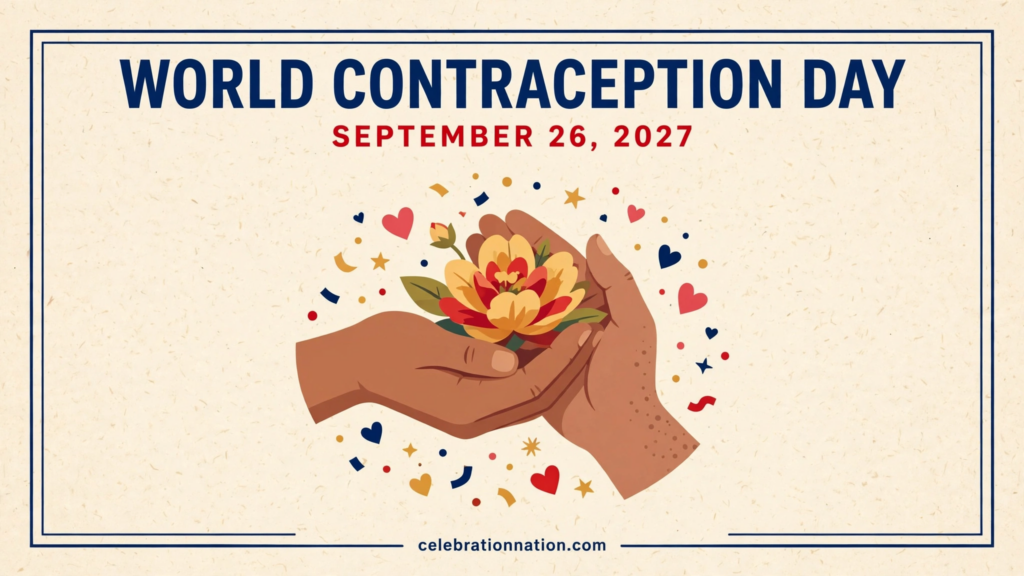
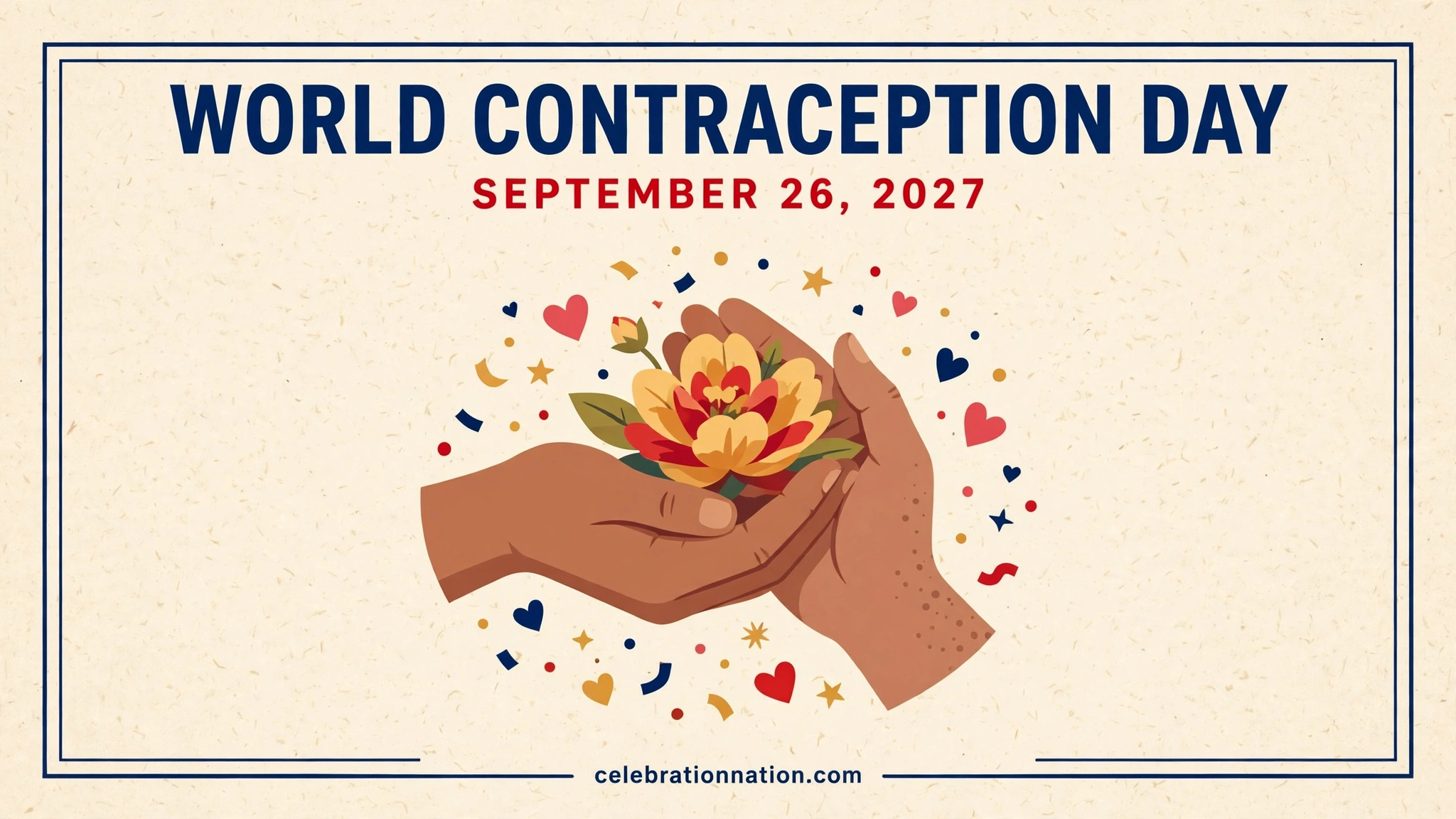
Every year on September 26, people in countries around the world join one of the most important conversations in public health. World Contraception Day is a warm, stigma-free observance built on a simple idea with life-changing power: everyone should have the knowledge and the means to decide if, when, and how many children to have. In 2027 the day falls on a Sunday, September 26. It belongs to people of every age, gender, and background, and it begins with honest information and open conversation.
- Also on Sep 26
- European Day of Languages · Pancake Day · Public Lands Day
- Hashtag
- #WorldContraceptionDay
WORLD CONTRACEPTION DAY
Every year on September 26, people in countries around the world join one of the most important conversations in public health. World Contraception Day is a warm, stigma-free observance built on a simple idea with life-changing power: everyone should have the knowledge and the means to decide if, when, and how many children to have. In 2027 the day falls on a Sunday, September 26. It belongs to people of every age, gender, and background, and it begins with honest information and open conversation.
So what does contraception actually mean? Contraception, also called birth control, is the use of methods or devices to prevent pregnancy, and it helps people decide if and when they want children. The range of options is wide: barrier methods, hormonal methods, intrauterine devices, implants, and permanent options, plus emergency methods used after unprotected intercourse. No single method is right for everyone, which is why talking with a qualified healthcare professional matters so much. Two facts are worth knowing: long-acting reversible contraception, such as implants and IUDs, is among the most effective birth control options available, and condoms are the only commonly used contraceptive method that can also help reduce the risk of many sexually transmitted infections.
The day was launched in 2007 as a global campaign by a coalition of ten international family planning organizations. Their shared goal was clear and hopeful: improve access to reliable information about contraception, help reduce unintended pregnancies, and empower young people to make informed decisions about their reproductive health. The first World Contraception Day was observed on September 26, 2007, and it struck a chord immediately, because it treated planning a family as something to be approached with knowledge and intention, not left to chance.
Since that first year, the movement has grown steadily. Today the day is supported by a coalition of about fifteen international NGOs, medical and scientific communities, and governmental organizations, with backing from UN agencies including the World Health Organization. Its guiding slogan says everything about its spirit: “A world where every pregnancy is wanted.” From the start, the campaign has stressed that access to different contraceptive methods is not only a medical issue but also a matter of reproductive rights and personal freedom.
Each year the day centers on a fresh theme, and the themes read like a map of the movement’s heart. Past themes have included “Contraception: Your Life, Your Choice” (2015), “Family Planning: It’s Your Right” (2016), “It’s All About You” (2017 and 2018), “It’s Your Life, Your Responsibility” (2021), and “The Power of Options” (2023). In recent years the banner theme has been “A choice for all,” carried in phrases like “agency, intention, access” and “Freedom to plan, power to choose.” The message stays constant beneath the changing words: personal autonomy, deliberate choices, and real access for everyone.
Why does a day like this matter? Because even when people want to avoid pregnancy, many lack real options. Social, cultural, and economic barriers can stand between people and the methods, support, and services they need, and myths and stigma can make honest questions feel hard to ask. The consequences of that unmet need ripple outward through families and communities. World Contraception Day meets the problem with its opposite: clear information, reduced stigma, wider access, and encouragement for partners and medical professionals to talk openly with one another.
One of the day’s most quoted lines comes from the late Dr. Nafis Sadik, former Executive Director of UNFPA, who said, “Healthy families are created by choice, not by chance.” The phrase has become tied to the day’s purpose, a reminder that voluntary, informed choices in family planning build stronger families and healthier communities. It captures the warmth at the center of the observance: this is not a day of lectures, but a day that trusts people with the truth and honors their right to decide.
The tone of the day matters as much as its message. Organizers encourage events that feel welcoming rather than clinical: educational initiatives, public campaigns, and community events that invite people to learn without embarrassment. Parents find age-appropriate ways to answer honest questions. Young people find the language to ask for what they need. Couples find space to talk about timing and dreams. And everyone is reminded that seeking care and information is a sign of strength, not shame, because our reproductive health shapes our futures, our families, and our peace of mind.
What began with ten organizations has grown into a global focal point for civil society, NGOs, health providers, and governments. Each September 26, social media fills with facts and resources, clinics and schools host educational events, and advocates work to counter myths and expand access. The work does not end when the day does: the conversations started on September 26 ripple outward into exam rooms, classrooms, and living rooms for the rest of the year. That is the quiet power of a day devoted to informed choice. One honest conversation can change a plan, and millions of them can change a culture.
The day’s recent banner theme, “A choice for all,” names three fundamental rights that sit at the heart of the observance. Agency means empowering individuals to make reproductive decisions free from coercion or judgment. Intention means ensuring those choices are deliberate and informed. Access means guaranteeing that methods, support, and services are available to all. Together they form a simple test for any community: can every person who wants to avoid pregnancy actually do so? World Contraception Day asks the world to answer yes, and then to make it true.
THE STORY BEHIND WORLD CONTRACEPTION DAY
🌎 Ten Organizations, One Launch
World Contraception Day was launched in 2007 by a coalition of ten international family planning organizations. The first observance took place on September 26, 2007, with a clear mission: give every person the knowledge and means to choose if, when, and how many children to have.
❤ “A World Where Every Pregnancy Is Wanted”
The day’s guiding slogan is also its vision of the future, a world where every child is born after careful planning. It is a warm goal, and it keeps the focus where it belongs: on intention, care, and love.
🧭 A Coalition Fifteen Strong and Growing
What began with ten organizations is now supported by a coalition of about fifteen international NGOs, medical and scientific communities, and governmental organizations, with support from UN agencies including the World Health Organization.
🗣 “Healthy Families Are Created by Choice, Not by Chance”
The late Dr. Nafis Sadik, former Executive Director of UNFPA, gave the movement one of its most enduring lines. Her words tie the day’s purpose to voluntary, informed family planning, and they are quoted around the world every September 26.
🎓 A New Theme Every Year
Each year brings a fresh focus: “Contraception: Your Life, Your Choice,” “Family Planning: It’s Your Right,” “The Power of Options,” and the recent banner theme, “A choice for all: agency, intention, access.” The themes keep the conversation current and personal.
WAYS TO CELEBRATE
📖 Learn About the Options
Spend time with trustworthy sources, from your own healthcare provider to reputable health organizations, and refresh your understanding of the many contraceptive methods available. Good information is the heart of the day.
💬 Have an Honest Conversation
Talk openly and respectfully with a partner, a friend, or a family member about family plans, timing, and dreams for the future. Honest talk turns big decisions into shared ones.
📢 Share Reliable Resources
Post a fact, a resource, or a local event using #WorldContraceptionDay, or support an organization expanding access to contraception in your community. Every share helps replace stigma with understanding.
Celebrate World Contraception Day
On September 26, 2027, take a warm step toward a healthier future. Learn, talk, share, and help build a world where every pregnancy is wanted and every choice is an informed one.
Plan ahead
World Contraception Day is observed on September 26 every year. Here is where it lands for the next ten years, handy for planners, marketers and party people.
Keep the party going
See the calendar


Celebrate every day, all year
Official gear from the people who track 1,700+ celebrations.
Browse the shop 2027 National Day Wall CalendarGet the 2026 edition free. 1,700+ observances.
Never miss a reason to celebrate.
One quick morning email with today's celebrations, ideas and posters. Free, unsubscribe anytime.
🎉 You're on the list! Watch your inbox for The Daily Confetti.