





World Duchenne Awareness Day
Every year on September 7, families, doctors, researchers, and advocates around the world stand together for everyone living with Duchenne muscular dystrophy. World Duchenne Awareness Day is a day of remembrance, resolve, and hope, dedicated to raising understanding of this rare disease and to supporting the search for better treatments. In 2027 the day falls on Tuesday, September 7. The date itself carries meaning: written 7/9, it stands for the 79 exons of the dystrophin gene at the heart of this condition.
- Also on Sep 7
- Grateful Patient Day · Neither Snow Nor Rain Day · New Hampshire Day
- Hashtag
- #WorldDuchenneAwarenessDay
WORLD DUCHENNE AWARENESS DAY
Every year on September 7, families, doctors, researchers, and advocates around the world stand together for everyone living with Duchenne muscular dystrophy. World Duchenne Awareness Day is a day of remembrance, resolve, and hope, dedicated to raising understanding of this rare disease and to supporting the search for better treatments. In 2027 the day falls on Tuesday, September 7. The date itself carries meaning: written 7/9, it stands for the 79 exons of the dystrophin gene at the heart of this condition.
Duchenne muscular dystrophy, often called DMD, is a genetic disorder that causes progressive muscle weakness and degeneration. It belongs to a larger family of conditions known as the muscular dystrophies, and it is among the most common and severe forms that begin in childhood. The cause lies in mutations of the dystrophin gene on the X chromosome. That gene carries the instructions for making dystrophin, a protein that protects muscle fibers from damage as muscles move and contract. In people with Duchenne, changes in the gene result in too little functional dystrophin, so muscle cells become damaged over time and muscle function is gradually lost. The condition affects the skeletal muscles, and it can also affect the heart and the muscles involved in breathing.
Duchenne primarily affects boys, though rare cases occur in girls. It is estimated to affect approximately one in every 3,500 to 5,000 boys worldwide. Symptoms usually become noticeable in early childhood: a child may have difficulty running, jumping, climbing stairs, or getting up from the floor. Because the condition is progressive, a person’s needs change throughout childhood, adolescence, and adulthood. Care often involves specialists across several areas, including neuromuscular, cardiac, and respiratory care. There is currently no cure, but early diagnosis and specialized care can significantly improve quality of life and life expectancy. For affected families, daily life can involve far more than medical appointments: new equipment, changes at home, specialist visits, and steady, loving support for whatever comes next.
The disease is named for Guillaume-Benjamin-Amand Duchenne de Boulogne, the 19th-century French physician who first described it in 1861. More than a century and a half later, his name marks a day that belongs to the families. The first World Duchenne Awareness Day was observed on September 7, 2014, an initiative of the Duchenne Parent Project in the Netherlands, led by Elizabeth Vroom together with global patient organizations. It was established by the World Duchenne Organisation to honor and support individuals living with Duchenne and Becker muscular dystrophy worldwide. What began as a parent-led call for attention has grown into a global campaign supported by patient groups, healthcare professionals, researchers, and governments.
In 2024, the cause reached a historic milestone when the United Nations officially recognized September 7 as World Duchenne Awareness Day, a landmark moment for rare disease advocacy worldwide. Each year the day carries a theme that directs attention where it is most needed. The 2025 theme, “Family: The Heart of Care,” honored the unwavering love, strength, and resilience of the families who navigate the challenges of Duchenne together. The 2026 theme, “Access changes lives,” focused on removing barriers to information, early and timely diagnosis, specialist care, clinical trials, and treatments. These themes reflect the day’s deeper purpose: not only to increase understanding of the condition, but to promote early diagnosis, better healthcare, research, inclusion, and support for affected families.
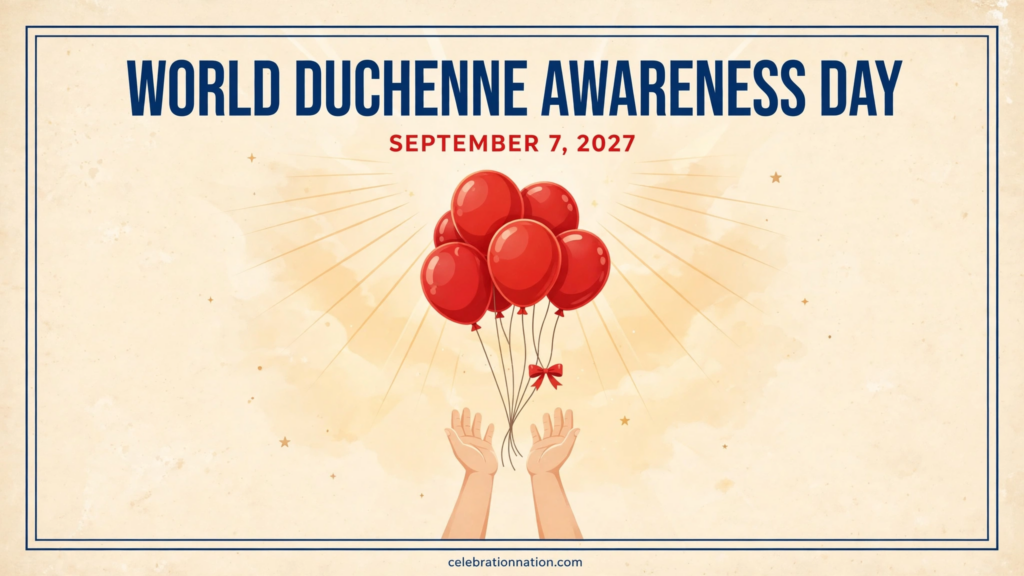
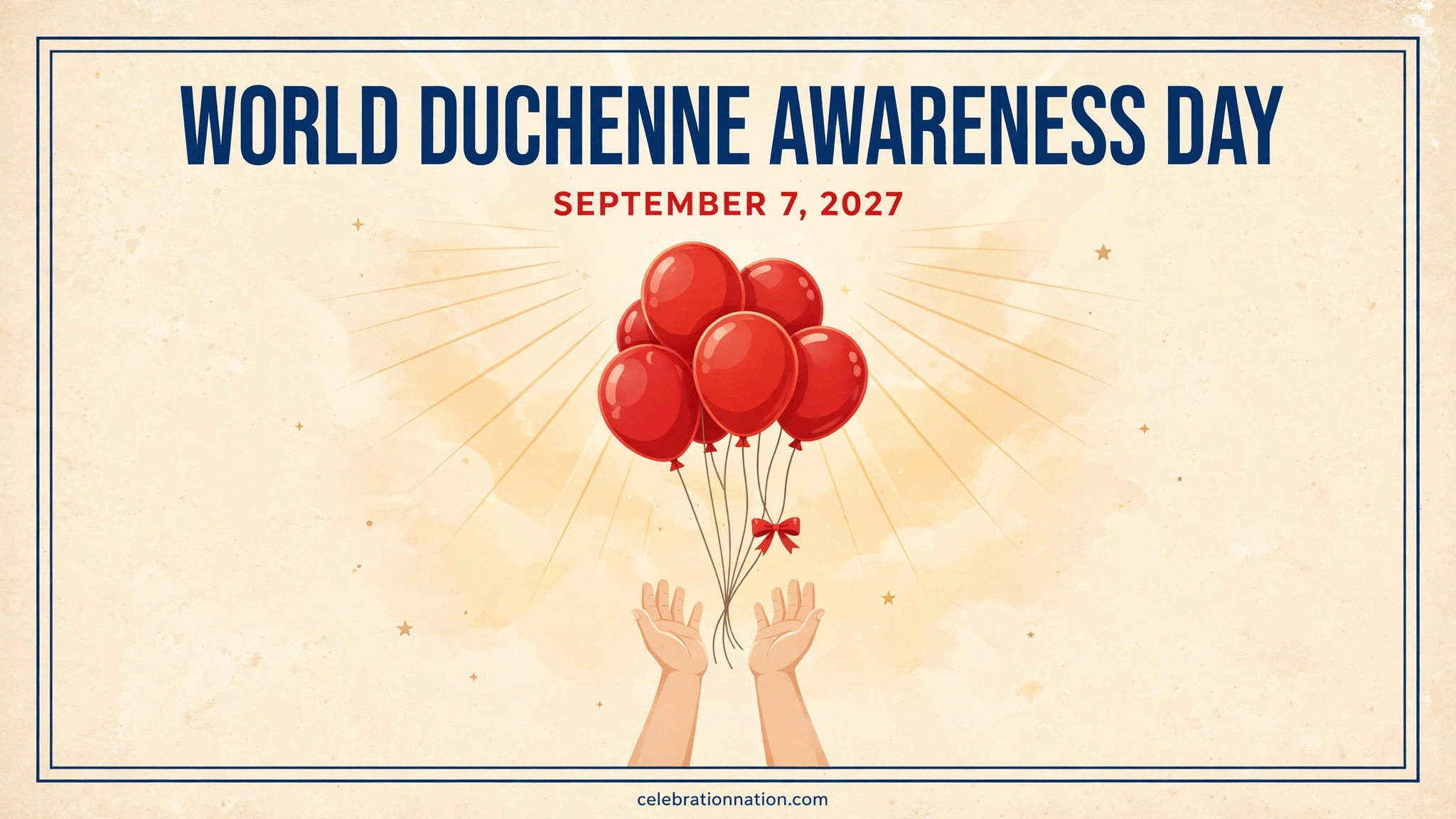
The symbol of the day is the red balloon. To commemorate World Duchenne Awareness Day, people around the world release red balloons into the sky, thousands of small red hopes rising together. It is a gentle image for a serious cause, and it captures what the day is really about: lifting up the children, young men, and families who live with Duchenne, and lifting up the research that may one day change their story. On September 7, patient organizations, families, clinicians, and communities organize events, fundraisers, and educational gatherings to increase awareness and understanding of these life-limiting conditions. Awareness is not an abstraction here. It is the first step toward earlier diagnosis, better care, and the treatments of tomorrow.
The day also embraces those living with Becker muscular dystrophy, a related condition caused by mutations in the same gene, and it speaks honestly about aspects of the disease that receive less attention. Researchers have long known that the missing dystrophin protein can affect the brain as well as the muscles, which is why some individuals face learning difficulties and behavioral challenges alongside the physical ones. Themes like “Duchenne and the brain” have asked for early screening, appropriate testing, more research, and better care in this area, so that every person can reach their full potential. For many families, these quieter struggles bring as much daily worry as the physical ones, and naming them openly is part of what the day is for.
Above all, World Duchenne Awareness Day is about community. It brings together people living with Duchenne, their families, healthcare professionals, researchers, patient organizations, governments, and neighbors who simply care. It asks the world to look closely at a rare disease and see the people behind it: children with favorite games and big dreams, parents who advocate fiercely and love endlessly, clinicians and scientists working toward breakthroughs. Hope, on this day, is not a wish. It is a plan, built from research, from care, and from the refusal of thousands of families to face this alone.
THE STORY BEHIND WORLD DUCHENNE AWARENESS DAY
🧬 7/9, the 79 Exons
September 7 was chosen with intention. Written 7/9, the date represents the 79 exons of the dystrophin gene, mutations in which cause Duchenne muscular dystrophy. The calendar itself tells the story of the science.
👶 Named for a 19th-Century Physician
The disease is named for Guillaume-Benjamin-Amand Duchenne de Boulogne, who first described it in 1861. His careful clinical observations gave a name to a condition families had faced without one.
🤝 Parents Started It
The first World Duchenne Awareness Day was observed on September 7, 2014. The initiative came from the Duchenne Parent Project in the Netherlands, led by Elizabeth Vroom with global patient organizations, and was established by the World Duchenne Organisation.
🌎 The United Nations Joins In
In 2024, the United Nations officially recognized September 7 as World Duchenne Awareness Day. The designation marked a milestone for global rare disease advocacy and for every family the day represents.
🎈 Red Balloons Rise
Red balloons are the symbol of the day. Around the world, people release them into the sky in memory, in hope, and in solidarity, thousands of small red promises that these families are not alone.
WAYS TO CELEBRATE
📖 Learn the Early Signs
Take time on September 7 to learn about Duchenne: its early symptoms, its genetic causes, and the path to diagnosis. Awareness that leads to earlier diagnosis can change a family’s journey.
🎈 Honor the Red Balloon
Display a red balloon, the day’s symbol, at home, at work, or in a post online to show solidarity with everyone living with Duchenne. It is a small, visible way to say: we see you, and we stand with you.
💗 Support Families and Research
Consider a donation to a Duchenne patient organization or share their work with friends. Fundraising and education on this day help drive research, better care, and hope for the future.
Honor World Duchenne Awareness Day
On September 7, 2027, stand with the families, clinicians, and researchers working toward a better future. Learn, share, support, and help lift awareness of Duchenne muscular dystrophy a little higher, like a red balloon against the sky.
Plan ahead
World Duchenne Awareness Day is observed on September 7 every year. Here is where it lands for the next ten years, handy for planners, marketers and party people.
Keep the party going
See the calendar



Celebrate every day, all year
Official gear from the people who track 1,700+ celebrations.
Browse the shop 2027 Wall Calendar, signed by Marlo AndersonSigned by the founder of National Day Calendar.
Never miss a reason to celebrate.
One quick morning email with today's celebrations, ideas and posters. Free, unsubscribe anytime.
🎉 You're on the list! Watch your inbox for The Daily Confetti.