









National Woodie Wagon Day
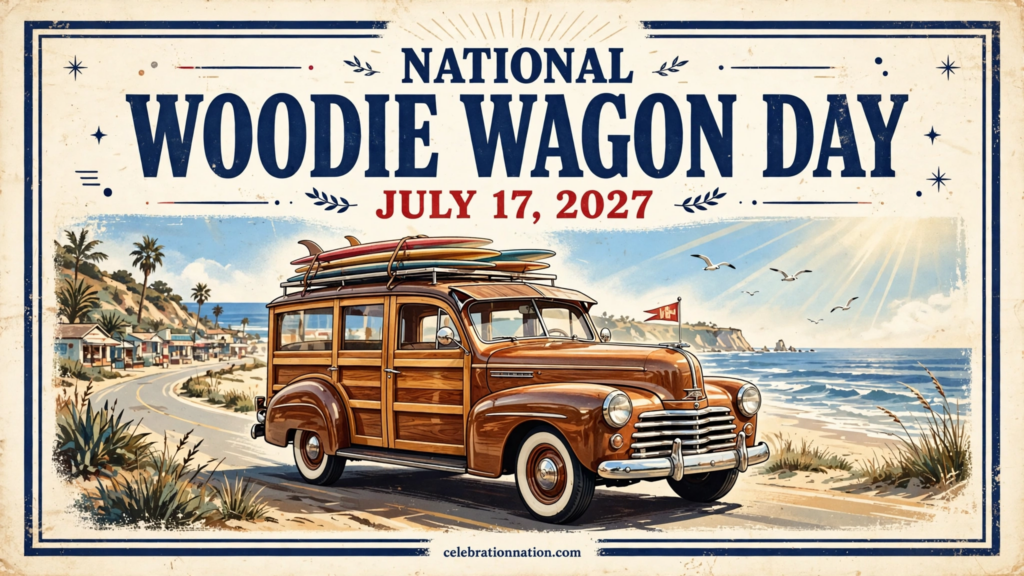
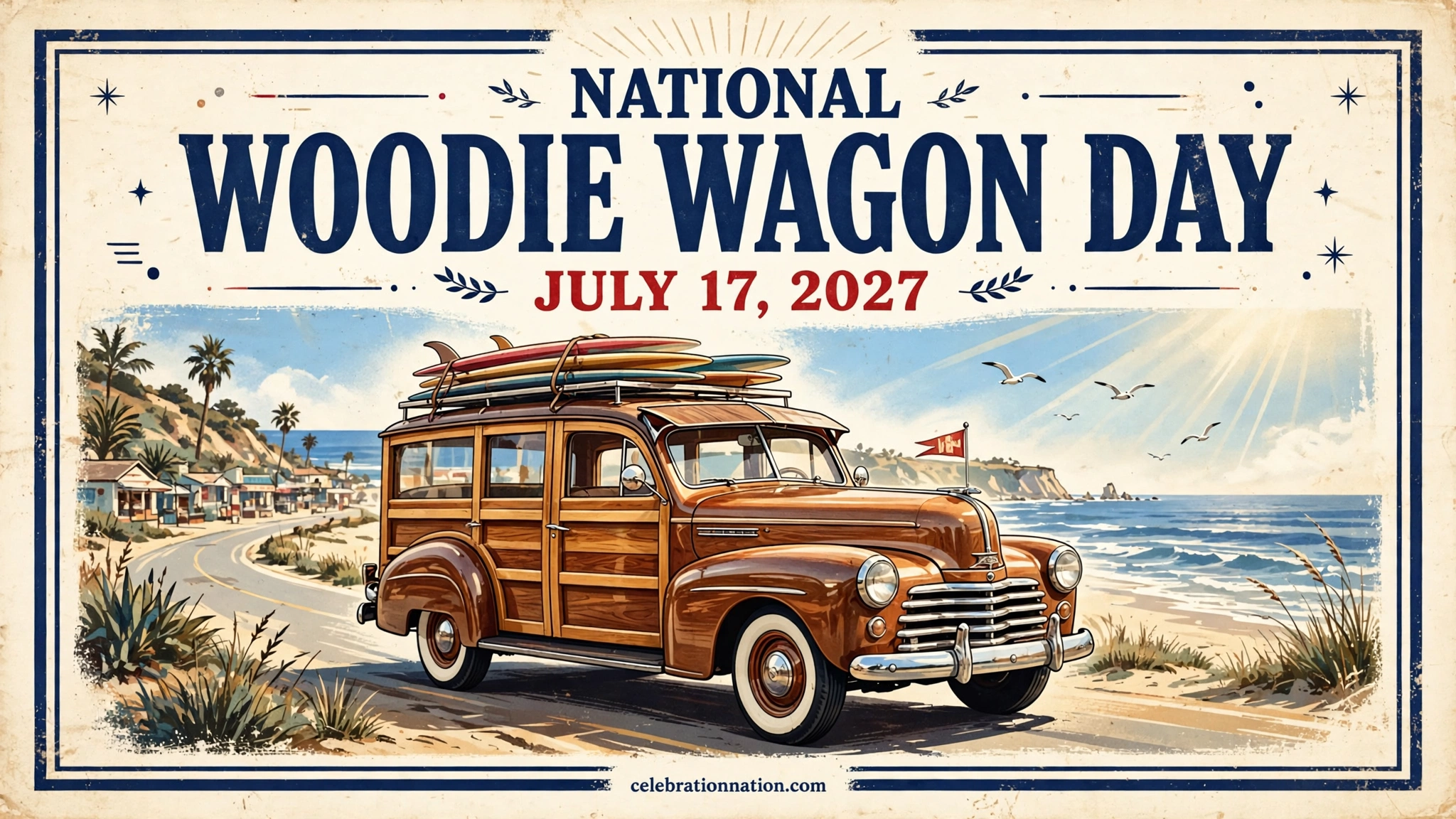
Every year on the third Saturday in July, we roll out the red carpet for the most beautiful workhorse ever to hit American roads. With their gleaming real-wood sides, doors, and tailgates, woodie wagons are rolling pieces of art, part fine furniture, part family car, and pure Americana from bumper to bumper. In 2027 the day falls on July 17. This is National Woodie Wagon Day, a celebration of classic craftsmanship, family road trips, and surf culture, and it is open to absolutely everyone.
- Hashtag
- #NationalWoodieWagonDay
NATIONAL WOODIE WAGON DAY
Every year on the third Saturday in July, we roll out the red carpet for the most beautiful workhorse ever to hit American roads. With their gleaming real-wood sides, doors, and tailgates, woodie wagons are rolling pieces of art, part fine furniture, part family car, and pure Americana from bumper to bumper. In 2027 the day falls on July 17. This is National Woodie Wagon Day, a celebration of classic craftsmanship, family road trips, and surf culture, and it is open to absolutely everyone.
So what exactly is a woodie wagon? It is a station wagon famous for its wood-bodied construction or wood exterior panels, built in the United States from the late 1920s through the late 1940s. The sides, doors, and even trunk hatches were meticulously paneled with real wood, think ash, mahogany, and birch. Despite being 200 to 300 pounds heavier than all-steel cars, woodies exuded beauty and class. Early versions were utilitarian workhorses, mostly used to carry passengers and heavy luggage from train depots to local resorts and hotels, because of how spacious they were. But they soon evolved into something much grander: during the 1930s and 1940s, the woodie wagon was a definitive status symbol among the elite, expensive to manufacture and requiring highly skilled woodwork and intensive labor that put them out of reach for the average buyer.
The woodie’s journey begins in the 1910s and 1920s, when car manufacturers built only the chassis and mechanical components of a vehicle, and buyers commissioned local craftsmen or custom body shops to build the wooden passenger compartments. By the late 1920s and 1930s, major automakers like Ford and Chrysler began mass producing woodie wagons as demand soared. The first mass-produced woodie was the 1929 Ford Model A. To feed his factories, Henry Ford purchased massive timberlands in Iron Mountain, Michigan, to supply the high-quality maple and birch needed for Ford’s iconic station wagons, and in 1940 alone Ford built 8,700 wood-bodied station wagons. A single woodie required some 150 sizes and shapes of wood to assemble, which tells you everything about the craftsmanship involved. Each one was practically a custom piece of furniture that happened to have an engine.
Real wood, however, comes with real headaches. Termites were one of the biggest maintenance issues for woodie owners, because early woodies were made of real maple, birch, and mahogany, and wood rot was every owner’s biggest worry. High maintenance costs, the expense of real wood, and vehicle depreciation forced automakers to phase out the woodie wagon in the 1950s. The last year for all-wood passenger compartments in American station wagons was 1953, and the last legitimate woodie ever made was the Morris Minor Traveller in 1971. But the story did not end there. A decade later, the vehicles found new life in California during the 1960s, when the woodie became permanently intertwined with surf music, beach culture, and the American West Coast lifestyle. The Beach Boys era turned the old depot hack into the ultimate surf wagon, and it has never quite left the beach since.
Today, woodie wagons are highly collectible symbols of Americana, treasured by the owners and restoration enthusiasts who keep these rolling pieces of art on the road. Surviving examples are most often seen at museums, classic car shows, and in private collections, where originality and quality of restoration matter as much as the badge on the hood. The National Woodie Club brings together enthusiasts of these delightful cars, American or foreign, celebrating their rich history and cultural contribution. Car makers did keep the wood look alive in later decades with decorative plastic and vinyl panels on and off through the 1990s, but nothing touches the real thing. On the third Saturday in July, we honor the history, the owners, and the craftspeople who keep the woodies gleaming.
The woodie’s appeal runs deeper than nostalgia. In an age of identical crossovers, a woodie wagon is unapologetically itself: part horse-drawn carriage, part automobile, all character. Collectors speak of them the way art lovers speak of paintings, because in a very real sense, that is what they are. A 1952 Mercury custom woodie sold for $134,750 in 2013, proof that the market agrees these are rolling masterpieces. Whether you admire them at a show, spot one cruising the coast, or simply enjoy the photos, National Woodie Wagon Day is a reminder that cars were once built like furniture, polished like pianos, and loved like family.
THE STORY BEHIND NATIONAL WOODIE WAGON DAY
🚗 The 1929 Ford That Started It All
The first mass-produced woodie was the 1929 Ford Model A, which became a beloved model for 25 years. Before that, cars with wood paneling were mostly done by custom shops in the 1920s. Ford’s decision to build woodies on the assembly line turned a craft curiosity into an American icon and launched the golden age of the wooden station wagon.
🌲 Ford’s Forest in Michigan
To meet demand for his woodies, Henry Ford bought 400,000 acres of forest land in Michigan in 1920 and began milling his own timber in 1934. The high-quality maple and birch from Iron Mountain, Michigan, supplied Ford’s iconic station wagons through the 1930s and 1940s, when the woodie reigned as a status symbol of the elite.
🐛 Termites: The Woodie’s Worst Enemy
Owning a real woodie meant living with real wood problems. Termites were one of the biggest maintenance issues for owners, because early woodies were made of real maple, birch, and mahogany, and wood rot was the constant fear. Many owners will tell you the woodie’s biggest worry was never the engine. It was the bugs.
🌎 Surf’s Up in the Sixties
After automakers phased out real woodies in the 1950s, the cars found glorious new life in 1960s California. The woodie became permanently intertwined with surf music, beach culture, and the American West Coast lifestyle, the perfect ride for hauling boards to the beach. It is the rare car that went from luxury status symbol to beach bum icon and nailed both.
🔨 Kept Alive by the Faithful
The National Woodie Club and restoration enthusiasts across the country keep these rolling pieces of art on the road today. With some 150 sizes and shapes of wood needed to assemble a single woodie, every restoration is a labor of love, and collectors prize originality and craftsmanship above all. The third Saturday in July is their day to shine.
WAYS TO CELEBRATE
🚗 Visit a Car Show or Museum
Head to a classic car show, cruise night, or auto museum in your community on July 17 and look for the woodies. Take pictures, ask owners about their restorations, and share your love for these classic cars on social media. There is no better way to appreciate 150 pieces of woodworking than up close.
📖 Learn About Woodie Wagons
Spend some time at home reading a book or watching a documentary about woodie wagons, from the 1929 Ford Model A to the surf wagons of the sixties. Fun starter facts: Ford built 8,700 wood-bodied wagons in 1940 alone, and the last legitimate woodie was the Morris Minor Traveller in 1971.
🤝 Share Your Woodie Love With Friends
Gather friends who love old and vintage cars and swap stories, photos, and dream-garage lists. If someone in the group actually owns a woodie, ask for a ride. Nothing converts a skeptic like cruising in 70-year-old woodwork with the windows down.
Celebrate National Woodie Wagon Day
On July 17, 2027, give a wave to every wood-paneled wagon you see, real wood or loving tribute. From depot hacks to surf icons, woodie wagons carried America in style, and they deserve their day in the summer sun. Shine up the woodwork and celebrate.
Plan ahead
National Woodie Wagon Day is observed on the third Saturday in July. Here is where it lands for the next ten years, handy for planners, marketers and party people.
Keep the party going
See the calendar


Celebrate every day, all year
Official gear from the people who track 1,700+ celebrations.
Browse the shop 2027 Wall + Desk Calendar BundleCelebrate every day at home and at work.
Never miss a reason to celebrate.
One quick morning email with today's celebrations, ideas and posters. Free, unsubscribe anytime.
🎉 You're on the list! Watch your inbox for The Daily Confetti.