






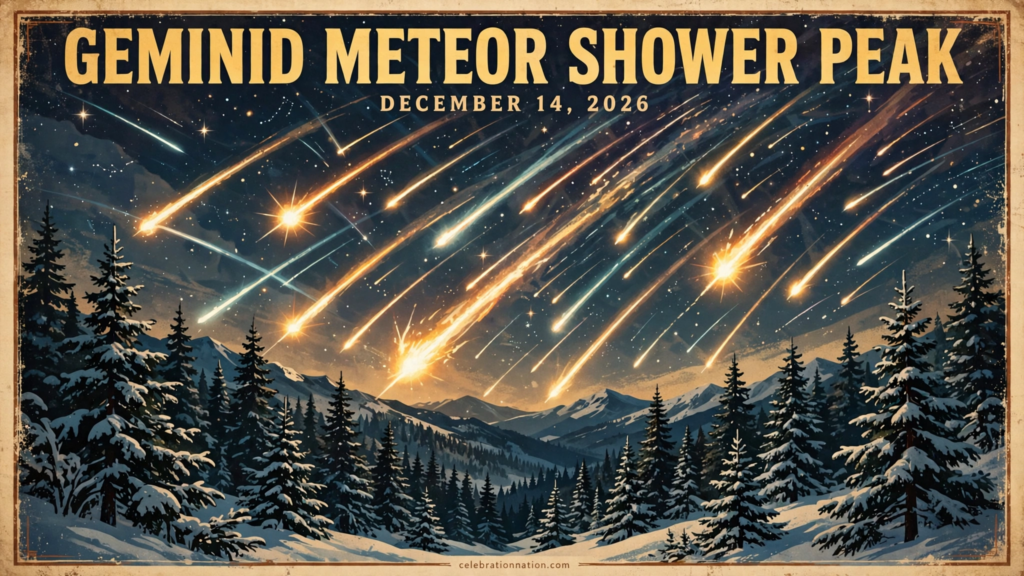
Geminid Meteor Shower Peak
This year on December 14, the Geminid meteor shower reaches its peak, and many skywatchers call it the best and most reliable shower of the year. Expect bright, often yellow meteors from a shower with an unusual parent: an asteroid, not a comet.
- Roots
- The Geminids come from 3200 Phaethon, an asteroid or possible rock comet, one of only two major showers not born from a comet.
- Also on Dec 14
- Martyred Intellectuals Day · Monkey Day · Alabama Day
- Hashtag
- #GeminidMeteorShowerPeak
3 ways to celebrate
Start Early
The Geminids put on a good show before midnight because the radiant in Gemini rises early in the evening. Head out around 9 or 10 pm instead of waiting for the small hours.
Enjoy a Moon-Free Night
On peak night the waxing crescent Moon sets at about 9:20 pm, leaving the rest of the night dark. Settle in just as it dips away and enjoy the darkest part of the show.
Dress Like Winter Means It
December nights are cold, and the standard advice from astronomers applies: dress for winter cold. Layers, a hat, and a warm drink turn a short peek into a long, comfortable watch.
Plan ahead
Geminid Meteor Shower Peak is observed on December 14 every year. Here is where it lands for the next ten years, handy for planners, marketers and party people.
Fast facts
The story
Most meteor showers are comet debris, but the Geminids come from 3200 Phaethon, an asteroid or possible rock comet. Along with the Quadrantids, they are one of only two major showers that do not originate from a comet. The shower is active from December 4 to December 17, 2026, and peaks on the night of December 13-14.
Read the full story
The Geminids are a young shower with a rising career. They were first observed in 1862 as a minor display of only 10 to 20 meteors per hour, but Jupiter's gravity has gradually pulled the debris stream closer to Earth's orbit, and the shower has intensified into the strongest of the year, with about 120 meteors per hour possible under perfect dark-sky conditions.
Unlike most showers, the Geminids put on a good show before midnight, because the radiant in Gemini, near the star Castor, rises early in the evening. The meteors themselves are bright, fairly slow at about 22 miles (35 kilometers) per second, and often yellow in color.
Conditions in 2026 are excellent. On the peak night the Moon is a waxing crescent that sets at about 9:20 pm, leaving the rest of the night dark. Dress for winter cold and watch from about 9 or 10 pm onward.
Keep the party going
See the calendar



Celebrate every day, all year
Official gear from the people who track 1,700+ celebrations.
Browse the shop 2027 Wall Calendar, signed by Marlo AndersonSigned by the founder of National Day Calendar.
Never miss a reason to celebrate.
One quick morning email with today's celebrations, ideas and posters. Free, unsubscribe anytime.
🎉 You're on the list! Watch your inbox for The Daily Confetti.