






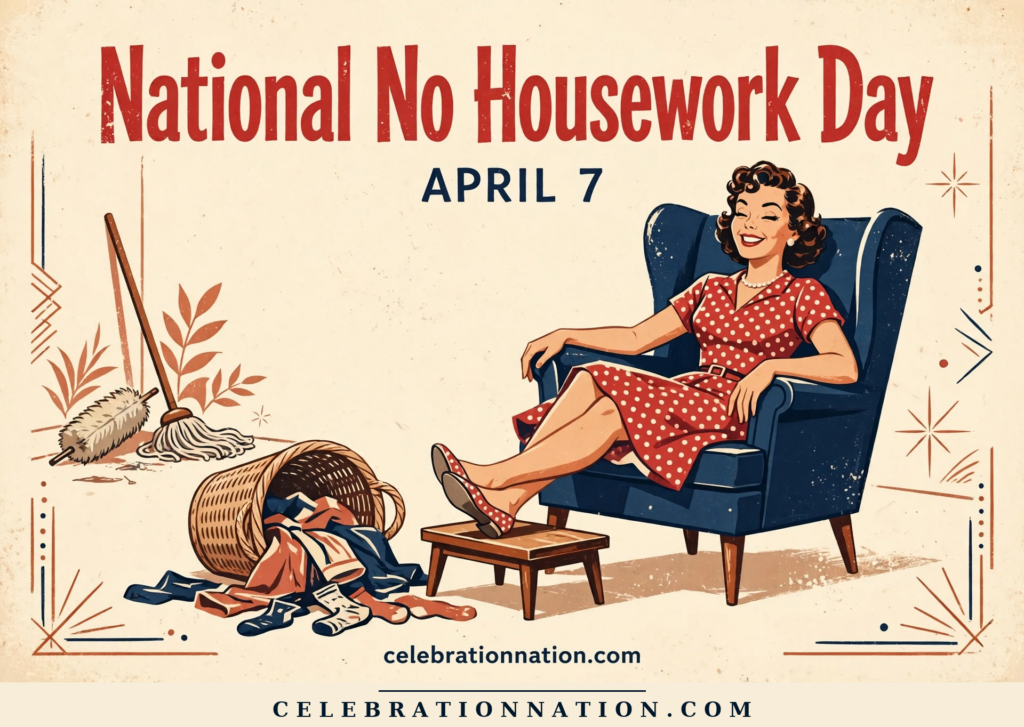
National No Housework Day
National No Housework Day is a small but real reason to pause, notice, and celebrate — together if we can.
- Roots
- Unclear, emerged in late 20th century as a cultural concept
- Vibe
- Relaxed, indulgent, liberating
- Also on Apr 7
- International Day of Reflection on the 1994 Genocide in Rwanda · International Beaver Day · Beer Day
- Hashtag
- #NationalNoHouseworkDay
Ways to celebrate
Small, doable ways to celebrate National No Housework Day.
- Do one small thing that makes the day feel marked.
- Tell someone what you're celebrating and why.
- Share a post, a photo, or a memory connected to it.
- Make a tiny tradition — something you could do again next year.
- Let it be simple. Not every celebration has to be a production.
Make it your kind of celebration
Family
Do one small thing together that everyone will remember.
Kids
Turn it into a craft, a story, or a snack — meet them where they are.
Couples
Use the day as an excuse for a little intentional time together.
Office
Acknowledge the day in the team chat or at a stand-up. Small, sincere, fast.
School
Anchor a short lesson or activity around the day.
Community
Share, volunteer, or donate to make the day mean something locally.
Just me
Celebrate quietly and completely. One person can still mark a day.
Plan ahead
National No Housework Day is observed on April 7 every year. Here is where it lands for the next ten years, handy for planners, marketers and party people.
Fast facts
The story
The concept of National No Housework Day, observed annually on April 7th, taps into a universal sentiment: the desire for a respite from endless domestic tasks. While its precise origins remain somewhat obscure, likely emerging from a grassroots cultural yearning rather than a formal proclamation, its widespread adoption speaks volumes. In a nation built on industry and the Protestant work ethic, a day dedicated to intentionally *not* working, especially on the home front, offers a refreshing counter-narrative. It’s a quiet rebellion against the constant hum of the washing machine and the ever-present dust bunny, an acknowledgment that even the most diligent among us deserve a break.
Read the full story
For generations, the American ideal of home often included a meticulously kept interior, a symbol of order and prosperity. From the post-World War II suburban boom, with its emphasis on domesticity and the rise of labor-saving devices, to the modern era of dual-income households, the expectation of a clean home has persisted. Yet, the reality of maintaining such an ideal often falls disproportionately, leading to burnout and stress. National No Housework Day provides a collective exhale, a moment to step away from the vacuum cleaner and reconsider the balance between domestic duties and personal well-being.
Culturally, this day resonates with a broader movement towards self-care and mindfulness. It's not merely about avoiding chores; it's about reclaiming time for oneself, for family, or for neglected passions. Imagine the countless Americans on April 7th, some opting for a leisurely brunch, others finally diving into that untouched novel, and many simply enjoying the quietude of a home where the to-do list has been temporarily suspended. This annual pause highlights the often-invisible labor of maintaining a household, prompting a momentary appreciation for the effort involved and the joy found in its absence.
Indeed, National No Housework Day serves as a playful reminder that life extends beyond the laundry pile. It's an encouragement to prioritize rest, recreation, and connection over perfection. From the bustling streets of New York City to the quiet suburbs of Kansas, the spirit of this day unites diverse individuals in a shared quest for a little domestic freedom. It underscores the profound truth that a truly celebrated life includes moments of intentional idleness, allowing the mind and body to recharge before returning to the rhythms of daily life, dust and all.
Did you know?
The Origin Story
Unlike many holidays with clear founders, National No Housework Day seems to have emerged organically from the collective desire for a break, gaining traction through informal channels and popular sentiment rather than legislative decree.
The "Second Shift"
Sociologists often refer to the unpaid labor of housework and childcare, predominantly performed by women after their paid workday, as the "second shift." This day subtly acknowledges that unseen labor.
Robotic Assistance
The rise of robotic vacuum cleaners like the Roomba, first introduced in 2002, reflects a societal yearning to minimize manual housework, aligning with the spirit of this celebratory day.
Calorie Burner
An hour of moderate housework, such as vacuuming or scrubbing, can burn approximately 200-250 calories, comparable to a brisk walk. Today, however, those calories are best spent on relaxation.
Housework as a Stressor
Studies consistently show that household chores are a significant source of stress for many individuals and couples, often leading to conflict. A day off can be a relationship balm.
Global Chore Time
While Americans spend about 6 hours a week on housework, women in many developing nations can spend upwards of 20-30 hours weekly on domestic tasks, highlighting global disparities.
The Dust Bunny's Reign
A typical household can accumulate up to 40 pounds of dust each year, composed of skin cells, pollen, textile fibers, and more. One day off won't make a significant difference to its reign.
Around the world
Every culture celebrates a little differently.
- USThe American Dream's PauseIn the U.S., where household chores are a significant part of daily life for millions, this day offers a specific, sanctioned break from the relentless tidying and cleaning. It reflects a growing recognition of the need for personal time and mental well-being amidst busy schedules.
- GBBritish 'Keep Calm'While not formally observed, the sentiment of a "no housework day" resonates deeply in the UK. The British penchant for a good cuppa and a moment of quiet reflection often naturally leads to brief pauses in domestic duties, aligning with the spirit of relaxation.
- JPZen of Tidiness vs. RestJapan, known for its meticulous approach to cleanliness and organization (think KonMari method), offers an interesting contrast. While tidiness is valued, the concept of a dedicated day for rest from these duties would be seen as a necessary balance to maintain harmony.
- FRFrench Art of LivingIn France, the "art de vivre" often prioritizes leisure, good food, and conversation. A day free from housework would naturally fit into this cultural philosophy, allowing more time for enjoying life's simpler pleasures without domestic interruption.
- INFestival of FreedomWith large families and often extensive homes, housework in India can be a monumental task. While no specific day exists, the spirit of celebration during numerous festivals often means a temporary suspension of routine chores for communal joy and feasting.
- AUAussie Chill OutAustralians, known for their relaxed "no worries" attitude and love for the outdoors, would readily embrace a day dedicated to avoiding chores. It aligns perfectly with spending time at the beach, having a barbecue, or simply enjoying the sunshine.
Keep the party going
See the calendar



Celebrate every day, all year
Official gear from the people who track 1,700+ celebrations.
Browse the shop 2027 Wall + Desk Calendar BundleCelebrate every day at home and at work.
Never miss a reason to celebrate.
One quick morning email with today's celebrations, ideas and posters. Free, unsubscribe anytime.
🎉 You're on the list! Watch your inbox for The Daily Confetti.