






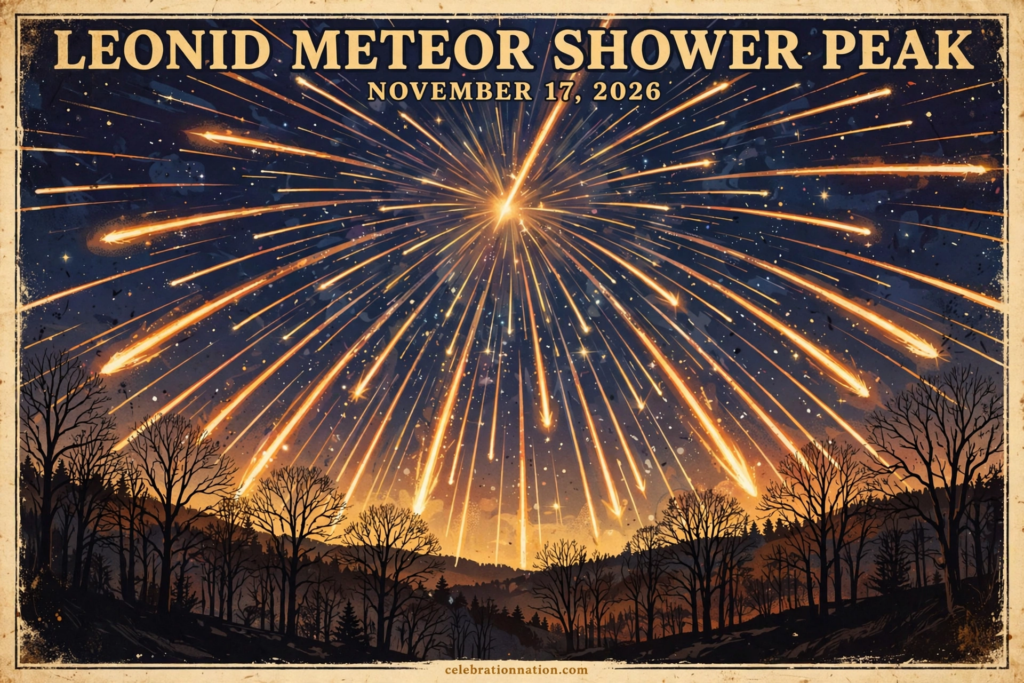
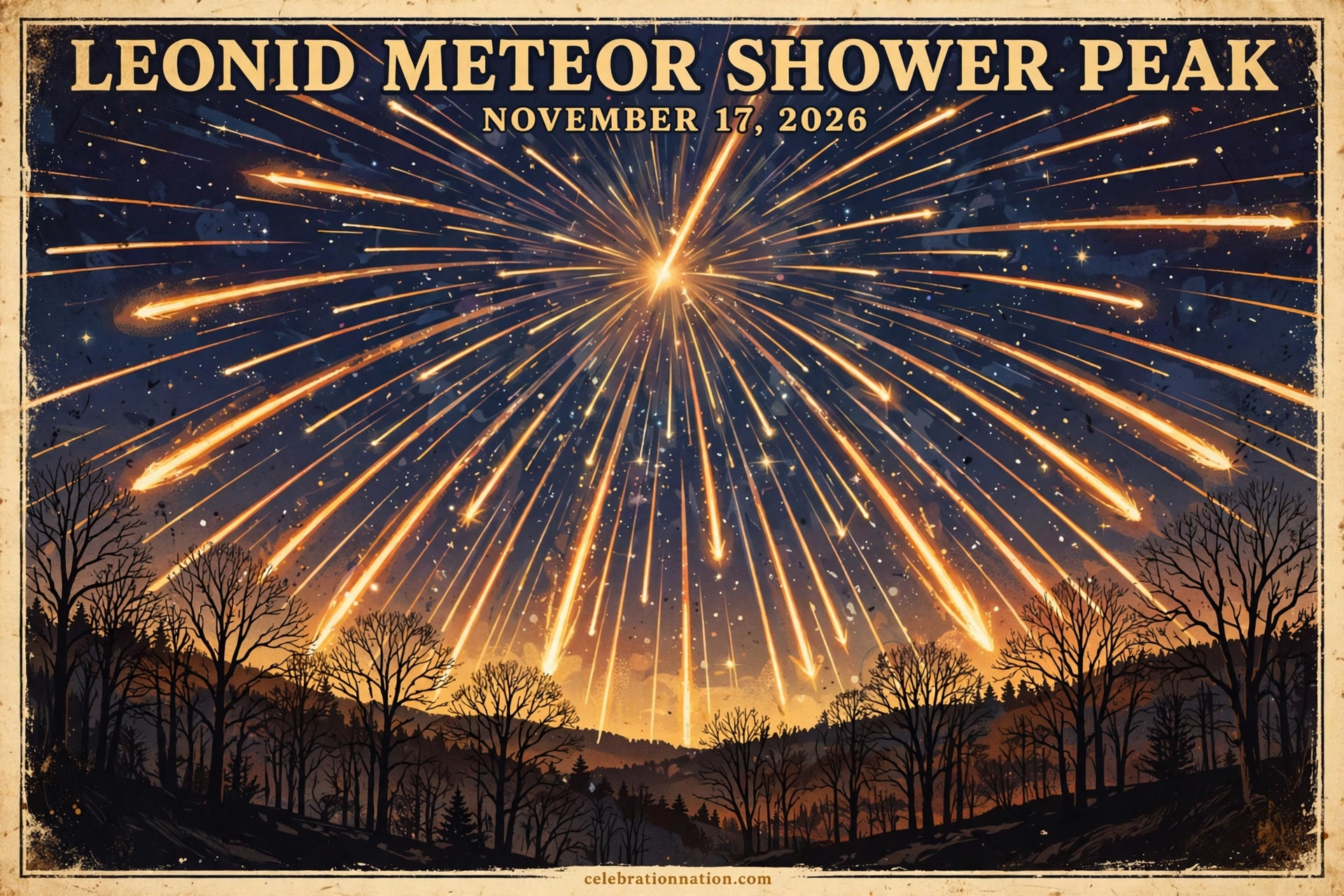
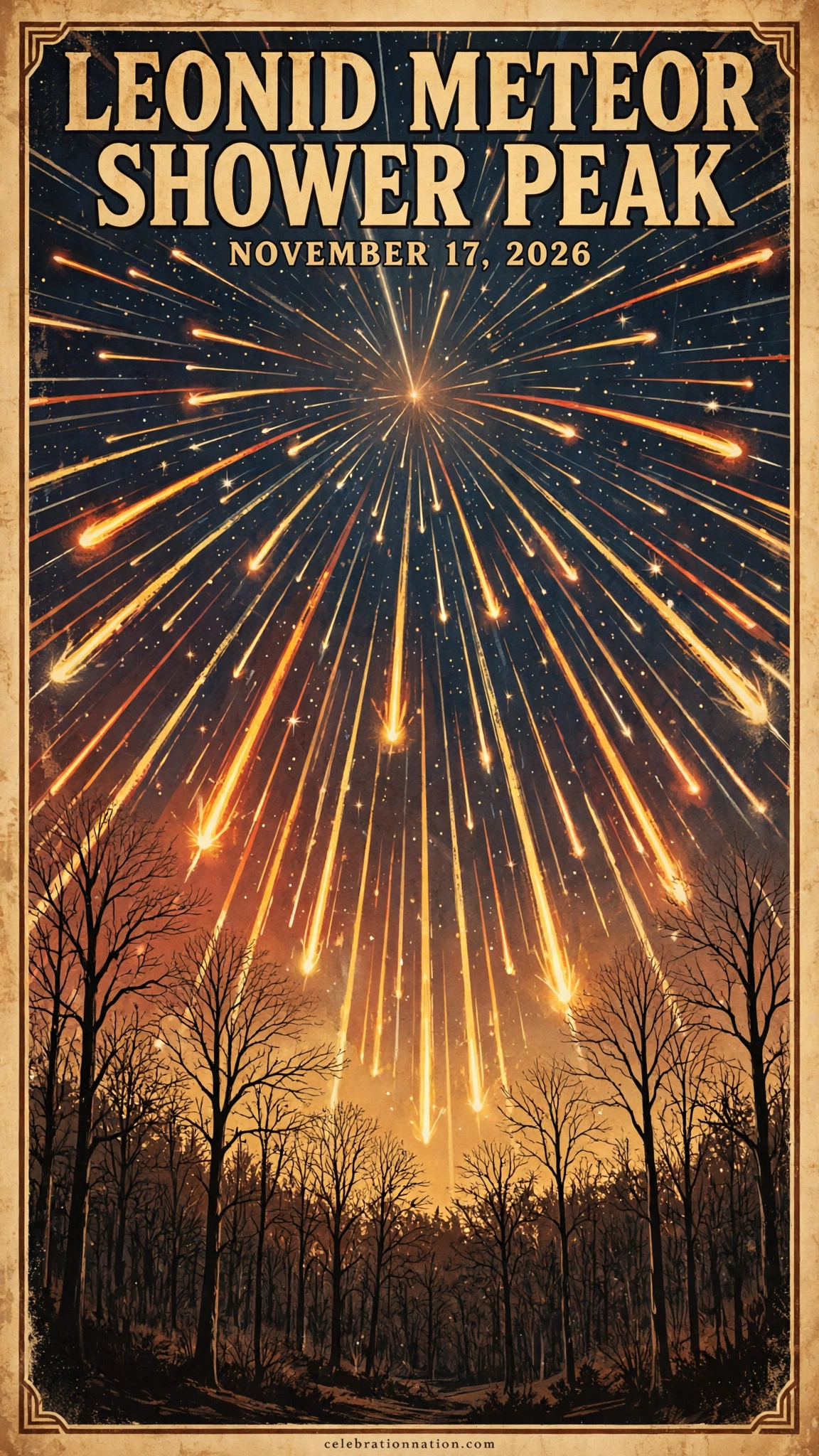
Leonid Meteor Shower Peak
This year on November 17, the Leonid meteor shower reaches its peak, carrying on a November tradition that includes some of the most famous meteor displays in history. These swift streaks are debris from comet Tempel-Tuttle, and every one arrives in a hurry.
- Roots
- The Leonids are debris from comet 55P/Tempel-Tuttle, which orbits the Sun about every 33 years.
- Also on Nov 17
- International Happy Gose Day · International Students’ Day · Baklava Day
- Hashtag
- #LeonidMeteorShowerPeak
3 ways to celebrate
Stay Up Past Midnight
Watch after midnight until dawn, when the radiant in Leo climbs high. The best Leonids of the night save themselves for the small hours.
Watch for Fireballs
Leonids are known for bright fireballs and long-tailed Earth-grazers. Keep your eyes on the whole sky, not just one spot, so the big ones cannot sneak past.
Use the Dark Pre-Dawn Window
The Moon is at first quarter on November 17 and sets before the pre-dawn hours on peak night. The darkest, best viewing comes after it is gone.
Plan ahead
Leonid Meteor Shower Peak is observed on November 17 every year. Here is where it lands for the next ten years, handy for planners, marketers and party people.
Fast facts
The story
The Leonids are debris from comet 55P/Tempel-Tuttle, which orbits the Sun about every 33 years. The International Meteor Organization predicts the 2026 maximum on the night of November 17 to 18, at about 23:45 Universal Time, with the best meteors before dawn on November 18.
Read the full story
Roughly every 33 years, when the comet's return refreshes the stream, the Leonids erupt into a meteor storm of at least 1,000 meteors per hour. In 1966 observers saw thousands of meteors per minute for 15 minutes, falling like rain. The last Leonid storm was in 2002, and no storm is expected in 2026, so this year brings the shower's steady, graceful best.
The Leonids also own one of the great nights in astronomy history. The great storm of November 13, 1833, seen across North America, is one of the most famous meteor displays ever recorded, and it helped launch modern meteor science.
For 2026, the Moon works in your favor. It is at first quarter on November 17 and sets before the pre-dawn hours, leaving the best window dark. Watch after midnight until dawn, when the radiant in Leo climbs high.
Keep the party going
See the calendar


Celebrate every day, all year
Official gear from the people who track 1,700+ celebrations.
Browse the shop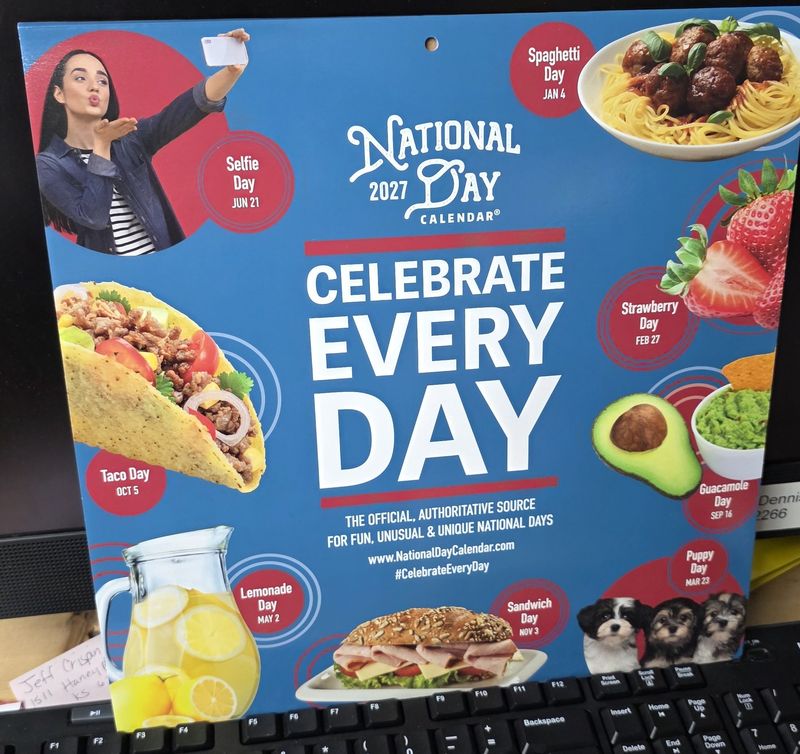 2027 Wall + Desk Calendar BundleCelebrate every day at home and at work.
Never miss a reason to celebrate.
One quick morning email with today's celebrations, ideas and posters. Free, unsubscribe anytime.
🎉 You're on the list! Watch your inbox for The Daily Confetti.