






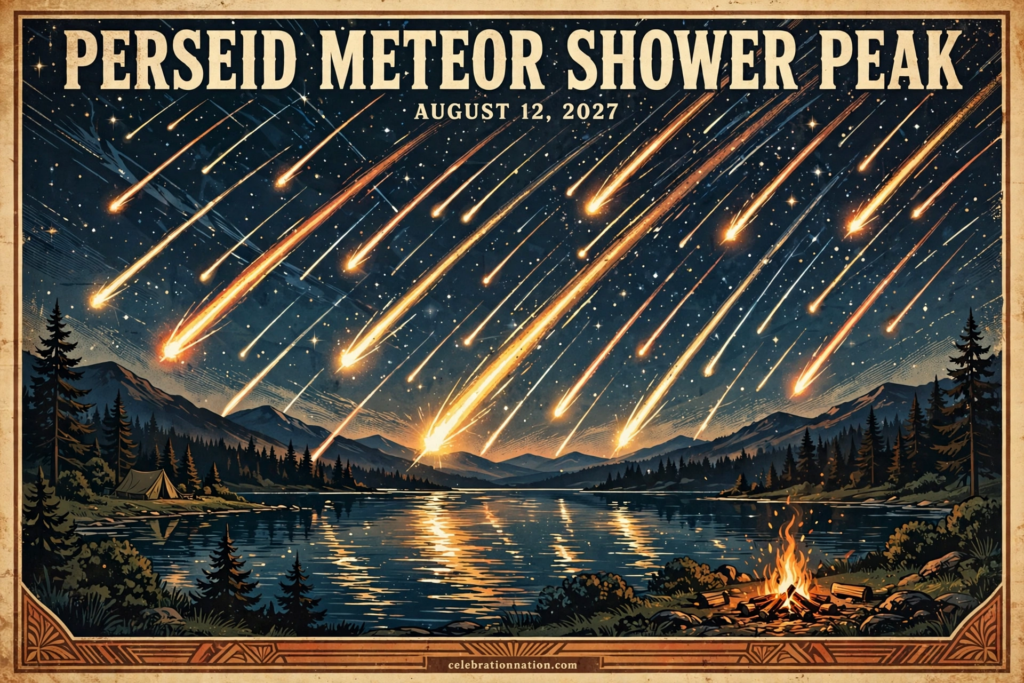
Perseid Meteor Shower Peak
This year on August 12, the Perseid meteor shower reaches its peak, turning a warm summer night into a meteor-counting party. The streaks overhead are tiny pieces of comet Swift-Tuttle, radiating from the constellation Perseus.
- Roots
- The Perseids are debris from comet 109P/Swift-Tuttle, and they take their name from the constellation Perseus, their radiant point.
- Hashtag
- #PerseidMeteorShowerPeak
3 ways to celebrate
Watch After Moonset
A waxing gibbous Moon washes out fainter meteors in the evening on peak night. The best viewing comes after the Moon sets, in the pre-dawn hours of August 13.
Leave the Telescope Inside
No telescope is needed for the Perseids. Your eyes, a reclining chair, and a dark sky are the whole kit.
Keep a Meteor Count
Observers at a dark site can see 60 to 100 meteors per hour at the peak. Tally yours by the hour and compare counts with everyone watching beside you.
Plan ahead
Perseid Meteor Shower Peak is observed on August 12 every year. Here is where it lands for the next ten years, handy for planners, marketers and party people.
Fast facts
The story
The Perseids are debris from comet 109P/Swift-Tuttle, and they radiate from the constellation Perseus, which gives the shower its name. The season runs each year from about July 17 to August 24, and in 2027 the peak falls on the night of August 12-13, with the most meteors in the pre-dawn hours of August 13.
Read the full story
In most years, observers at a dark site can see 60 to 100 meteors per hour at the peak. Now and then the shower outbursts well above normal: in 2016, after Jupiter's gravity tugged the debris stream closer to Earth's path, NASA's Bill Cooke estimated rates of 160 to 200 meteors per hour.
The parent comet is a record holder in its own right. Comet Swift-Tuttle is the largest object known to make repeated passes near Earth, and its next visit to the inner solar system will be in 2126, so the annual August show is the way to enjoy its legacy in the meantime.
In 2027 a waxing gibbous Moon, roughly three-quarters lit, shares the peak nights and washes out fainter meteors in the evening. The best viewing comes after moonset in the pre-dawn hours, and no telescope is needed: just a dark place, a reclining chair, and time.
Keep the party going
See the calendar



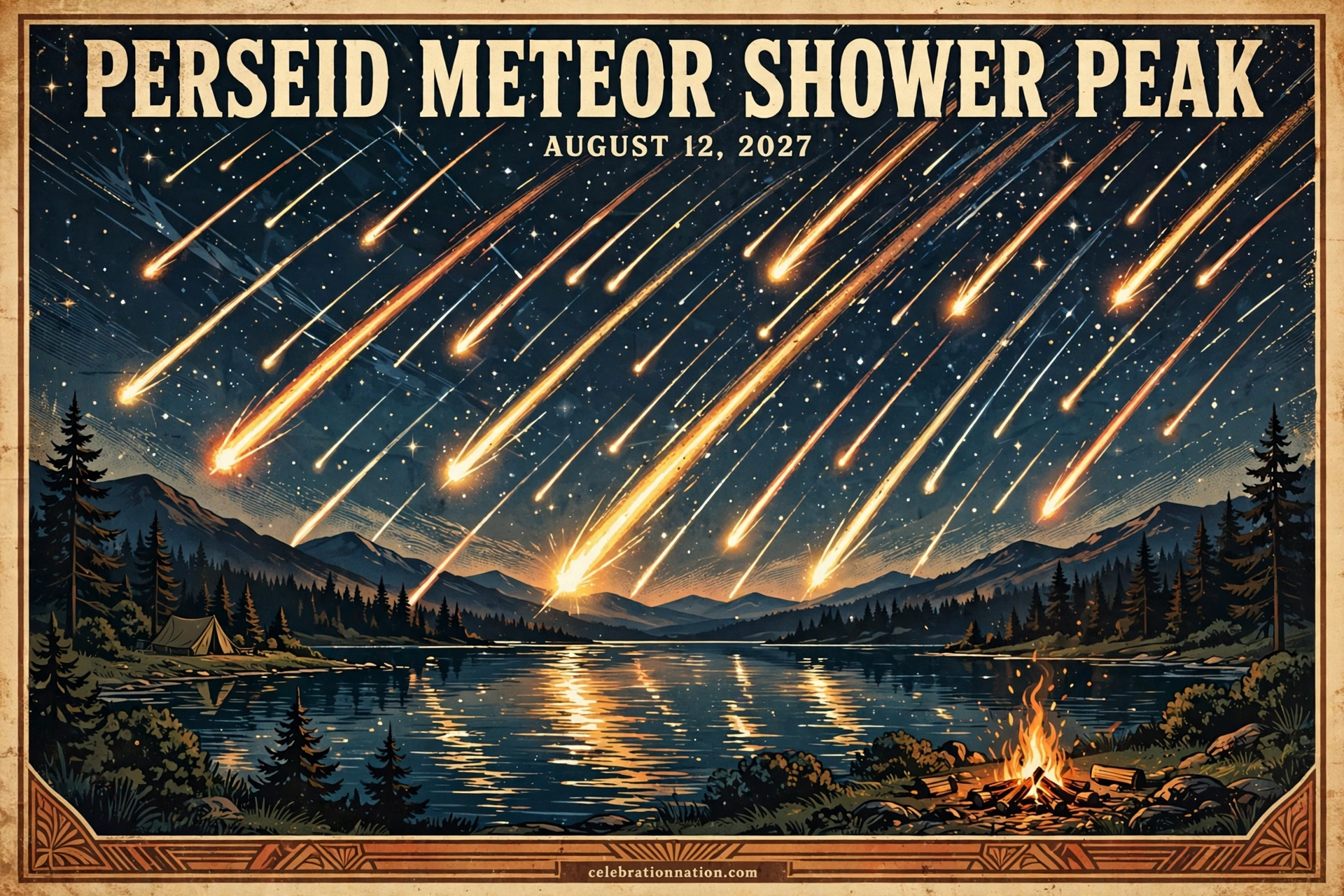
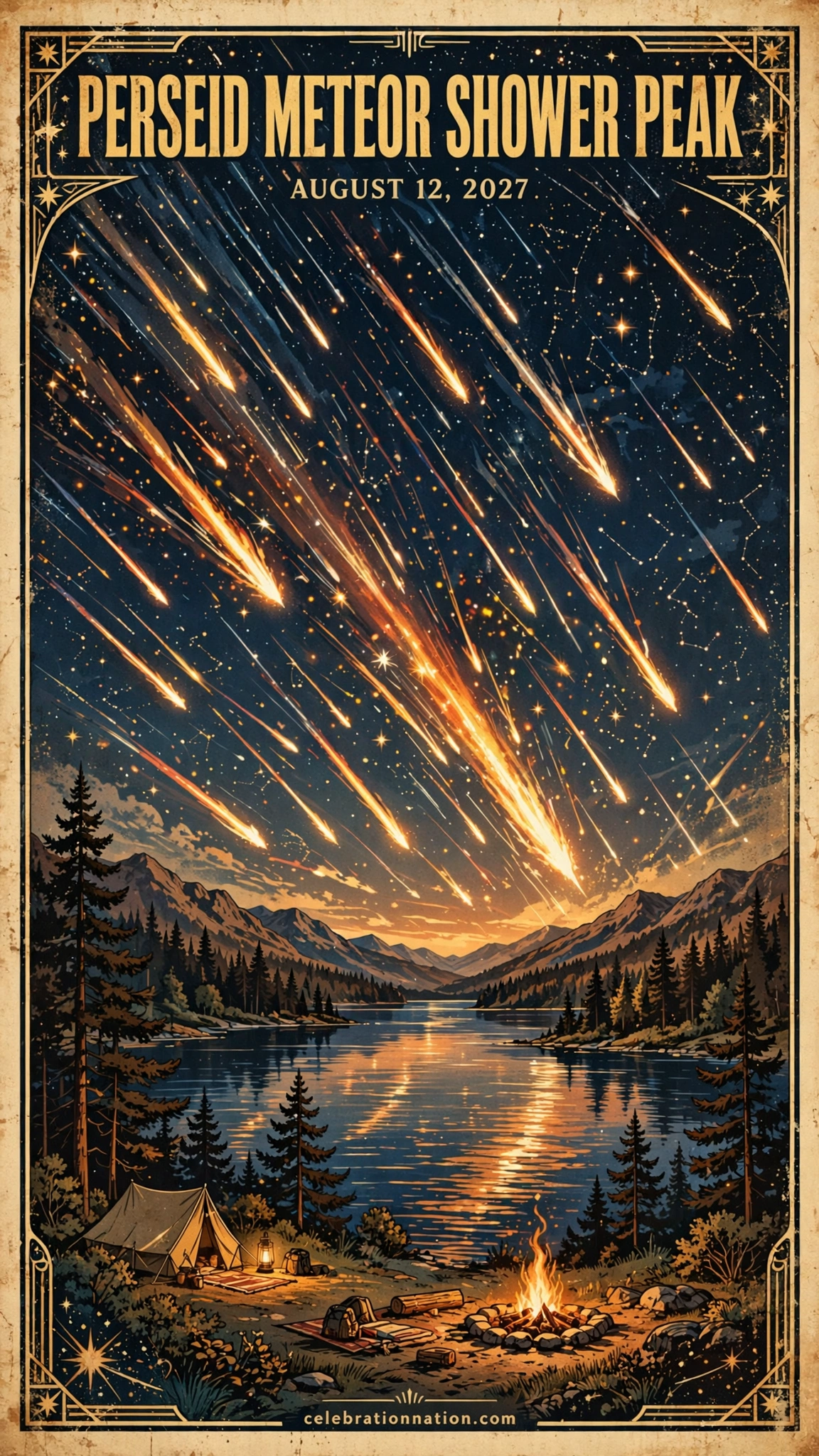
Celebrate every day, all year
Official gear from the people who track 1,700+ celebrations.
Browse the shop National Day Celebration Card GameA party in a box, any day of the year.
Never miss a reason to celebrate.
One quick morning email with today's celebrations, ideas and posters. Free, unsubscribe anytime.
🎉 You're on the list! Watch your inbox for The Daily Confetti.