

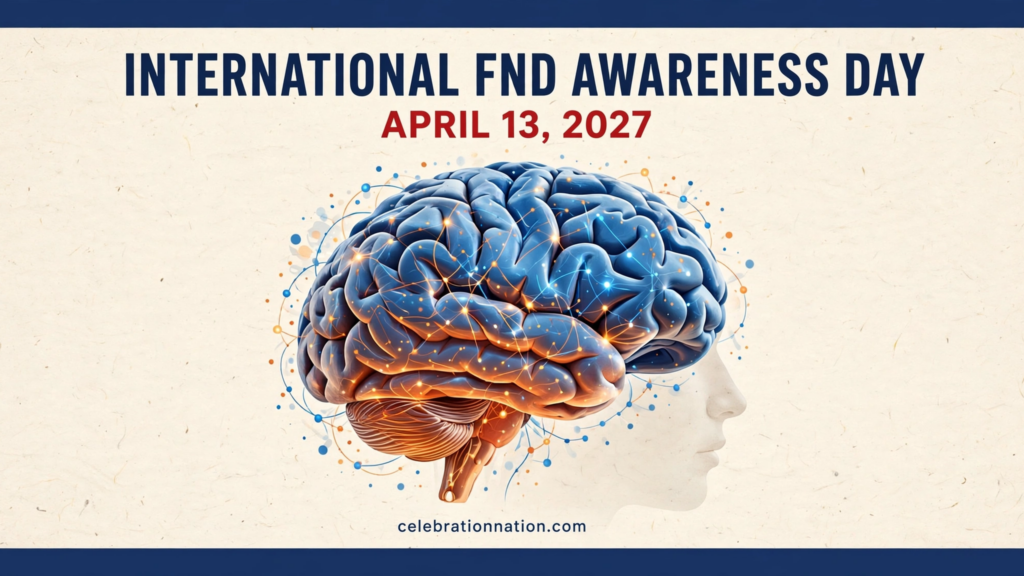
International Fnd Awareness Day
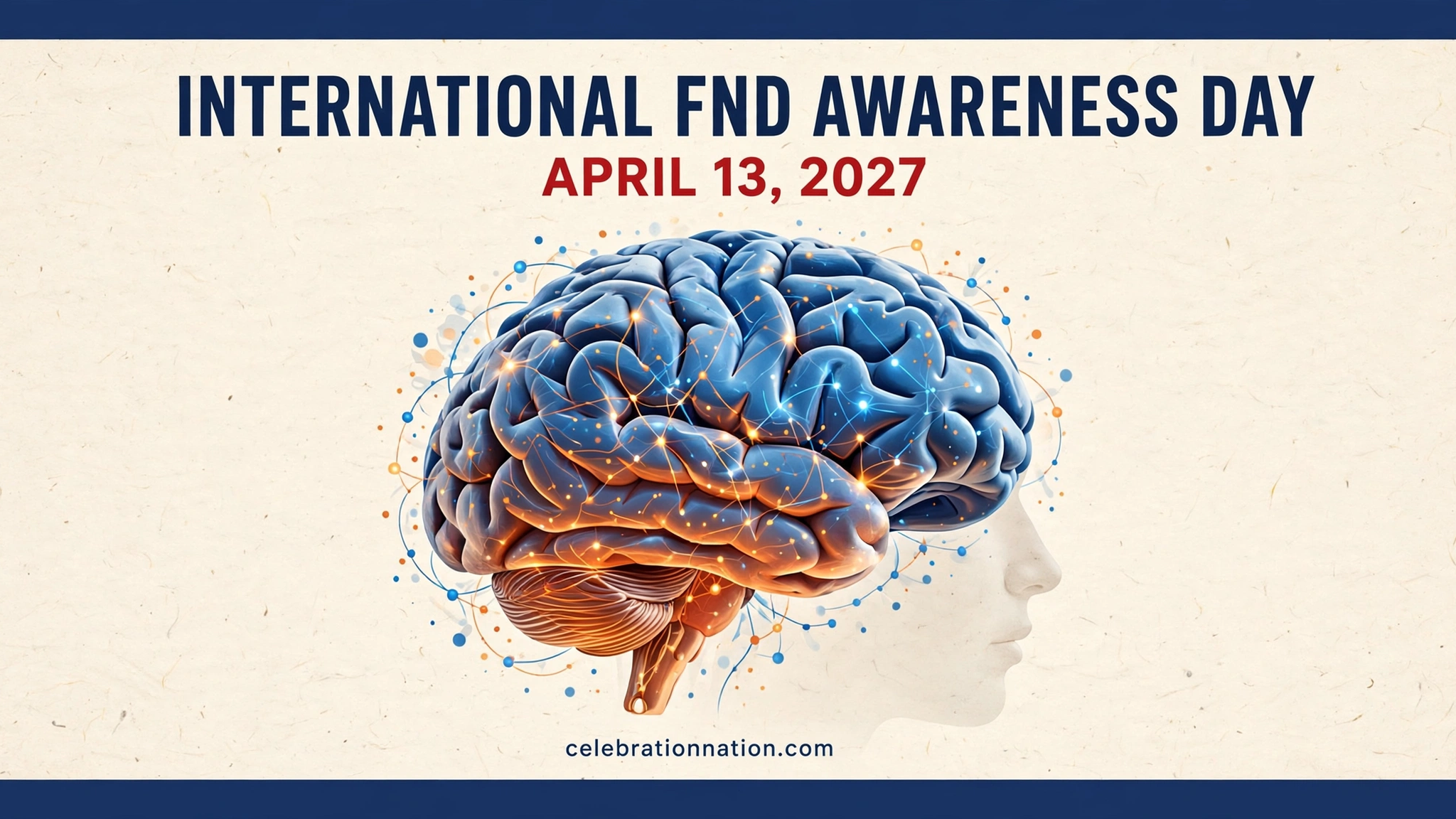
Every year on April 13, millions of people living with Functional Neurological Disorder ask the world for one simple thing: to be believed. International FND Awareness Day shines a light on one of the most common and most misunderstood neurological conditions, a disorder in which the nervous system is not broken but misfiring. It is a day for education, empathy, and the simple insistence that patients deserve to be heard.
- Also on Apr 13
- World Awareness Sarcoidosis Day · Thomas Jefferson Day · Borinqueneers Day
- Hashtag
- #InternationalFndAwarenessDay
INTERNATIONAL FND AWARENESS DAY
Every year on April 13, millions of people living with Functional Neurological Disorder ask the world for one simple thing: to be believed. International FND Awareness Day shines a light on one of the most common and most misunderstood neurological conditions, a disorder in which the nervous system is not broken but misfiring. It is a day for education, empathy, and the simple insistence that patients deserve to be heard.
Functional Neurological Disorder, or FND, is a problem with how the nervous system functions. The brain struggles to send and receive signals correctly, producing very real symptoms such as weakness or paralysis in the limbs, tremors, gait difficulties, seizure-like episodes that resemble epilepsy, and speech or vision problems. People with FND also commonly contend with fatigue, chronic pain, anxiety, and low mood. Brain scans often appear normal, because nothing is structurally damaged. A useful way to think about it is the computer analogy: the hardware is intact, but the software is not running as it should. The symptoms are genuine, often disabling, and they deserve the same seriousness as any other neurological condition. Some people experience only a few symptoms, while others endure a multitude that fluctuate in severity, and each person’s experience is unique. Fatigue, pain, anxiety, and low mood often travel alongside the neurological symptoms.
Symptoms often arrive suddenly and can wax and wane in ways that baffle onlookers: a person may be in near-complete remission one day and face a sudden recurrence the next, sometimes triggered by another illness or injury. For much of history, people with these symptoms were told it was all in their heads, dismissed with older labels like hysteria or conversion disorder. Modern neuroscience has moved past that. FND is now recognized as a genuine condition at the intersection of neurology and psychiatry, and research has shown that around 70 percent of patients report no traumatic event in their past, underscoring that the condition is not simply psychological. Yet public and even medical understanding still lags, and many patients wait years for an accurate diagnosis and the right treatment. Because symptoms look like those of multiple sclerosis, Parkinson’s disease, or epilepsy, misdiagnosis is common, and it may take years for affected people to be diagnosed and receive treatment that helps.
Treatment today focuses on retraining the nervous system rather than fixing damage, often through physiotherapy, occupational therapy, speech therapy, and psychological approaches such as cognitive behavioral therapy. Progress is real, but it depends on a correct diagnosis, and that depends on awareness. The first International FND Awareness Day was organized in 2013 by FND Hope, the first global patient-led charity devoted to functional symptoms. Founded by people living with the disorder, the organization set out to close a massive gap in public and medical understanding of a condition that affects millions. Since then the day has grown into a worldwide movement of patients, families, neurologists, and healthcare professionals. Awareness efforts include the #FNDaware social media challenge, in which supporters post photos holding ‘I Am #FNDaware’ signs from fndhope.org.
April is also World FND Awareness Month, first recognized in 2013 and now marked in more than 100 countries with social media campaigns, personal stories, fundraisers, and community events. Supporters wear blue and orange, the official FND colors, on April 13 to spark conversations about the condition, and the #FNDAware message travels across social media every year. Awareness matters because belief is the beginning of care. When doctors, families, and communities understand that FND is real, patients get diagnosed sooner, gain access to better rehabilitation, and feel less alone in a frightening experience. April 13 is a day to trade stigma for empathy, myths for facts, and silence for the voices of the people who live with FND every day. If you are a clinician, April 13 is a good day to refresh your knowledge of diagnostic criteria; if you are a friend, it is a good day to simply believe.
THE STORY BEHIND INTERNATIONAL FND AWARENESS DAY
🩸 A Software Problem, Not Hardware
In FND, the brain’s ‘hardware’ is intact, but the ‘software’ that sends and receives signals is glitching. That is why MRIs and CT scans can look normal even while a person experiences disabling symptoms such as weakness, tremors, or non-epileptic seizures. The analogy helps doctors and patients talk about the condition with less judgment and more clarity, and it gives families a way to explain the inexplicable. The analogy comes from patients and neurologists themselves, including the widely shared description of the brain as a computer whose hardware is fine but whose software is glitching.
💡 Common, Yet Overlooked
FND is considered one of the most common reasons people see a neurologist, yet it remains widely misunderstood and under-researched. People living with it often face long diagnostic delays, with symptoms sometimes mistaken for multiple sclerosis, epilepsy, or stroke. Awareness days like this one push the condition out of the shadows, into medical curricula, and onto research agendas where it belongs. Greater visibility drives research funding, and research funding drives better diagnostic tools and therapies.
💖 Born From Patient Courage
The first International FND Awareness Day was organized in 2013 by FND Hope, a charity founded by people living with functional symptoms. Its goal was to address a massive gap in understanding of a condition that was historically dismissed as ‘all in the head.’ Patient leadership remains at the heart of the movement, and the day belongs first and foremost to the people who live with FND. The charity’s patient-led model means every campaign is shaped by lived experience, not just clinical theory.
🔍 Blue and Orange
Blue and orange are the official colors of FND awareness. Each April 13, supporters wear the colors, light up landmarks, and share the #FNDAware message so the invisible becomes visible. Even a small touch, like blue and orange nail polish, a scarf, or a ribbon, starts a conversation that matters. Landmarks around the world have gone blue and orange, and the colors appear on ribbons, shirts, and social media profile frames each April.
WAYS TO CELEBRATE
👥 Wear Blue and Orange
Put on something blue and orange on April 13 and tell one person at home or at work what FND is. A simple conversation is one of the most powerful awareness tools there is, and the colors make it easy to start one. Snap a photo and share it with #FNDAware to join supporters worldwide. Blue nails, an orange scarf, or a two-tone ribbon all do the job.
💬 Share a Story
With permission, share the story of someone living with FND, or simply listen to one without judgment. Use #FNDAware on social media to join the global conversation and help others find community and hope. If you live with FND yourself, consider sharing your journey; your words may be the lifeline someone else needs. A listening ear without judgment is one of the kindest gifts you can offer.
🤝 Support the Cause
Donate to or volunteer with FND organizations such as FND Hope, or ask your local library or clinic to display FND information during April. Better funding and education mean faster diagnoses and better care for everyone affected, and even a small fundraiser among friends makes a difference. Workplace fundraisers, bake sales, and sponsored walks all count.
Celebrate International Fnd Awareness Day
To everyone living with FND: your symptoms are real, your experience matters, and you are not alone. On April 13, let compassion outpace stigma, and let every conversation bring understanding one step closer. Your courage in the face of the invisible inspires more understanding every single year.
Plan ahead
International Fnd Awareness Day is observed on April 13 every year. Here is where it lands for the next ten years, handy for planners, marketers and party people.
Keep the party going
See the calendar

Celebrate every day, all year
Official gear from the people who track 1,700+ celebrations.
Browse the shop National Day Celebration Card GameA party in a box, any day of the year.
Never miss a reason to celebrate.
One quick morning email with today's celebrations, ideas and posters. Free, unsubscribe anytime.
🎉 You're on the list! Watch your inbox for The Daily Confetti.